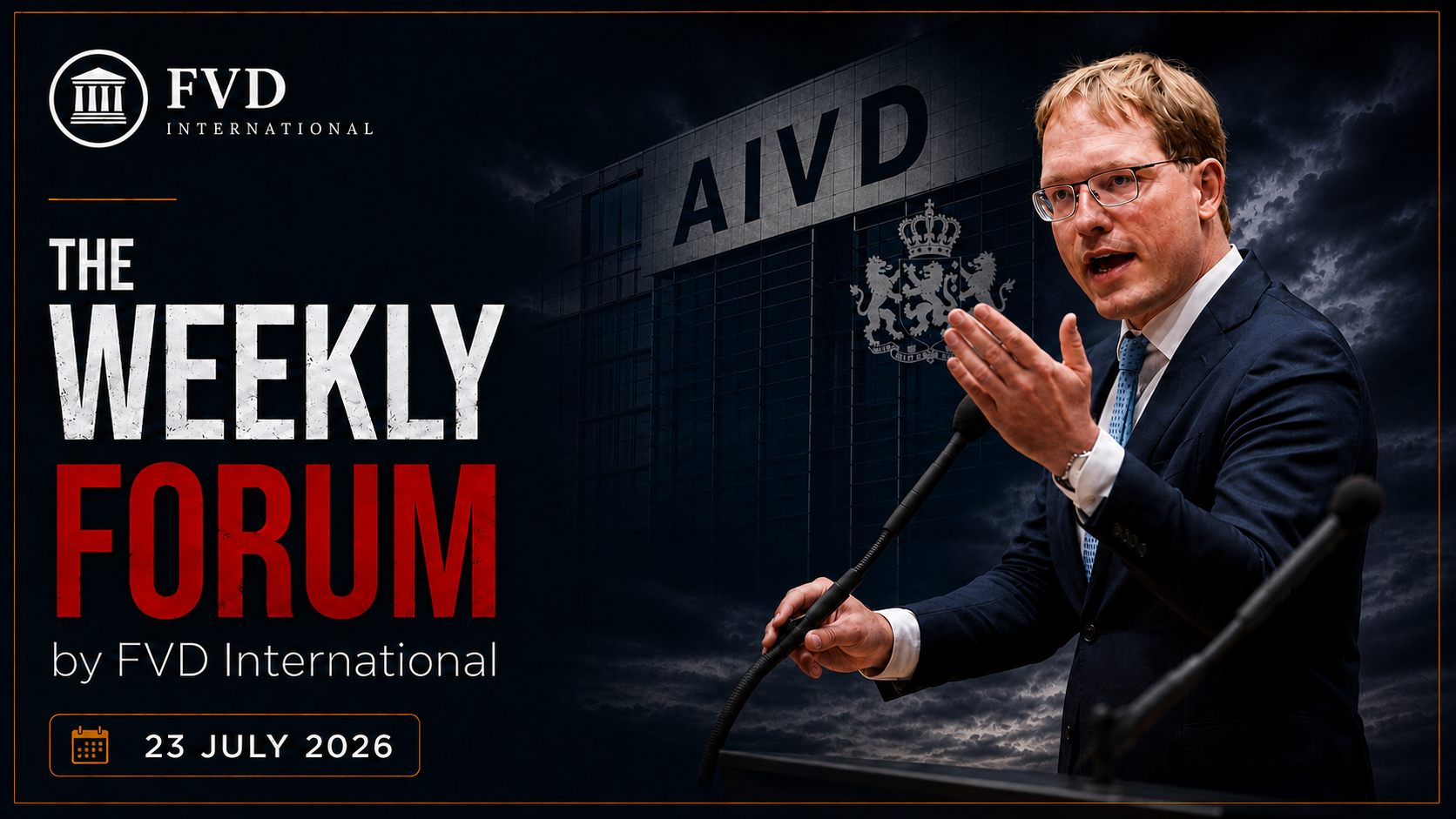
Do secret services plant stories in the media to influence public opinion according to the government’s wishes? One would have thought this was an easy question to answer. Certainly, FVD MP, Pepijn van Houwelingen, has put it numerous times to the Dutch government in very clear terms, both in writing and orally. But the answers are always unclear – or rather, the minister says that he is not at liberty to discuss the activities of the secret services. Naturally, this confirms the suspicion that the answer to the question is ‘Yes’. Given that there is a huge history of governments secretly influencing the media, whether by bribery or coercion – there is, for example, documentary proof that the British government secretly funded the news agency Reuters in the 1950s for propaganda purposes – the assumption must surely be that this continues to this day, especially when ministers refuse to deny it. Only FVD asks the questions.
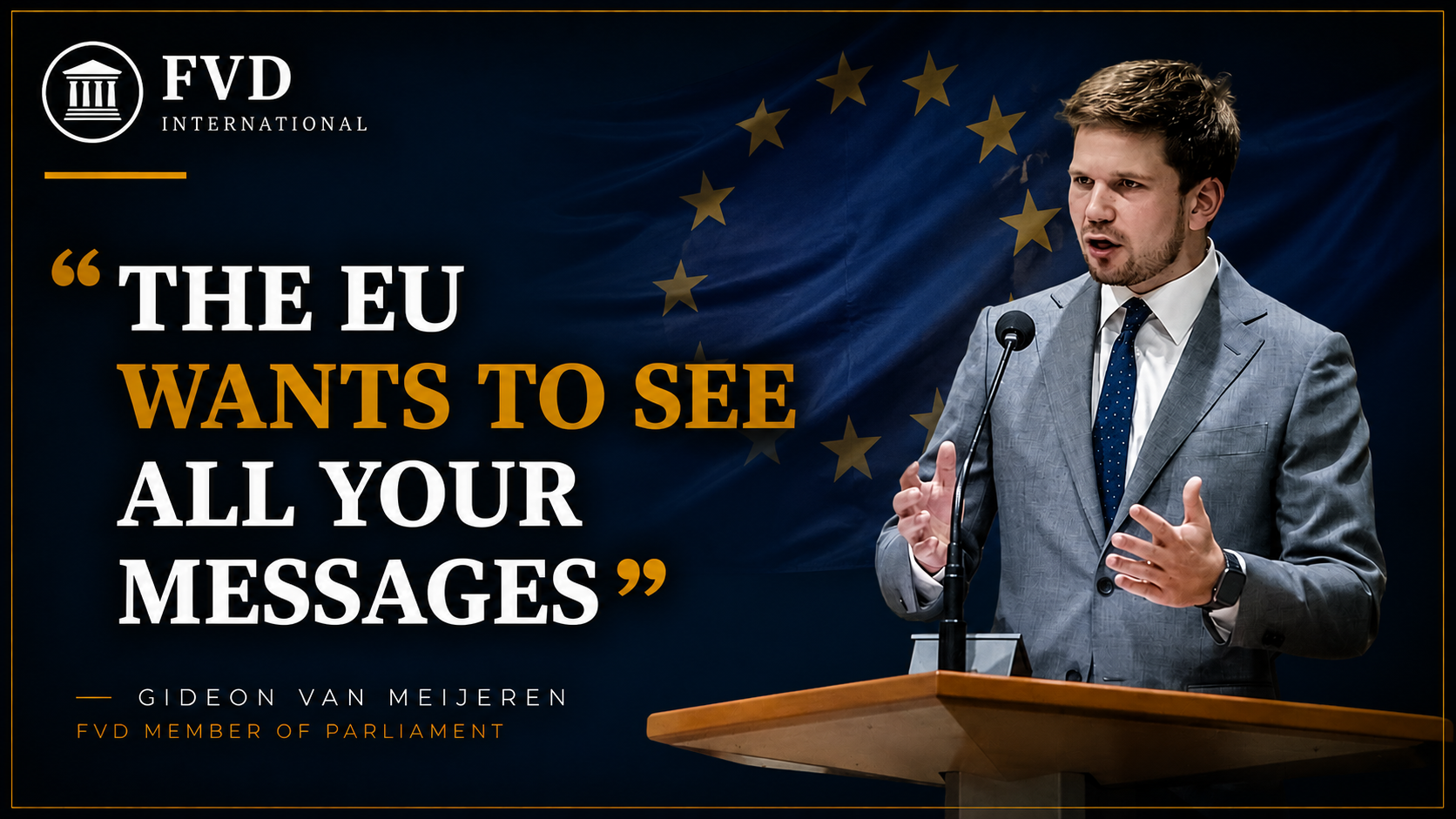
Talking of secret services, what about Chat Control ? As we reported last week, European Parliament voted this through, using a procedural trick, during the last plenary session before the summer, when many MEPs were away. Since then, France has ‘banned access to social media for all young people under 15’ – the correct translation of which is ‘has imposed identity checks on all people accessing social media.’ It is difficult to think of clearer examples of totalitarianism. Reading people’s correspondence (which incidentally is a violation of Article 8 of the European Convention on Human Rights) is what the Stasi famously used to do in East Germany. Now, however, the surveillance will be gar greater - the Stasi was limited by the number of envelopes it could steam open. Does anyone protest about this? Only FVD. Gideon van Meijeren laid out the problems with this last year, in a video we are re-posting to remind people of his prescience.
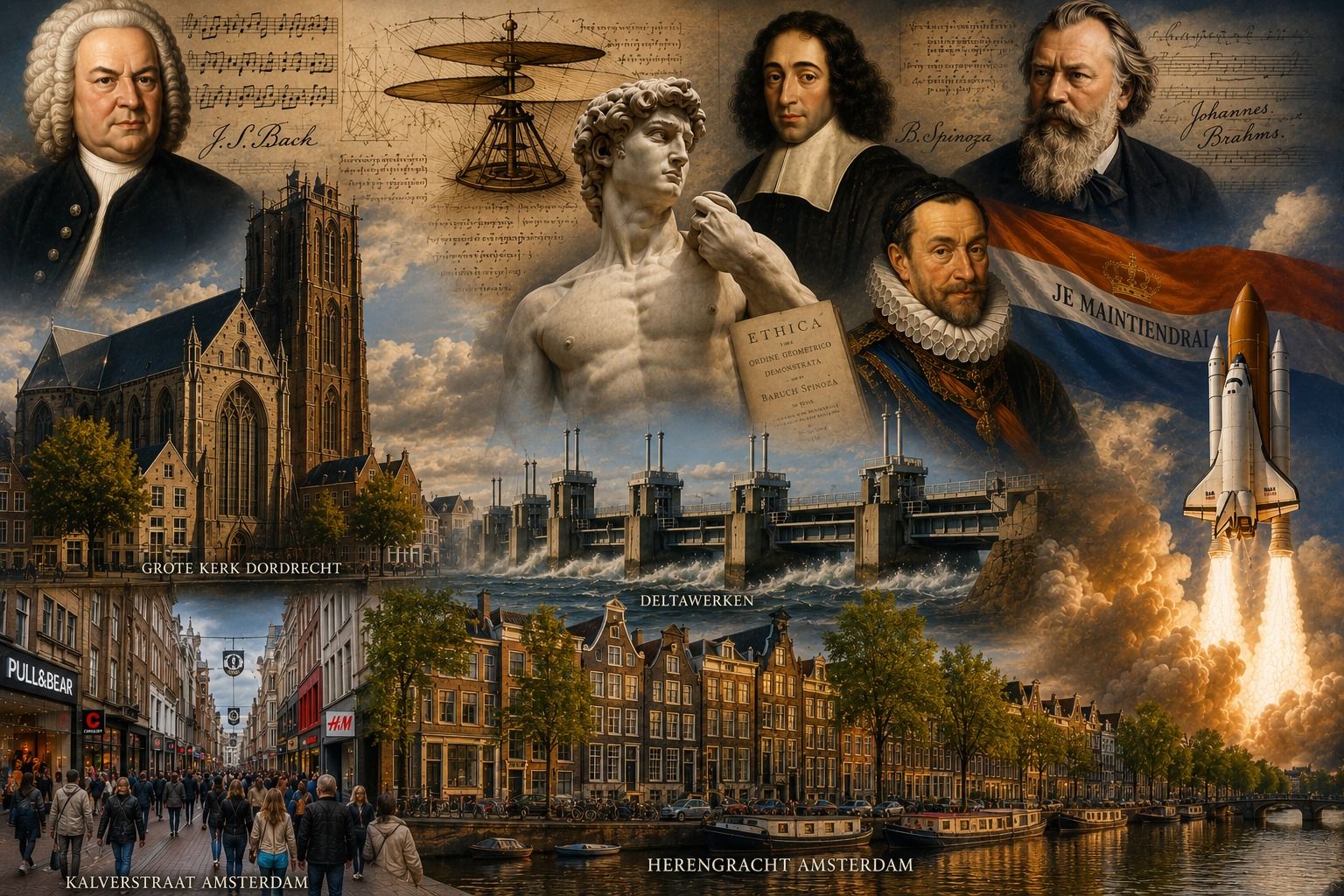
The great British art historian, Kenneth Clark, said in his magnificent TV series and book, ‘Civilisation’, broadcast in the 1960s, that the key to civilisation is confidence. The Dutch philosopher, Sid Lukkassen, agrees. In his recent book What the World Can Learn from the Fall of the West Sid argues that life force, struggle and the search for recognition are the keys to civilisation - and that the West has lost all of these. Renaissance Institute’s Hans van de Breevaart has reviewed Sid’s book and suggests adding an element – prudence, what the Greeks called ‘phronesis’, practical knowledge. This means understanding one’s limits even if pushing oneself to them. In der Beschränkung zeigt zich erst der Meister.
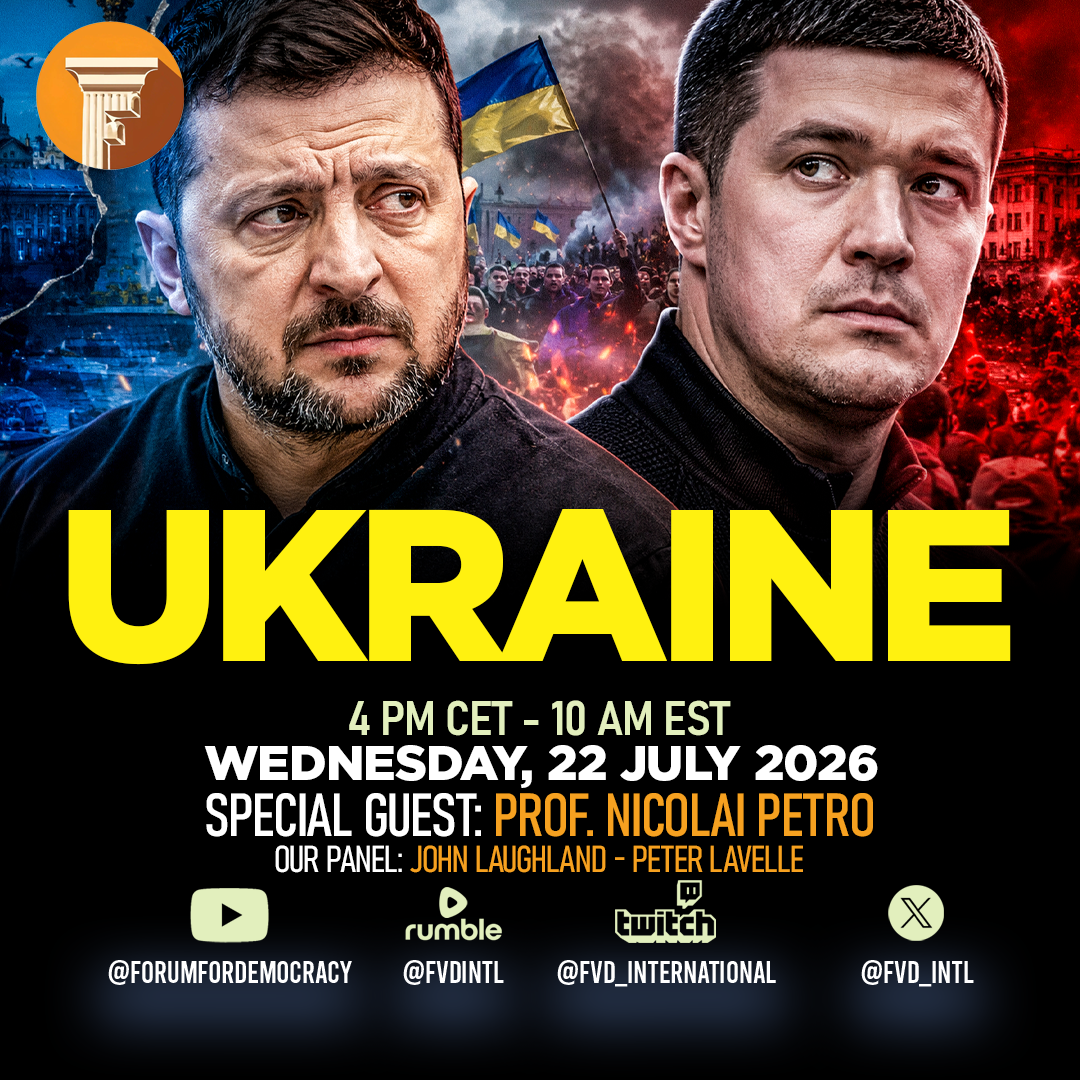
Our guest on The Forum this week was Professor Nicolai Petro of the University of Rhode Island. Nicolai is a specialist on the history and politics of Ukraine. They began by discussing the extraordinary game of musical chairs going on at the top of the Ukrainian government following the sacking of the Defence Minister, Mikhail Fedorov. Who is really in charge? Nicolai Petro believes that the European Union is ultimately pulling the strings and that the money flows which previously dictated Ukrainian politics through its oligarchs are now essentially coming from Brussels and the main EU states. Ukraine has previously served as a vehicle for washing vast amounts of money into private pockets, now it is an instrument for washing European taxpayers’ money into Europe’s own military-industrial complex (with commissions creamed off on the way, naturally). Our guest also discussed Ukrainian history and the birth of Ukrainian nationhood and identity, rejecting the claim sometimes made by Russians that it is little but an invention of Austrian historians at the end of the 18th Century to split their newly annexed Ruthene (‘rusyn’) territories off from the Russia of which they were a historical part.