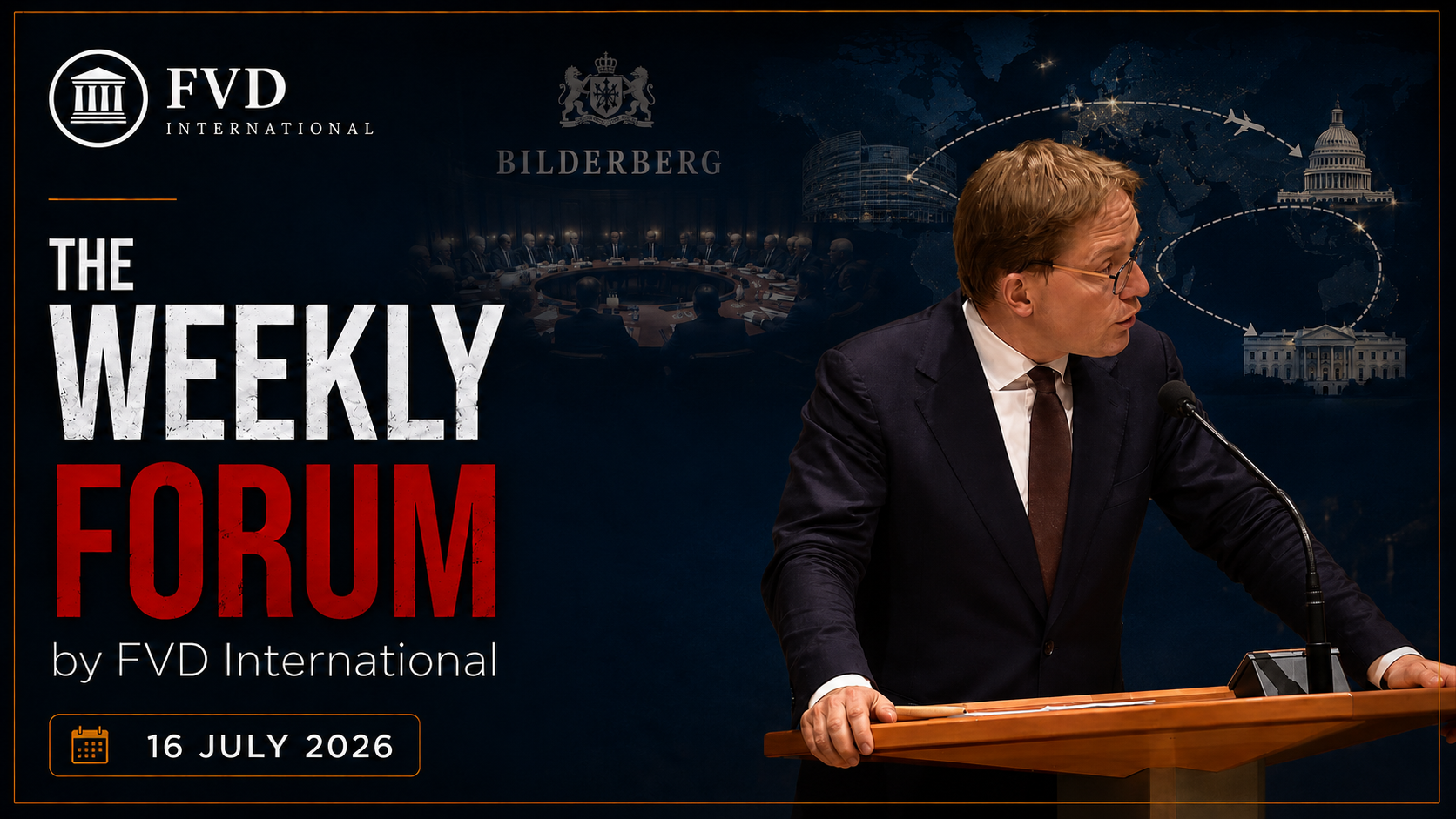
Do elected officials represent the people who elected them, or do they represent foreign interests against those voters? FVD MP Pepijn van Houwelingen claimed, in a recent debate on the then upcoming meeting of the European Council, that the current Dutch PM, Rob Jetten, like his predecessor, Mark Rutte, in fact represents globalist interests and not Dutch ones. That is one reason why Jetten is so often abroad – including when he, together with the Dutch king and queen, attended the last Bilderberg conference in Washington DC in April. But in what capacity did they attend? Were they official representatives of their county or were they there in a personal capacity, as is generally the case for Bilderberg attendees? We do not know the answer to this question – it has been put but no clear answer has been received – and this demonstrates the unacceptable grey area of unaccountability which globalism deliberately cultivates, and behind which it hides.
Watch Pepijn van Houwelingen’s speech here
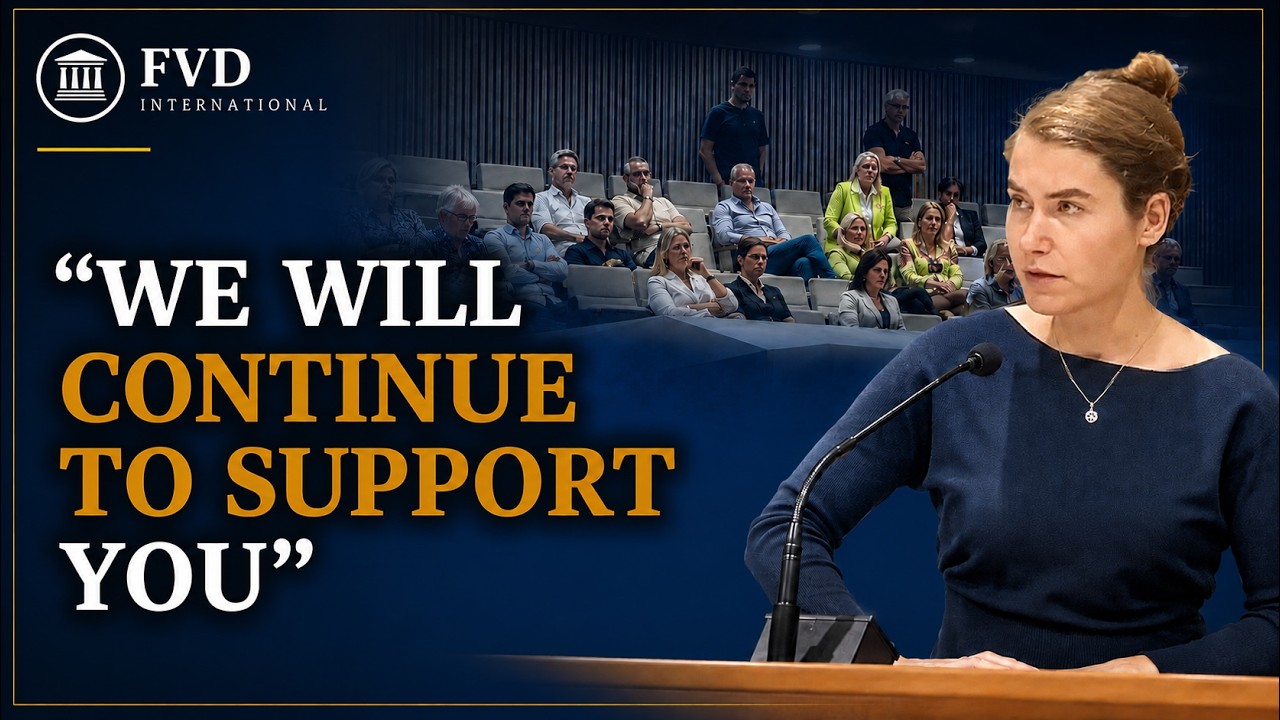
“There is no one in the cockpit” was the title of a recent book by Lidewij de Vos and Thierry Baudet, about the so-called ‘nitrogen’ policy of the Netherlands. According to this policy, nitrogen is bad for the environment and so farms have to be scaled down or, even better, closed. The only problem is that there is no scientific evidence to back up this claim. As a scientist herself, Lidewij discovered this as she was writing the book. Yet for 25 years whole swathes of policy have been based on it – from energy policy to agriculture. That a policy could become so deeply entrenched for so long, without being questioned until FVD came along, makes you wonder whether there is a cockpit at all, let alone whether there is anyone in it.
Watch Lidewij de Vos’ speech here

‘If you don’t succeed at first, try, try and try again’ may be a good motto in personal life, but is it appropriate in a democracy for a government to bring back legislative proposals which have been rejected, in the hope that they will pass a second or third time? It certainly should not be the rule for referendums, any more than for judicial acquittals: once a person has been acquitted, or once a referendum has been rejected, those decisions should be final. But the EU does not abide by these rules. Instead, mass surveillance of messages – full-on Stasi stuff – which was voted down in March was re-introduced to the European Parliament using a procedural trick according to which it could be rejected only by an absolute majority. So even though more MEPs voted against it than in favour last week, it passed. Democracy!

Our guest on The Forum this week was Jenin Younes, a civil rights and free speech attorney from Washington DC. Jenin is also president of the Arab-American Anti-Discrimination Committee – a difficult cause to embrace in the USA. John Laughland and Peter Lavelle discussed with her Max Blumenthal’s recent ‘treatment’ at the hands of the US immigration authorities – he had his computer and phone taken on his return from Iran, unlike other mainstream journalists who were allowed to pass without let or hindrance – and the case of Graham Platner, an Democrat candidate for a Senate seat, whose campaign has recently been de-railed by old accusations of sexual misconduct dredged up for the purpose of sabotaging him because he opposes funding for Israel. Jenin bemoaned the fact that many of her old allies during Covid – people who had campaigned against lockdowns and against ‘following the science’ (i.e. not questioning certain pronouncements) have turned against her on the fundamental issue of free speech when it comes to Israel. Certainly you are not allowed to be pro-Palestinian in US universities. Is the situation worse in the US or in Europe? Watch The Forum and decide!