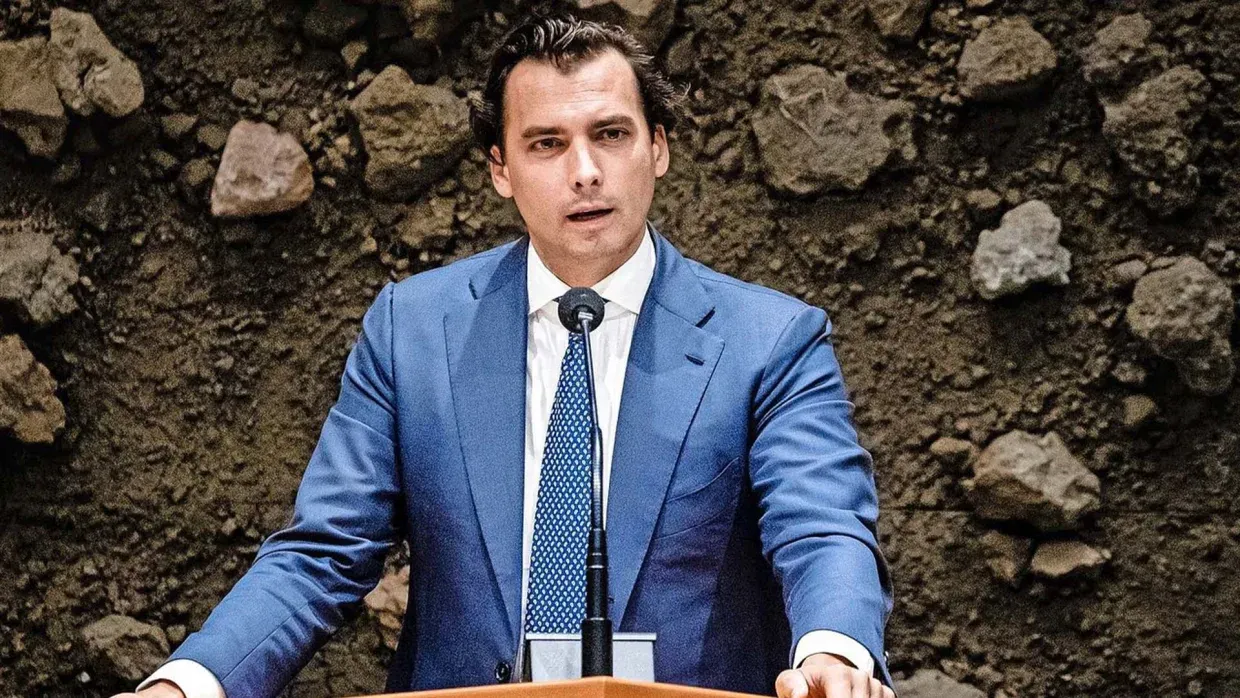
Yesterday, I was installed as a member of the Provincial Council of North Holland. It is wonderful to be able to fulfil the role of people's representative at provincial level too! I spoke on TATA steel, on mobility and on nitrogen. A perfect prelude to the provincial elections on 15 March!
I also saw some former colleagues who split off from my party, Forum for Democracy, in 2020 - Annabel Nanninga, Ivo Mantel, Daniël van den Berg. It struck me how incredibly leftist and centrist their views had become. These people - whom I selected myself four years ago - were originally elected on a campaign against overblown climate and environmental policies, against the EU, against immigration. Yesterday in the Provincial Council, they referred to the forced recycling of washing machine water (!) as 'sympathetic', they said they wanted to make blast furnaces 'sustainable', and in the Lower House of Parliament they are now pro-EU, pro-'real refugees', pro-NATO and pro-mRNA vaccines. No wonder they are a darling of the press.
Once again I realised that Forum for Democracy is fundamentally different from all other parties. In my new book, Gideon’s Men, I go into that in detail. I write about everything that has happened and about the possibilities for the future.
I discuss the cult of woke-ism, the war in Ukraine, Covid, the World Economic Forum, repopulation and the shadow power in the background. I also go into the fundamental difference between us and all those other so-called opposition parties.
I call it policy opposition versus system opposition. JA21, that motley collection of people who split off from FVD, but likewise Caroline van der Plas's BBB, Wybren van Haga's BVNL, and so on - all of them want to oppose at policy level. They criticise specific policies but they do not dispute the policy's basic assumptions. In the Lower House, Joost Eerdmans starts his climate speeches with, "Of course we have to reduce CO2, but...". They are not in favour of NEXIT, not against the Covid story at all. At the provincial level, they go along completely with the nitrogen story (that nitrogen emissions need to be reduced by reducing the amount of marlmand).
They want it all to cost just a bit less, to distribute the burden just a bit better. They do not put up a real, fundamental opposition.
Forum for Democracy, on the other hand, does. We are conducting what I call systemic opposition. We attack the basic assumptions on which current policy is based. Only then can you really propose and want something different.
As in the Bible story of Gideon’s Men (Judges 6), we at FVD are a small group of idealists. We fight for the preservation of our country, for future generations, for eternity in short. Not for ourselves. Not for a job or being liked by the system.
As we stand on the eve of a new Provincial Council election - how quickly the past four years have gone by! - I have written down the founding principles of our party. I explain why FVD is substantially different from all other parties. I identify the opponent's true nature and ideology. And I outline the path to victory.
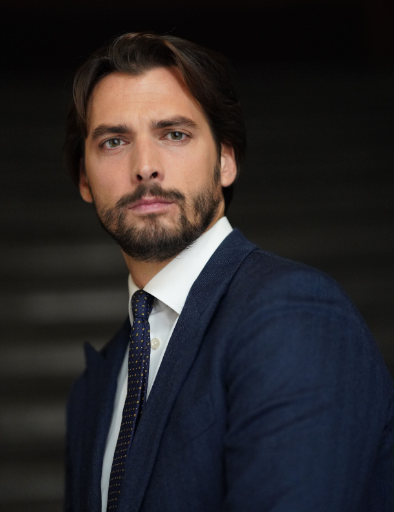
Thierry Baudet
Leader of FVD and Member of Parliament of the Netherlands
Thierry Henri Philippe Baudet (born 28 January 1983) is a Dutch politician, academic and author. He is the founder and leader of Forum for Democracy (FVD), and has been a member of the House of Representatives since 2017. He also serves as the party’s parliamentary leader.
Baudet was born in Heemstede into a family of partial Walloon ancestry. His forefather Pierre Joseph Baudet immigrated to the Batavian Republic in 1795 when his home in Hainaut was annexed by the French Republic, fleeing from conscription into the French Army. Baudet’s great-great-grandmother Ernestine van Heemskerck was born in the Dutch East Indies and was of partly Indonesian parentage. Baudet attended the Haarlem gymnasium, i.e. a high school with compulsory Latin and Ancient Greek. His first degree, from the University of Amsterdam, was in history, and from 2007 to 2012 he was a lecturer at Leiden University, where in 2012 he graduated as a Doctor of Philosophy with a thesis on national identity, European identity, and multiculturalism. This was co-directed by the philosopher Roger Scruton and was published in Dutch as The Assault on the Nation-State. An English translation was also published, called The Significance of Borders.
Related articles
 Politics
Is a reduction in gas tax impossible due to a European agreement, or are there more hidden rules at play?
 Politics
Blurring the line between alleged extremism and legitimate viewpoints threatens to narrow public debate
 Politics