
Dutch Government Refuses to Address Key Questions on Russia and the War in Ukraine
Has Russia ever physically attacked the Netherlands? Was the Nord Stream sabotage an act of aggression against Dutch interests? And what is the government doing to prevent a direct war between NATO and Russia?
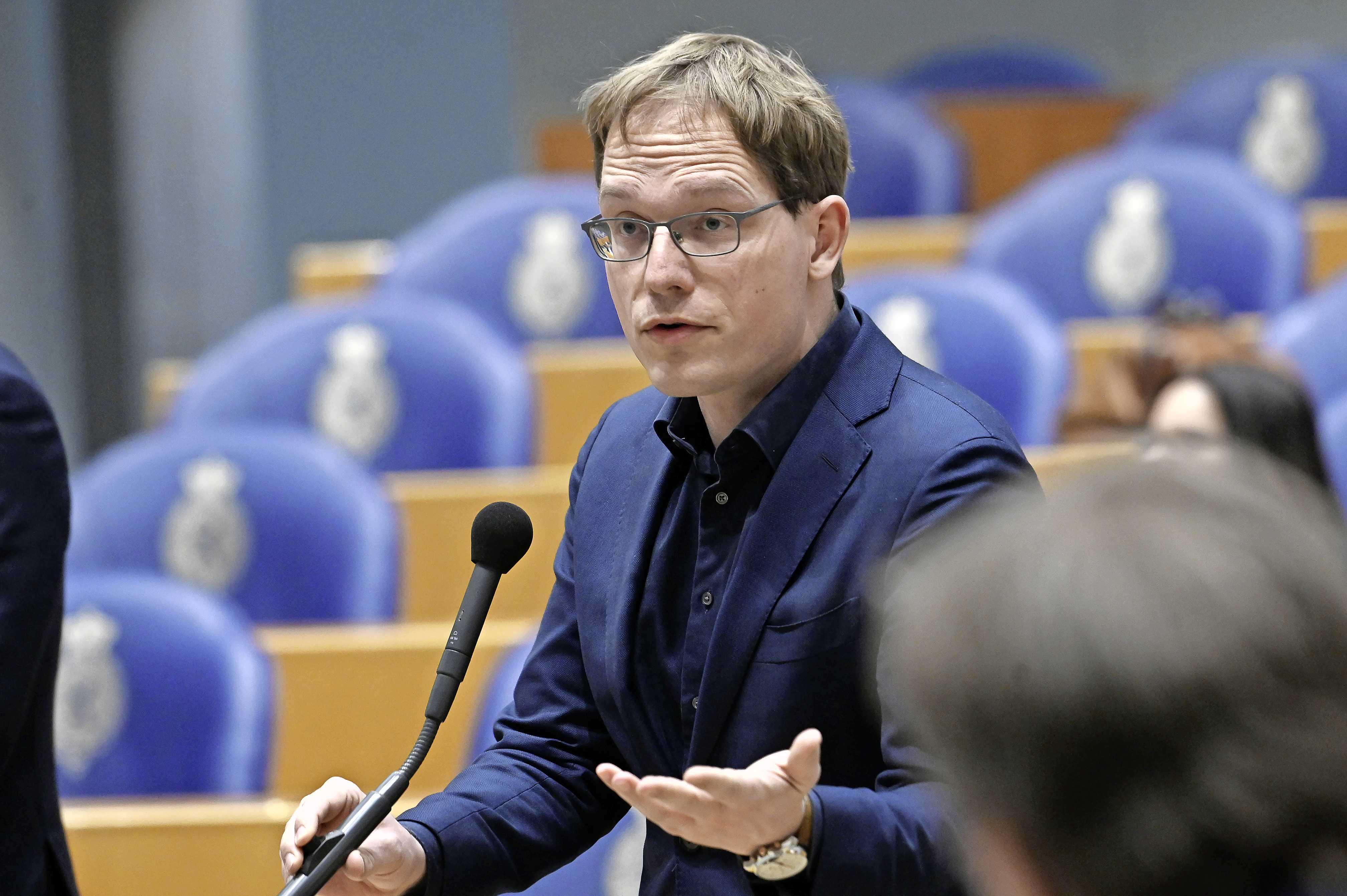
These are among the questions submitted by FVD MP Pepijn van Houwelingen to Dutch Foreign Minister Tom Berendsen.
In his written response, received on 16 October 2026, the Minister reiterates the government's position on Russian aggression but leaves several specific questions unanswered. He also dismisses the arguments of prominent international scholars, including John Mearsheimer, Jeffrey Sachs and Glenn Diesen, without addressing their underlying reasoning.
Read the nine parliamentary questions and the Minister's answers in full below:
Questions to the Netherlands Foreign Minister put down by FVD MP Pepijn van Houwelingen
Reply from Minister Berendsen (Foreign Affairs) (received 16 October 2026)
Question 1
To the best of the Government’s knowledge, has Russia ever physically attacked the Netherlands since the beginning of this decade? If so, where and when exactly, and can the House be provided with evidence of this?
Answer
The Russian threat to Europe is real. Russia is waging a war of aggression on the European continent. At stake here is not only Ukraine’s freedom but also our shared values, global confidence in the international legal order, and the security and stability of Europe – and therefore also of the Netherlands. In its war against Ukraine, Russia is taking increasingly irresponsible risks and, in doing so, is violating NATO airspace with greater frequency. There has also been an increase in Russian hybrid operations against European countries, as the AIVD and MIVD warned in February.
The Netherlands is therefore making every effort to support Ukraine in its fight against Russian aggression. In doing so, the Netherlands takes into account Ukraine’s needs, the capabilities at the Netherlands’ disposal, the impact on Dutch readiness and broader security, and the potential (de-)escalatory effect. Furthermore, it is crucial for the Netherlands to counter future aggression in Europe. The Netherlands is therefore working together with our international partners, both within NATO and the EU, to maintain a credible deterrent and to increase the pressure on Russia with the aim of bringing Russia to the negotiating table.
Question 2
Does the government regard the attack on Nord Stream – 9 per cent of which is owned by the Dutch Gasunie – as ‘an (physical) act of aggression’ against the Netherlands? If not, why not?
Question 3
Are there, at present, any countries other than the US and Ukraine that might be directly or indirectly involved in the attack on Nord Stream?
Answers 2 and 3
In order to adopt a well-considered position on the sabotage of the Nord Stream pipeline, the Government is closely awaiting the findings of the German Public Prosecutor’s Office. Sabotage of energy infrastructure is unacceptable and threats in this regard are taken seriously. It is precisely for this reason that caution is required. The Government is awaiting the outcome of the German legal proceedings.
Question 4
Is the Minister aware of the views of various independent experts (such as Glenn Diesen, John Mearsheimer, Jeffrey Sachs, etc.) who characterise the war in Ukraine as a (Western-provoked) proxy war between the EU/NATO on the one hand and Russia on the other, taking place on Ukrainian territory? Can the Minister provide a brief substantive response to this, addressing the arguments put forward by these experts (such as the violent, Western-backed coup in Ukraine in 2014)?
Question 5
What is the Dutch government doing to prevent the current conflict from escalating into a direct war between Russia and the EU/NATO (and thus the Netherlands)? What diplomatic contacts are currently being maintained with Russia? For example, when was the last time our ambassador in Moscow spoke with members of the Russian government or officials from the Russian state apparatus about the situation in Ukraine?
Answers 4 and 5
Russia started this war by unlawfully invading Ukraine and violating the country’s sovereignty. It is Russia that is increasing the risk of this war spreading through its escalating actions and rhetoric. Furthermore, Russia can end the war against Ukraine at any time by withdrawing its forces. In this regard, the Government also wishes to emphasise that NATO is a defensive alliance.
The government strongly rejects the characterisation of the war of aggression against Ukraine, initiated by Russia, as a ‘(Western-provoked) proxy war between the EU/NATO on the one hand and Russia on the other, on Ukrainian territory’, and from the characterisation of the events leading to President Yanukovych’s departure as a “violent and Western-backed coup d’état in Ukraine in 2014”.
The Government will continue to pursue a combination of support for Ukraine, pressure on Russia and diplomatic efforts, together with our international partners, aimed at achieving a lasting peace. In doing so, the Government’s guiding principle remains that a peace settlement must respect the sovereignty and territorial integrity of Ukraine and that the security of Ukraine and Europe must be sustainably guaranteed in the process. The Netherlands also emphasises this in the necessary diplomatic contacts it maintains with the Russian Federation and will continue to do so.
Question 6
Does the government acknowledge that, in the past, wars have been started and justified by means of so-called ‘false flag’ operations?
Answer
Yes.
Question 7
Is the government aware that such a ‘false flag’ operation could be organised not only by Russia but also by the West (EU/NATO)? If not, why does the government categorically rule out the latter possibility? If so, what is the government doing to prevent the Netherlands from being wrongly drawn into a war with Russia as a result of such a ‘false flag’ operation?
Answer
NATO is a defensive alliance; it does not seek confrontation and poses no threat to Russia. The government, together with its allies and partners, remains committed to de-escalation.
In response to Russia’s war of aggression in Ukraine and the Russian threat to NATO territory, the Government remains committed to a combination of strengthening collective defence and resilience, supporting Ukraine, exerting pressure on Russia, and diplomatic efforts aimed at bringing Russia to the negotiating table. In this regard, the government’s guiding principle remains that any peace settlement must respect Ukraine’s sovereignty and territorial integrity, and that the security of Ukraine and Europe must be guaranteed in the long term.
Question 8
How certain is the government that, in the absence of elections and given the forced mobilisation, not only the Ukrainian government but also the majority of the Ukrainian population currently supports the continuation of the war?
Question 9
Does the Dutch government take into account the risk that a section of the Ukrainian population may (gradually) turn away from the West (the EU/NATO) because they believe, as many (Western!) experts also argue, that they are being used and sacrificed in a proxy war waged by the West against Russia, with the (understandable) consequence that Ukraine (a country with a large, strong and highly experienced army) might in future turn against the EU and NATO, and thus also against the Netherlands?
Answers 8 and 9
The Government emphasises that Russia has the choice every day to cease the war, but that Ukraine, as a victim of Russian aggression, has no choice but to defend itself or else lose its freedom and independence. Furthermore, the Government once again strongly rejects the characterisation of the Russian war of aggression against Ukraine as a ‘proxy war by the West against Russia’.
See also the answer to question 1.

Pepijn van Houwelingen
MP for Forum for Democracy
MP for Forum for Democracy
Related articles
 Politics
Is a reduction in gas tax impossible due to a European agreement, or are there more hidden rules at play?
 Politics
Blurring the line between alleged extremism and legitimate viewpoints threatens to narrow public debate
 Politics