
Peter van Duijvenvoorde Raises Questions over Houellebecq Case
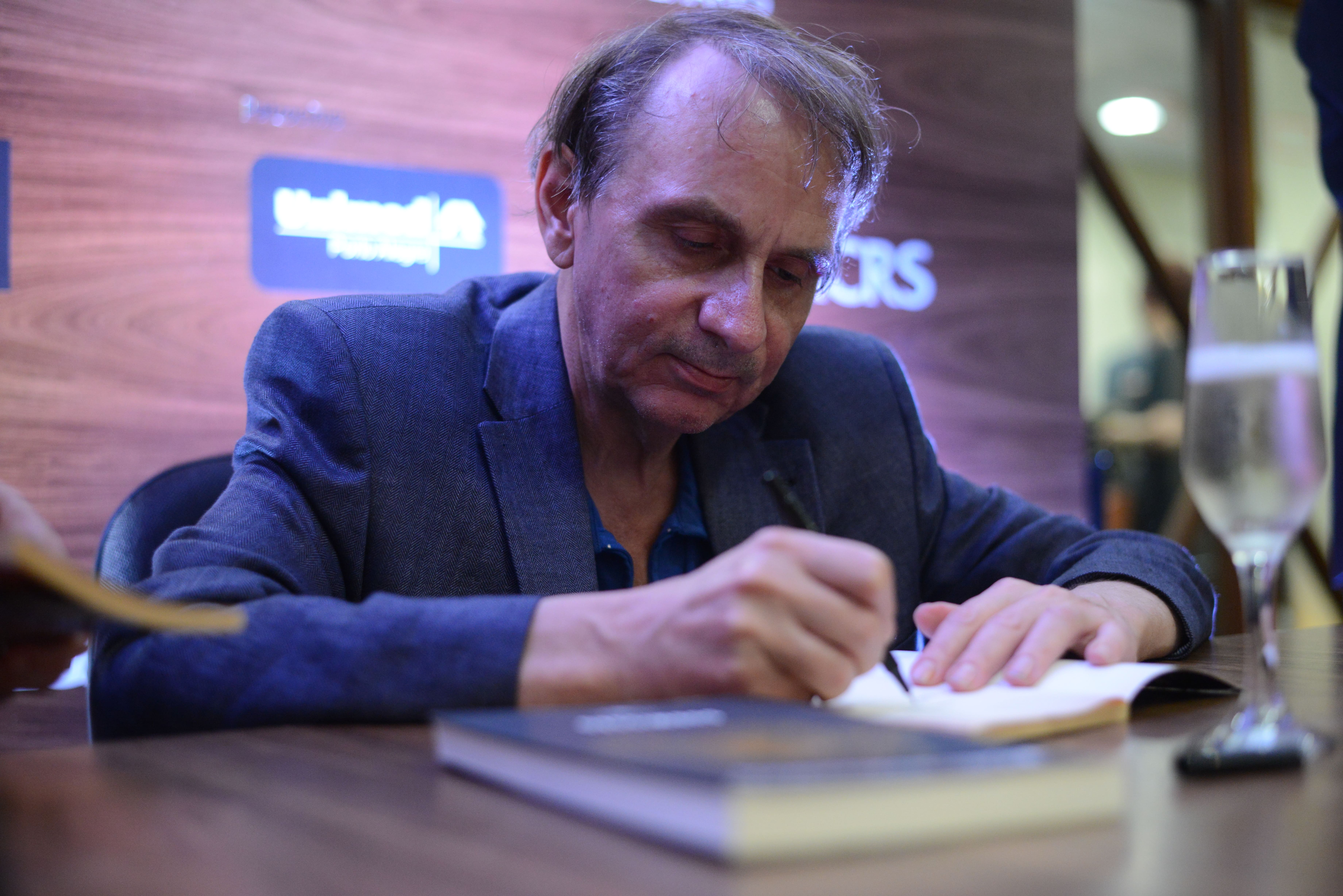
Peter van Duijvenvoorde submitted parliamentary questions about the criminal proceedings against French writer Michel Houellebecq. On 10 November, he was formally charged in Nanterre over statements published in the November 2022 issue of Front Populaire. The questions address freedom of expression, the risk of self-censorship, and whether the Netherlands should raise the case with France or at European level.
Questions to the Ministers for Education, Culture & Science, Foreign Affairs and Justice & Security regarding the criminal investigation into Michel Houellebecq and writers’ freedom of expression.
Questions put down by FVD MP Peter van Duijvenvoorde, 17 November 2026
Are you aware of the report that, on 10 November 2026, the French writer Michel Houellebecq was formally charged by an investigating judge in Nanterre with complicity in incitement to discrimination, hatred or violence on the basis of statements made in the November 2022 issue of the magazine Front Populaire?¹
Do you have any further information regarding the statements to which this charge relates and the current status of the proceedings? If not, are you prepared to seek information on this matter?
Do you agree that freedom of expression also affords protection to statements that are perceived as shocking, disturbing or offensive, and that this protection is essential for a free intellectual debate?
What significance do you attach to the freedom of writers to describe social tensions, to paint uncomfortable visions of the future and to criticise religious, cultural and political developments?
Do you share the view that predicting violence is, in itself, distinct from inciting violence, and that this distinction must be carefully taken into account in the criminal assessment of statements?
Are you familiar with the position taken by Houellebecq’s lawyers that his statements do not constitute an incitement to violence, but rather a warning about possible social developments? How do you take this distinction into account in your assessment of the concerns surrounding this case?
Are you aware of the statement issued by PEN Berlin on 12 November 2026, in which the writers’ association expresses its concerns regarding the investigation into Houellebecq and the potential chilling effect of criminal proceedings?²
Do you recall that, in response to parliamentary questions regarding the arrest of Turkish writers and publishers, Minister Rosenthal stated that freedom of expression was under pressure due to the large number of legal proceedings against writers, amongst others, and wrote: ‘This increases the risk of self-censorship in the media’?³
Does the Government still endorse the principle set out in that response, namely that legal proceedings against writers can contribute to self-censorship, even before a court has handed down a conviction?
In your view, could this deterrent effect also occur in criminal proceedings against writers within Member States of the European Union? If so, how do you assess that risk in the Houellebecq case?
What significance does it have for your assessment of that risk that Houellebecq was formally charged almost four years after the publication of the interview, whilst it remains uncertain whether the case will lead to a trial?
What specific criteria does the Government apply when deciding whether to comment publicly or through diplomatic channels on foreign criminal proceedings against writers?
Can you explain how these criteria are applied to the Houellebecq case and what circumstances would prompt the Government to express concern about this matter?
How do you ensure that, when applying these criteria, the same standards apply to writers with differing political, religious and social views?
What significance does the independence of the judiciary have for the Government’s scope to express concerns about the consequences of criminal proceedings for freedom of expression?
How does any reluctance in the Houellebecq case relate to the government’s earlier position, as expressed by Minister Rosenthal, that the Netherlands had held the Turkish government to account – both bilaterally and through the EU – regarding the importance of press freedom and freedom of expression?³
Do you share the view that membership of the European Union should serve as a reason to hold one another to high standards regarding the protection of freedom of expression? How is this principle reflected in relations with France?
Are you prepared to draw the attention of your French counterparts to the importance of freedom of intellectual debate and the prevention of self-censorship amongst writers, partly in response to the concerns raised by PEN Berlin regarding this matter?
Are you prepared to raise the issue at European level regarding the potential chilling effect of criminal proceedings against writers and the importance of carefully distinguishing between the description or prediction of violence and incitement to violence?
Could you answer these questions separately and, in doing so, set out in concrete terms what steps the Government will or will not take in response to the Houellebecq case, stating the reasons for its decisions?
Sources
¹ Le Figaro, 10 November 2026, “Writer Michel Houellebecq charged following comments on Muslims and the ‘great replacement’”.
² PEN Berlin, 12 November 2026, “On the Investigation into Michel Houellebecq”.
³ Appendix to Parliamentary Proceedings II 2011/12, no. 1025, answers from Minister Rosenthal, received on 28 December 2011, in particular the answers to questions 4 and 5.

Peter van Duijvenvoorde
Member of Dutch Parliament for FVD
Member of Dutch Parliament for FVD
Related articles
 Politics
Dutch Government Refuses to Address Key Questions on Russia and the War in Ukraine
 Politics
Is a reduction in gas tax impossible due to a European agreement, or are there more hidden rules at play?
 Politics