Is a reduction in gas tax impossible due to a European agreement, or are there more hidden rules at play?
If the Netherlands were to lower the tax on natural gas to ease the burden on households now that energy prices are skyrocketing, this would not be without consequences. If the government were to implement this measure, the state risks missing out on hundreds of millions of euros from the European COVID-19 Recovery Fund. The Rutte IV government has made this agreement with Brussels, as emerged during a recent committee debate.
It had already emerged that a number of forthcoming or already implemented Dutch policies are linked to the billions in the European COVID-19 Recovery Fund. Now that it appears the tax on natural gas cannot be reduced without Brussels’ involvement, this raises a much broader question: which other national laws and measures are linked to European funding, and what does that say about Dutch sovereignty?
This may not only concern the gas tax, but also the pension system, air passenger duty, CO₂ levies, vehicle taxes, the self-employed tax allowance and compulsory incapacity insurance for the self-employed. The House of Representatives has formal authority to decide on these matters, but if it were to take a different decision, it would run the risk of the Netherlands missing out on hundreds of millions or even several billion euros due to agreements that successive governments appear to have made with Brussels without parliamentary consent. This is an absurd reality that directly contradicts the House of Representatives’ position as the highest decision-making body in the Netherlands.
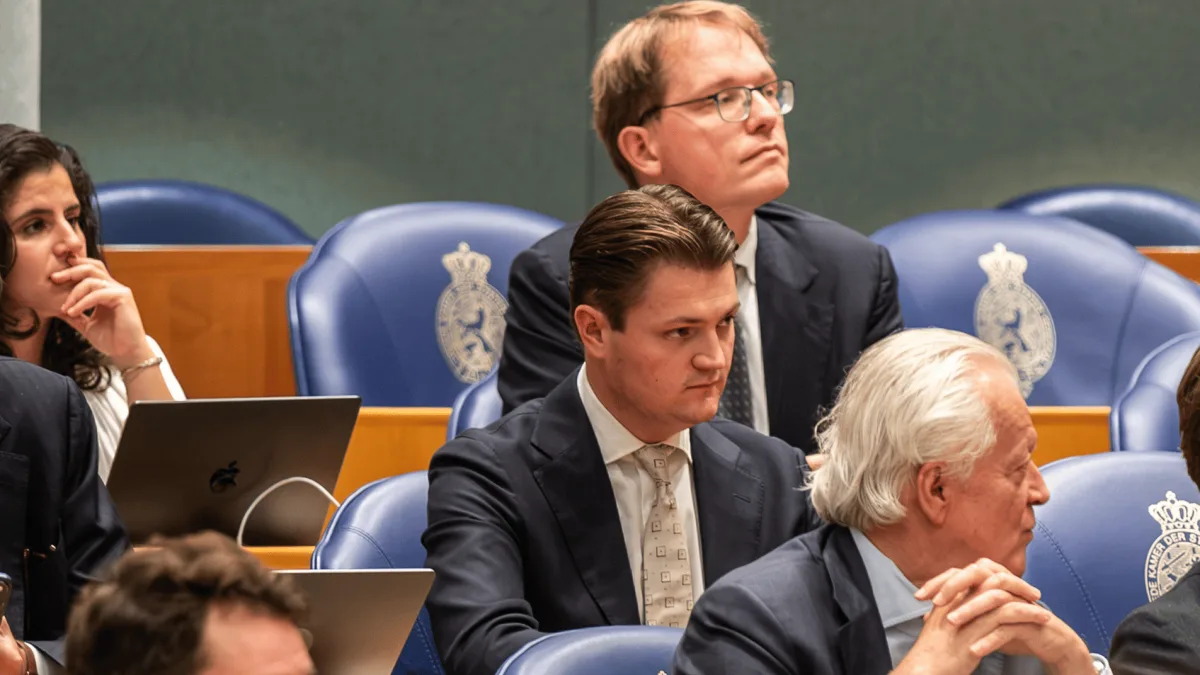
That is why MPs Milan Schenk and Pepijn van Houwelingen are tabling parliamentary questions to Prime Minister Rob Jetten and Finance Minister Eelco Heinen. The FVD MPs are demanding a full overview of all agreements that successive governments have made with the European Union in the context of the European COVID-19 Recovery Fund, how much money is involved, and what the (financial) consequences would be if the Netherlands were to amend or reverse a measure.
It is of the utmost importance that the Dutch public are made aware of what powers – and to what extent – governments have ceded to the EU in areas such as taxation, pensions and social security. Forum for Democracy wants to get to the bottom of this. It is unthinkable that the House of Representatives should de facto lose its freedom of decision-making simply because the Netherlands might otherwise miss out on billions.
Read all the parliamentary questions below:
Written questions from MPs Schenk and Van Houwelingen (both FVD) to the Prime Minister and the Minister of Finance regarding Dutch agreements with the European Union in the context of the COVID-19 Recovery Fund
Is the Government aware of the revelation in a recent committee debate that the Netherlands cannot reduce the tax on natural gas without risking the loss of up to 600 million euros in funding from the European COVID-19 Recovery Fund?
Is it true that the Rutte IV government has promised the European Commission and/or other EU institutions to increase the tax on natural gas in exchange for funding from the European COVID-19 Recovery Fund? If so, who made this agreement on behalf of the Netherlands, has the House ever been explicitly informed of this, and has the House ever explicitly consented to it?
Can the government share a comprehensive overview with the House of Representatives detailing all the measures that the Netherlands has promised to the European Commission and/or other EU institutions in the context of the European COVID-19 Recovery Fund, including agreements that have subsequently been amended or scrapped?
Can the Government specify in that overview, for each agreement, which government made the agreement, which Dutch law and/or measure is linked to it, how much money is involved, and what happens in practice if the Netherlands fails to implement the agreement?
Which Dutch laws, measures and/or decisions can the House not reject, amend or reverse without (financial) consequences due to these commitments? Is it correct that, in addition to the tax on gas, this also applies to forthcoming or already taken decisions concerning, amongst other things, the pension system, air passenger duty, CO₂ levies, vehicle taxes, labour market policy, the self-employed person’s allowance and compulsory incapacity insurance for self-employed workers without employees?
Does the Government consider that the House of Representatives can still decide openly and freely on Dutch laws, measures and/or decisions when rejecting, amending and/or reversing them could cost the Netherlands hundreds of millions or even several billion euros?
How much money has the Netherlands received so far from the European COVID-19 Recovery Fund, how much is still outstanding, and how much could the Netherlands still miss out on? Please provide a detailed explanation.
How much has the Netherlands itself paid, directly and indirectly, into the European COVID-19 Recovery Fund; how much will the Netherlands still have to pay into it in the future; until when, at the latest, will these payments continue; and, in various scenarios, what will the Netherlands’ net balance be? Please provide a detailed explanation.
Until when will the Netherlands remain bound by the agreements made under the European COVID-19 Recovery Fund? Please provide a detailed explanation.
Can laws, measures and/or decisions resulting from the agreements made be amended or reversed at a later date, without consequences such as recovery, once the payment has been disbursed by the European Commission and/or other EU institutions? If not, why not?
Can the Netherlands still withdraw from agreements made with the European Commission and/or other EU institutions? If so, what will happen to the funds in the European COVID-19 Recovery Fund that were earmarked for the Netherlands, and what exactly would this cost the Netherlands? If not, does the Government consider that the Netherlands still has full policy autonomy regarding its own laws, measures and/or decisions?
Is the Government prepared to make public all underlying agreements and correspondence with the European Commission and/or other EU institutions in the context of the European COVID-19 Recovery Fund, and to ensure that, from now on, no Dutch laws, measures and/or decisions are linked to European funding without the prior, explicit consent of the House? If not, why not?
Can the Government answer these questions separately and as soon as possible?

Forum for Democracy
Dutch Political Party
Dutch Political Party
Related articles
 Politics
Dutch Government Refuses to Address Key Questions on Russia and the War in Ukraine
 Politics
Blurring the line between alleged extremism and legitimate viewpoints threatens to narrow public debate
 Politics