Prime Minister Jetten says he wants to “punch opponents in the face”; FVD MP Gideon Van Meijeren tables parliamentary questions
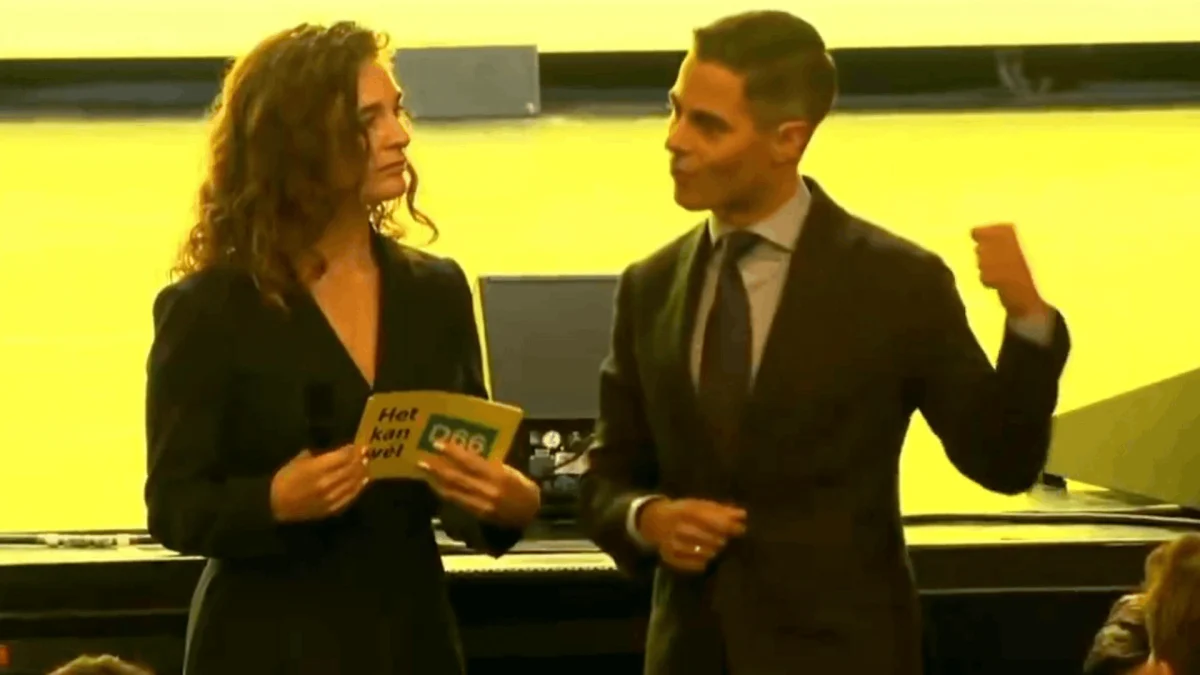
At the annual conference of the ruling D66 party on 27 September, Prime Minister Rob Jetten said that “well-organised and well-funded organisations” were behind attacks on minorities. His message to them: “We’re not going to let those lot win, but we’re going to punch them in the face.” The chair of the day described this as “very good, combative words”.
Baseless accusations
According to Jetten, these organisations want “to target a small group first, then an ever-larger group”, in order “simply to gain more power for themselves and line their own deep pockets”. He does not say which organisations these are. Nor does he say which attacks they have organised or who has enriched themselves as a result.
This is not the first time. On 5 August, Jetten had already spoken of “toxic, well-organised and heavily funded groups” who were allegedly hiding “behind the façade of freedom of expression”. FVD MP Gideon Van Meijeren wants to know who Jetten is referring to and on what he bases his claims.
Double standards
Gideon Van Meijeren himself was prosecuted for incitement, following a speech in which he repeatedly called for peaceful and non-violent resistance. The Public Prosecution Service demanded 200 hours of community service. The Court of Appeal acquitted him in March.
In 2023, during a debate on NOS op 3, Jetten told FVD that politicians have “a very great responsibility” to weigh their words carefully. He claimed that FVD’s rhetoric regarding transgender people would “ultimately lead to more homophobia”. Less than three weeks later, Thierry Baudet was struck on the head with a beer bottle during an election rally in Groningen.
Now that Jetten is Prime Minister, he is himself announcing that he will punch opponents in the face. He will have to apply the same standards he imposes on others to himself as well. Gideon Van Meijeren wants to know whether the Prime Minister stands by his words, or whether he will retract them.
Read the 26 parliamentary questions below.
Questions from MP Gideon Van Meijeren (FVD) to the Prime Minister, Minister for General Affairs, regarding his remarks at the D66 conference on 27 September 2026
1. Do you recall your remarks at the D66 conference on 27 September 2026, where you stated that “those attacks on the LGBTI community, or the attacks on women, or the attacks on minorities of colour or faith – they do not just come out of the blue”, that these involve “well-organised and well-funded organisations that try first to target a small group, then an ever-larger group, simply to gain more power for themselves and line their own deep pockets”, to which you added: “we’re not going to let those lot win, but we’re going to punch them in the face?
2. Do you endorse the view of the Advisory Division of the Council of State that government ministers remain “politicians as well”, that “the fact that government ministers fulfil different roles” places special demands on them, that “the extent to which a clear distinction between roles has been maintained” may be one of the factors in assessing their actions, that Parliament’s confidence in a government minister “is not solely linked to the policy pursued by the minister, but may also depend on the minister’s conduct in their private life, which is separate from their responsibilities as a minister”, that the House may pass judgement on this, “even where the conduct in question strictly speaking falls outside the scope of ministerial responsibility”, that the Prime Minister has a “special role” in matters of integrity, and that it is important that he “not only sets a good example in word and deed, but also guides, advises and, where necessary, holds fellow ministers to account in this regard”?
3. In the light of the above, do you acknowledge that your statements at the conference, regardless of whether you were speaking there in your capacity as party leader, inevitably also reflect on your role as Prime Minister, and that you are accountable to the House in this regard? If not, why not?
4. In light of the above, how do you assess your own words?
5. Do you also count civil society organisations or parties represented in the House of Representatives that are critical of the Government’s LGBTI policy amongst the organisations you referred to? Can you provide the House with a list of the names of the organisations you referred to?
6. Which ‘attacks on minorities’ did you mean exactly? Are you referring to criminal attacks, such as acts of violence or threats, or also to non-criminal ‘attacks’, such as political expressions and (lobbying) activities that fall within the bounds of the law?
7. On what grounds do you claim that these attacks are organised or funded by the organisations you referred to? Can you specify, for each organisation, which specific attacks can be attributed to it? If not, why not?
8. What evidence is there that these organisations are following a strategy whereby, in your words, they “try to target a small group first, then an ever-larger group”? Which documents, studies or intelligence form the basis of that claim?
9. What evidence is there that the aim of these organisations is ‘simply to gain more power for themselves and to line their own deep pockets’? What documents, studies or intelligence underpin that claim?
10. If you are unable to name the organisations you are referring to, or to provide sound evidence for your claims regarding their strategy, their aim and their involvement in attacks, why did you make these claims in public?
11. Do you recall your speech on 5 August 2026 at the opening of the Human Rights Conference, in which you stated that “behind the façade of freedom of expression” lurk “toxic, well-organised and heavily funded groups” that “spread hatred and push their own agenda”?
12. Which groups did you mean on 5 August when you referred to those hiding “behind the façade of freedom of expression”? Are these the same organisations you referred to on 27 September? On what basis do you claim that when these groups invoke freedom of expression, this constitutes a “façade”, or a deceptive pretence?
13. Are the resources you announced on 5 August 2026 – including €7.5 million per year for the safety of the queer community and a public campaign aimed at combating discrimination and disinformation – being used against the groups you referred to?
14. Who determines which statements are classified as ‘disinformation’ in this context? On the basis of which sources is it determined whether information is true or false? Is it true or false, based on those sources, that there are two sexes (male and female)? Is it true or false, based on those sources, that men can become pregnant and give birth to a baby?
15. Given that you state that social media companies ‘hardly moderate hate content at all’ any more, is the Government putting pressure on these companies to remove or make less visible statements concerning the groups you refer to? If so, in what way and on what legal basis? How does this relate to freedom of expression and the prohibition of censorship?
16. Who exactly did you mean by ‘those people’: the organisations you referred to, the people who lead them, the people who carry out attacks, or others?
17. Do you acknowledge that ‘punching someone in the face’ in everyday language means that someone receives a hard blow to the head and that physical violence is therefore being inflicted?
18. Did you realise during the conference that you did not actually mean what you said verbatim and that you reject physical violence against ‘those people’? If not, why not?
19. Can you rule out the possibility that listeners or viewers might interpret your words as a justification for physical violence against people they regard as ‘those lot’? If so, how can you rule that out?
20. Do you recall that on 26 May 2026, in the House of Representatives, during the debate on the normalisation of violence in politics and society, you stated: “What we say here in the House of Representatives, as Members of Parliament or as members of the Cabinet, makes a huge difference. Our words have a direct impact on what happens on the streets. When politicians call for resistance, they are inciting citizens against local authorities, against emergency services staff and against people working in, for example, asylum centres.”? Do you acknowledge that, if, in your view, a call for resistance already incites citizens, this applies all the more to a Prime Minister’s announcement that ‘we’ are going to ‘punch them on the face’? If not, why not?
21. Do you recall the NOS op 3 election programme of 1 November 2023, in which you told Thierry Baudet, the then party leader of Forum for Democracy, that “that appalling language that you and your colleagues always use about transgender people in the Netherlands ultimately leads to more homophobia in the Netherlands”? Do you recall holding him and his party responsible for homophobia? Do you recall that, less than three weeks later, Mr Baudet was struck hard on the head with a beer bottle because of his criticism of LGBTI policy? Do you consider the possibility that your statements contribute to a climate in which it is deemed legitimate to use violence against people who criticise LGBTI policy? If not, why not?
22. Do you acknowledge that, according to established case law, incitement is defined as “instilling in others the idea of committing a criminal offence, attempting to establish the view that such an offence is desirable or necessary, and arousing the desire to carry out that offence”? How do you assess your own words in the light of this case law?
23. Do you acknowledge that the European Court of Human Rights has ruled in this regard that a decisive factor is whether a statement was made against a sensitive social or political backdrop, or in a climate of hostility and hatred, in which it could provoke unlawful acts and expose individuals to a real threat of physical violence? Do you acknowledge that you yourself describe the context of your statement as a climate in which ‘expressions of homophobia are becoming increasingly overt and virulent’? How do you take account of this context, which you yourself have outlined, when assessing your own words?
24. Do you share the view that freedom of expression must be interpreted broadly, both for members of the opposition and for the Prime Minister, and that criminal law should not be used to regulate political opponents? Do you also share the view that confidence in the rule of law requires that the same standards apply to everyone, regardless of political affiliation? If so, how does the Government ensure this?
25. Do you continue to stand fully by your statements of 27 September 2026? If not, which parts do you retract?
26. Can you answer these questions separately and within the standard timeframe?
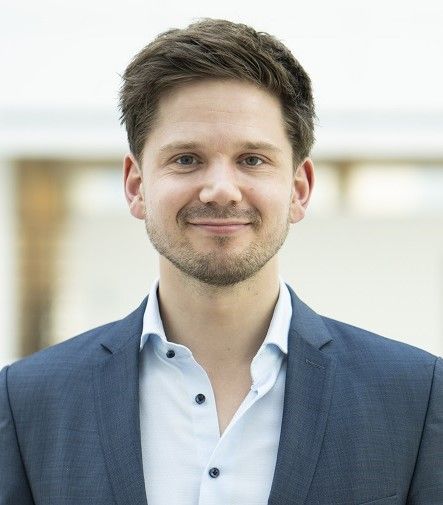
Gideon van Meijeren
Member of Dutch Parliament for FVD
Member of Dutch Parliament for FVD
Related articles
 Politics
Is a reduction in gas tax impossible due to a European agreement, or are there more hidden rules at play?
 Politics
Blurring the line between alleged extremism and legitimate viewpoints threatens to narrow public debate
 Politics