General Political Considerations 2026: Ralf Dekker’s Address to the Dutch Parliament
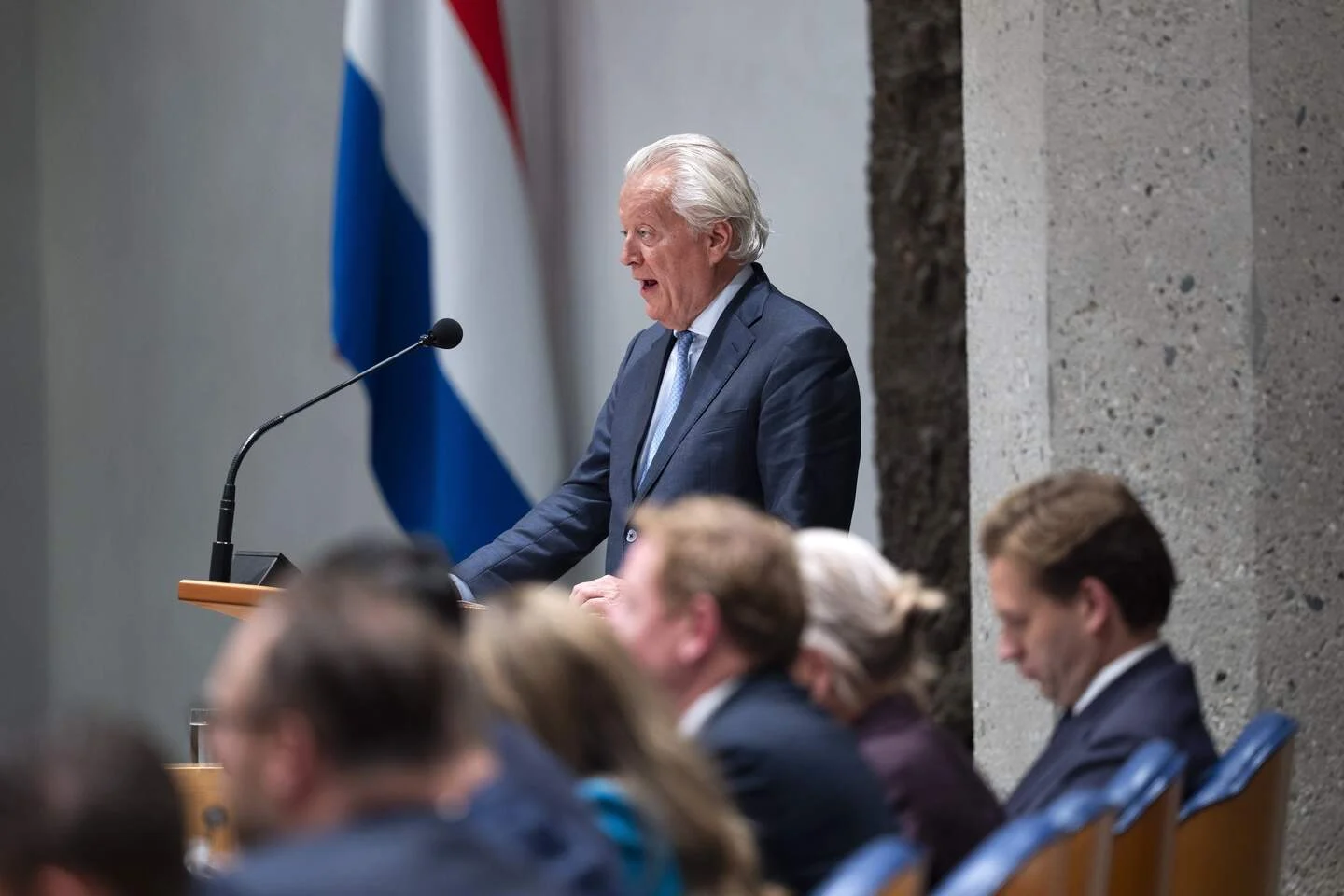
Speech to the Second Chamber of the States-General of the Netherlands
(Lower House of the Dutch Parliament)
Ralf Dekker MP, interim leader of the FVD parliamentary group.
16 September 2026
I would like to begin by sharing some important and particularly joyful news. The leader of our parliamentary group, Lidewij de Vos, whom I am temporarily standing in for here, gave birth to a beautiful daughter during the night between Saturday and Sunday. Both mother and baby are doing very well. On behalf of the entire FVD parliamentary group, we extend our congratulations to the young family.
The Dutch public notice it every week when they go shopping. Groceries are more expensive. Energy is becoming more costly, and increasingly uncertain too. Housing is becoming unaffordable for more and more people. Mass immigration remains high, whilst the housing market, healthcare, education and social security have long since been unable to cope with that pace.
The economic outlook is bleak. Our industry is under pressure. The electricity grid is becoming overloaded. And whilst we debate here, the wars in Ukraine and the Middle East continue to rage. They are costing countless lives, swallowing up ever more billions and pushing Europe further into a downward spiral with no clear way out.
That is the grim reality of 2026.
For years, the government’s plans have merely been a continuation of existing policy. And so it is again. Carrying on along the path already set out. It makes no difference whether D66, the VVD or the CDA takes the lead; the policy remains the same: further growth in spending, increased burdens. Carrying on with climate policy, nitrogen, immigration, the EU, NATO wars.
This worrying trend is not being reversed. It is being mindlessly continued.
When I left the banking sector in 2018 and joined Forum for Democracy, I entered party politics for the first time. A year later – perhaps not unrelated to this – FVD became the largest party in the Netherlands and I was elected in North Holland. That marked the start of a turbulent learning curve: exclusion, conflicts, splits.
Then came my experience in The Hague. It was a disappointment to me that the substance of issues was rarely addressed. Instead, the political game almost always revolved around tricks, rhetorical quibbles and cutting personal attacks.
In short, no debate, no substantive exchange of ideas, but more of a contest to score points for the sake of the stage.
And then came the coronavirus.
We were the only ones to raise fundamental questions about the underlying assumptions on which the policy was based.
The mortality rate of the virus.
The effectiveness – and the risks – of the vaccines.
The cost (both economic and social) of the lockdowns. And so on.
And that turned out to be a red line. Criticising the EU, climate change or immigration had already been difficult. You were constantly dismissed, treated with contempt, laughed at, ignored.
But asking fundamental questions about lockdowns and the vaccination campaign actually made you indecent. Dangerous. Colleagues and friends turned their backs on you. A debate about a ‘party ban’ got underway. A blockade in the mainstream media, which is still ongoing, was imposed.
Then came Ukraine.
Once again, FVD took a fundamentally different stance.
We said: this is an unwinnable war with a long, complex history, in which the West itself, moreover, has quite a lot to answer for. A war which – and this is the most important thing – can only end through diplomacy.
Diplomacy. A forgotten concept, it would seem.
And the Russian position cannot be ignored. Diplomacy requires both parties to sit down at the table and take each other seriously.
Our refusal to go along with ever-increasing escalation, and our vision for a completely different approach, met with equally categorical rejection. People were furious. There was not the slightest interest in the background to our carefully considered position.
Renowned experts from home and abroad, whom we wished to invite to round-table discussions in the House, were flatly refused.
Only those who agreed with their own views were welcome.
They called us traitors. Putin-lovers. Yes, we must surely have been ‘bribed’.
After all, surely no one else could possibly think that way about this matter?
What has struck me time and again is not that people disagree. That is part and parcel of politics. That is the very essence of democracy. We love that. We embrace it.
But what bothers me time and again is the constant assumption of bad faith.
Not: ‘Your analysis is wrong’ (or rather: ‘There is absolutely no interest in that analysis!’) – no, people would rather cry out: ‘Your motives are suspect’.
We see this pattern time and time again.
There is a curious asymmetry to it. Suggestions that FVD has bad intentions are almost the norm. You hear it all the time. Conspiracy theorists. Making a fuss for the sake of it. Putin lovers. Anti-rule of law.
But when we say that institutions, too, have interests, biases and groupthink, all hell breaks loose. Then we are fuelling so-called ‘anti-institutional extremism’, as the AIVD now characterises political opposition.
Uncritical adherence to institutions is regarded as a civic duty.
But trust that must not be questioned is not trust. It is obedience. Servitude. Submissiveness. Perhaps even: naivety.
Democracy – in its true sense, genuine democracy – is organised scepticism.
It is based on the recognition that no one has a monopoly on the truth. Not the government. Not science. Not journalism. Not the FVD either.
But that recognition, that realisation, seems to have completely vanished from the current establishment.
In short, we have lost something.
Call it magnanimity.
Call it humility.
The willingness not immediately to view a political opponent as a bad person. Keeping open the possibility that someone with whom you fundamentally disagree may have seen something you might have missed.
That requires an awareness of human fallibility – a core conservative value.
Unfortunately, that is completely lacking.
On almost every – yes, perhaps even every – major issue, a single, morally correct position has emerged: climate change, Covid-19, Ukraine, immigration, the EU, nitrogen.
Anyone who expresses doubt is in the wrong and has crossed a moral line.
This has consequences. I was there when Thierry Baudet was struck on the head with a beer bottle in Groningen. That could easily have ended very differently. If politicians are dismissed for years as dangerous, lacking in integrity and morally wrong, we should not be surprised if some people draw violent conclusions from this.
Those in positions of authority – politicians, journalists, judges, civil servants and scientists – are people too. And so they are fallible. And susceptible to this kind of framing. That is precisely why this House should set an example: fewer labels, less casting of suspicion. More reasoned argument. More curiosity. More magnanimity.
Another – related – phenomenon is the erosion of personal responsibility. I saw this at close quarters in the banking sector. Experience and personal judgement did not fit into spreadsheets and were viewed with suspicion. From then on, models, procedures and compliance were supposed to be the answer.
Ready-made protocols.
If things go wrong following a decision you have made yourself, you have to answer for it. That can be unpleasant. Painful.
A protocol is safer. A standardised procedure, an advisory committee of experts.
Because if something does go wrong, you are not responsible.
Because of this moral condemnation, the refusal to allow dissent and a rigid adherence to protocol, many developments in recent decades have simply carried on as a matter of course – perhaps even spiralling out of control – developments which, in reality, nobody really wanted.
There has been a constant influx of huge numbers of foreign nationals, about which, with hindsight, almost everyone says: there really ought to have been fewer. In major cities, more than half the pupils in school classes are now children of foreign origin. Asylum seeker centres are springing up like mushrooms. Insecurity on the streets has increased.
The justified concern for the environment in the 1970s has degenerated into such an obsession with nature, nitrogen and the climate that traditional Dutch landscapes are at risk of disappearing. They are being transformed into industrial-looking wind farms and solar fields. Or, through rewilding, they are becoming wildlife parks with limited public access. With wolves. Stifling nitrogen regulations are bizarre and unique in the world.
This is making the survival of the farming industry – in many respects the pride of the Netherlands – impossible. And the restrictions on fishing, too, know no bounds, supposedly to protect fish habitats. Meanwhile, the sea is being crammed full of wind turbines that thoroughly disrupt marine life.
On the roads, ever-increasing demands are being placed on motorists. Ever-higher fines for minor offences, unaffordable fuel, environmental zones, average speed checks, the drive for zero road casualties – an absurd and unachievable target that undermines our entire mobility.
Our gas and energy infrastructure – the Netherlands as an energy exporter, the gas hub of Europe – is being dismantled at a rapid pace. Here too, we seem to have gone too far with protocols and procedures – with tunnel vision. Now we have to import energy – even though we have only just poured concrete into the wells of Western Europe’s largest gas field, right beneath our own Groningen.
Meanwhile, our electricity grid is also overloaded. This is due to the erratic, fluctuating output from wind and solar power, not to increased electricity consumption. As a result, our businesses and homes can no longer be connected to the grid.
The country is grinding to a halt. A poor solution has been found for a non-existent problem.
And then there is the manufacturing sector.
The lives of small and medium-sized enterprises are being made increasingly difficult by regulations and cost pressures.
The Netherlands has been heavily de-industrialised. We can hardly manufacture anything ourselves any more and are entirely dependent on countries, often far away. Small-scale business activity is disappearing more and more.
Husband, wife and children – the traditional single-earner household has almost become a curiosity.
Even from a tax perspective, this former cornerstone of society – the family – is heavily penalised.
For young people, many old certainties have been swept away. Learning a proper trade is rare; most courses lead to unclear working environments. And it is a constant rat race.
This is also due to the normative role of social media. Spectacular success is a must. Deviant sexual behaviour is being normalised – and criticism of it is being made taboo.
Starting a family has become a financial and social challenge. Young people often continue to live with their parents until well into their 30s. Many young people suffer from stress and burnout. The number of suicides has risen dramatically.
Pension provision is also under pressure. For years, the major pension funds have lived in luxury, supported charitable projects and squandered enormous sums through activist investments. The Future Pensions Act introduces uncertainties and new costs. Here too, projects have continued for years because they could no longer be stopped.
Because changing government activities requires genuine leadership – which we have largely outsourced – the size of the state continues to grow. That is why taxation must be handled in ever more creative ways. There is now almost nothing left to be gained from income tax and excise duties, so the focus is increasingly shifting to wealth. Box 3 tax, inheritance tax and gift tax – these are all assets on which tax has already been paid several times over.
That is unfair.
Inheritance tax is fundamentally unjust and should, of course, be abolished between parents and children. I will table a motion on this during the second session.
And then there are the international organisations, such as the EU, the UN and NATO, and treaties such as the Refugee Convention and the European Convention on Human Rights, to which we have bound ourselves hand and foot and to which we simply go along with the flow.
The costly, senseless war in Ukraine, the trade agreements that flood our markets with products, thereby destroying the competitive position of our farmers and manufacturing industry – it is all part of the same trend, the same mindset.
No one is questioning it. Our country is being eroded further and further.
I shall now present my conclusions.
FVD was founded because major developments are heading in the wrong direction: sovereignty, immigration, energy, bureaucracy, the escalation of conflicts, and a ruling class that is far too detached from the people.
That we no longer feel at home in our own country.
That our prosperity is being taken away from us.
We have often warned about things that were dismissed in the past: the disastrous war in Ukraine, the unaffordable and absurd energy transition, the ridiculous yet dramatic nitrogen restrictions, endless immigration, the power of Brussels, and the Covid-19 measures.
We were often right.
But there is also hope.
A new generation – with whom I am very much involved thanks to Forum for Democracy – gives me hope for the future. When I was 25, I couldn’t care less about the opinions of the over-65s. They were old-fashioned, did nothing but moan about the war and hadn’t achieved a thing.
My generation knew far better. That was rather arrogant of us.
Now I’m experiencing something quite different. The young generation I come across has wide-ranging interests and is open-minded. They try and explore all sorts of things and are hardly held back by taboos or forbidden thoughts. And whether you’re 35 or 95 – old in their eyes either way – what matters is whether you have something to say based on knowledge and experience.
Something they can learn from.
Something they can discuss and reflect on. Something from which they can draw direction for themselves and for society. That is the attitude towards the future that we need: open-minded, magnanimous and independent-minded.
If I go back to where I started - to the prices in the shops, to immigration that is straining our services, to the bleak economic outlook, to the wars in Ukraine and the Middle East which just go on and on.
That reality proves one simple thing: anyone who insists that everything is under control is denying reality.
Anyone who continues to dismiss those with differing views as dangerous is precisely shutting out the very voices that warned us earlier.
That is why the call to listen to one another is not about polite manners or going easy on each other in debate. It is a necessity. When old certainties begin to crumble, we need the critic.
Not because they are always right. The FVD does not deserve quite that much credit…
But because nobody is always right. And so you constantly need substantive opposition.
Democracy means that we can disagree wholeheartedly and still see one another as valued fellow human beings.
In thirty years’ time, our children will look back on things we assert with certainty today and ask: how could they have believed that?
That is precisely why what is needed now is: less moral judgement. More reasoned argument. Less conformism. Less fear of dissenting views.
More curiosity.
And… more room to admit mistakes.
That is the foundation of a mature, free society. That is what our democracy demands of us.
Thank you.
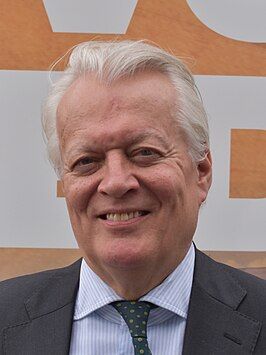
Ralf Dekker
Member of Dutch Parliament for FVD
Member of Dutch Parliament for FVD
Related articles
 Politics
Is a reduction in gas tax impossible due to a European agreement, or are there more hidden rules at play?
 Politics
Blurring the line between alleged extremism and legitimate viewpoints threatens to narrow public debate
 Politics