In a speech to Dutch parliament on 29 february, FVD party leader Thierry Baudet gave his vision on Dutch health policy.
Chairman,
Why is there any individual freedom at all? Why doesn't the state - which thinks it knows it all so incredibly well - just regulate everything in life? It is a serious question that comes to mind when you hear what is being discussed in the context of the “National Prevention Agreement” and the “Agreement for Healthy and Active Living”.
Public health is being discussed. All sorts of experts have identified things which, in their view, are not optimal for the physical condition of the body: sugar, smoking, drinking, partying, drugs, unsafe sex, and so on. We have also discussed mandatory seatbelt use, speed controls on motorways, rubber tiles at all children's playgrounds, etc. Indeed, between 2020 and 2022, our society lived with lockdowns, facemasks and semi-compulsory vaccinations.
All, again and again, to overcome supposed societal risks. To organise and optimise people's lives.
Imagine a world in which the government forces people to live optimally healthy lives. A world in which they might also be forced to make choices in other areas which - in the eyes of the experts - would be best for them. A choice of partner, for example. A choice of study - based on a character profile determined by artificial intelligence. A match for a job, a house, and so on. This could conceivably all be done very soon. Should we want that? Or are people also entitled to mistakes, to be inefficient? Can we make a case for that?
When I spent time in Oxford writing my doctorate, this was a familiar thought experiment. Later, when I started teaching political philosophy at Leiden and Tilburg Universities, I often discussed it with students. At the time it seemed mostly a theoretical idea - a "just imagine" question. But it has become more and more concrete, more and more real.
"Because yes," as Mrs. Tielen of the VVD just said, "society benefits from healthy people, and so do people themselves."
A watertight argument. More rules, more management, more control. Right? Or is there a catch? Are we overlooking something, in our endless drive to regulate people’s lives?
The argument for human freedom, in the midst of an ever-expanding group of pundits and experts who know best what to do with it, is quite difficult to make. Yet it is of great importance to make it, because I sincerely believe that when we forget that, civilisation comes to an end.
The first argument for human freedom, against the technocratic argument, is that experts can and do make mistakes all the time. They erred dramatically during Covid, for example. They may be wrong where “climate change” and CO2 and nitrogen are concerned.
It is Forum for Democracy's opinion that just about every so-called “expert” in the modern West is wrong on just about every subject - whether they are biologists who say that transgenders and non-binary people exist, or economists who say that the euro is good for our prosperity, or nutrition experts who say that eating vegetarian food is healthy and eating meat is bad. So why would you want to give those experts power over our lives? Rather not. Keep those experts out of my life, you might say.
But there is another more fundamental argument. It is not a matter of which choices are good and healthy but about whether the quality of life can be captured in such categories. In other words, the life of a human being, “ein Mensch” to put it in Yiddish, is perhaps not primarily body, but spirit. Not primary matter, but soul. Not a measured path, but a hero's story, a tragedy, a fire that may want to burn briefly - but then will be remembered forever in the hearts of us all.
Could it be that modern democracy, in which life is increasingly regulated by extremely well-meaning busybodies and control freaks, in its efforts to make life better for people, is actually losing sight of the core of life? Is it possible that we are going down a terrible path of sterilisation of life, where every risk and all beauty and greatness are also muted?
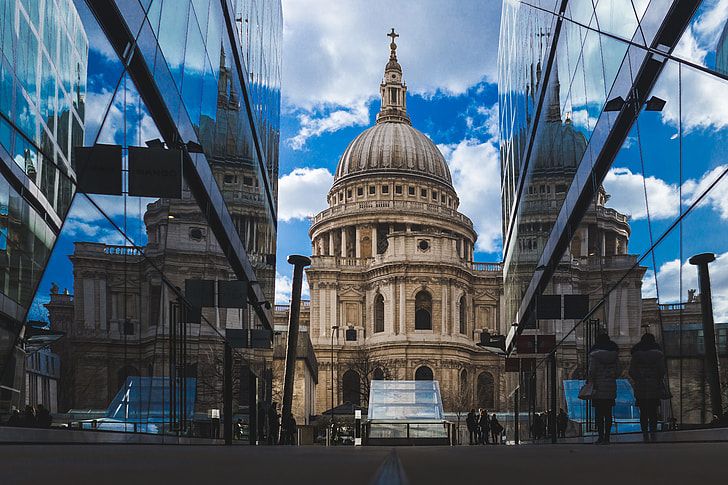
In the Middle Ages, the average life expectancy was 35 and we built cathedrals. Now the average life expectancy is 75 and we build the kinds of structures like the one where we are today.
I think that says something.
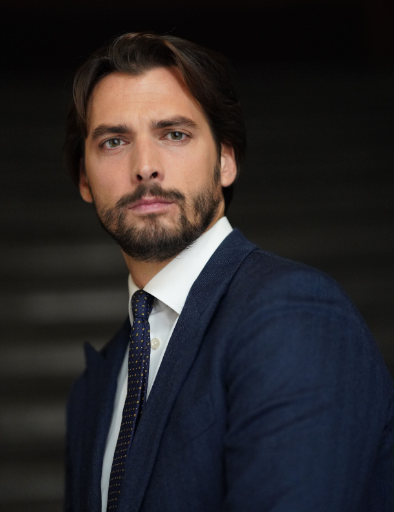
Thierry Baudet
Leader of FVD and Member of Parliament of the Netherlands
Thierry Henri Philippe Baudet (born 28 January 1983) is a Dutch politician, academic and author. He is the founder and leader of Forum for Democracy (FVD), and has been a member of the House of Representatives since 2017. He also serves as the party’s parliamentary leader.
Baudet was born in Heemstede into a family of partial Walloon ancestry. His forefather Pierre Joseph Baudet immigrated to the Batavian Republic in 1795 when his home in Hainaut was annexed by the French Republic, fleeing from conscription into the French Army. Baudet’s great-great-grandmother Ernestine van Heemskerck was born in the Dutch East Indies and was of partly Indonesian parentage. Baudet attended the Haarlem gymnasium, i.e. a high school with compulsory Latin and Ancient Greek. His first degree, from the University of Amsterdam, was in history, and from 2007 to 2012 he was a lecturer at Leiden University, where in 2012 he graduated as a Doctor of Philosophy with a thesis on national identity, European identity, and multiculturalism. This was co-directed by the philosopher Roger Scruton and was published in Dutch as The Assault on the Nation-State. An English translation was also published, called The Significance of Borders.
Related articles
 Politics
Is a reduction in gas tax impossible due to a European agreement, or are there more hidden rules at play?
 Politics
Blurring the line between alleged extremism and legitimate viewpoints threatens to narrow public debate
 Politics