How the government led by Geert Wilders’ Freedom Party has failed
Speech given to the Dutch Parliament by Thierry Baudet, 12 June 2025
Chairman,
I am beginning to understand better and better why Geert Wilders ran away from his responsibility last week with his tail between his legs: because today is accountability day, the day on which we evaluate the cabinet's policy over the past year, and boy, oh boy: what incredibly disappointing results the PVV has shown over the past year.
To be clear: I do believe that the other coalition partners, the VVD and the NSC, are difficult partners. But the extremely disappointing results on infrastructure, immigration, healthcare, mobility, and so on – they really are the PVV's own fault.
They were PVV ministries. They were PVV ministers.
First of all, immigration. As many as 314,000 immigrants entered our country in 2024.
That's a city the size of Utrecht.
The Spreading Act has still not been repealed even though the Immigration Minister, Marjolein Faber, from the PVV, could have just done it.
I will say it again, Chairman: this coalition has made a lot of choices with which Forum for Democracy disagrees, and the PVV has been thwarted both in front of and undoubtedly behind the scenes by coalition partners, but there was indeed an opportunity to reduce mass immigration, at least in parts. It is deeply regrettable that the PVV missed that opportunity. Our motion to develop the ten-point plan for a stricter asylum policy into concrete proposals was supported by VVD, BBB and NSC - but was blocked by the PVV itself!
So next year we can count on even more asylum seekers - and therefore even higher costs, even more crime, even more pressure on social services, even more housing shortage. The latter rose further last year - thanks to the growing population as a result of mass immigration - to a shortage of 400,000 homes.
Then there is nitrogen policy. There, too, the government failed miserably last year. According to minister Wiersma - of the Farmers’ Civic Movement, note! - the absurd, stupid nitrogen standards are (and I quote) ‘not scientifically questionable’. What a travesty. These standards are based on models that demonstrably bear no relation to reality. We are being held hostage to a modelling reality that could have been ended by removing Critical Deposition Values from the law and licensing.
It could have been done by Wiersma on day 1 of her term of office.
Instead, this cabinet has reduced air traffic at Schiphol Airport, a new speed limit of 130 km on the motorway has turned out to be a farce (because it applies only on three stretches of motorway) and farmers are being bought out or subjected to quasi-forced closures at breakneck speed.
And then there is the financial picture. In recent years, the term “subsistence security” has become the focus of political attention, and not without reason. The Dutch are rapidly becoming impoverished due to rising living costs - inflation - and a failing tax and benefit system. As in previous years, the collective tax burden was as high as 38 per cent. People can no longer buy a house, they don't have a penny left over for anything extra and they can no longer pay energy bills, healthcare costs, petrol, and so on.
What strikes me is that this Chamber, especially the cabinet parties, are constantly talking about the hard-working Dutchman but they mainly want to give presents to people on low wages: increasing rent allowance, energy allowances, whether or not to freeze social rent, while the vast majority of Dutch people, the middle class, don't benefit at all. The average hard-working Dutchman gets no care allowance at all but pays a higher care premium. The average Dutchman does not live in social housing, but does face higher housing costs because housing construction is locked up and our population (thanks to open borders) keeps growing. Foreign students now even get scholarships, while our loan students face ever higher interest rates after taking out the loan.
Chairman,
To get this country back on track, we need to do the following things:
- Cut mass immigration;
- Radically scrap the absurd nitrogen and climate policy;
- Reopen the Groningen gas field, there is 1,000 billion euros’ worth of gas in the ground there;
- And as DOGE cut government spending, regulation, radically simplify the tax system, increase the tax-free base for all working Dutchmen and all pensioners.
You will see that our country will then recover at a rapid pace, people will have money left over and start to feel at home in this country again. In short, the sun will start shining again as the cabinet promised but absolutely failed to achieve.
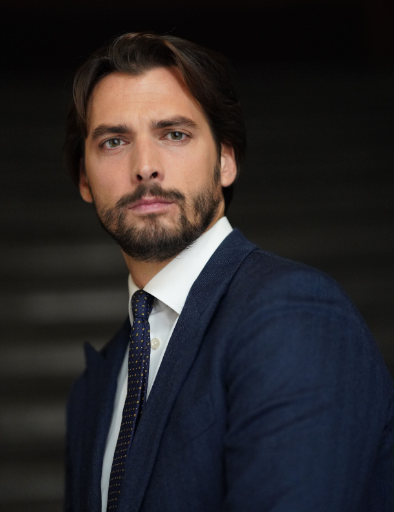
Thierry Baudet
Leader of FVD and Member of Parliament of the Netherlands
Thierry Henri Philippe Baudet (born 28 January 1983) is a Dutch politician, academic and author. He is the founder and leader of Forum for Democracy (FVD), and has been a member of the House of Representatives since 2017. He also serves as the party’s parliamentary leader.
Baudet was born in Heemstede into a family of partial Walloon ancestry. His forefather Pierre Joseph Baudet immigrated to the Batavian Republic in 1795 when his home in Hainaut was annexed by the French Republic, fleeing from conscription into the French Army. Baudet’s great-great-grandmother Ernestine van Heemskerck was born in the Dutch East Indies and was of partly Indonesian parentage. Baudet attended the Haarlem gymnasium, i.e. a high school with compulsory Latin and Ancient Greek. His first degree, from the University of Amsterdam, was in history, and from 2007 to 2012 he was a lecturer at Leiden University, where in 2012 he graduated as a Doctor of Philosophy with a thesis on national identity, European identity, and multiculturalism. This was co-directed by the philosopher Roger Scruton and was published in Dutch as The Assault on the Nation-State. An English translation was also published, called The Significance of Borders.
Related articles
 Politics
Is a reduction in gas tax impossible due to a European agreement, or are there more hidden rules at play?
 Politics
Blurring the line between alleged extremism and legitimate viewpoints threatens to narrow public debate
 Politics