Is there political persecution in the US? Republican campaigner Steve Bannon has been arrested in run-up to the midterm elections. Thierry Baudet puts down questions in Dutch Parliament.
- US opposition leader arrested just before election
- Witch hunt opened on Trump and his supporters: 35 house searches
- All the signs of political persecution
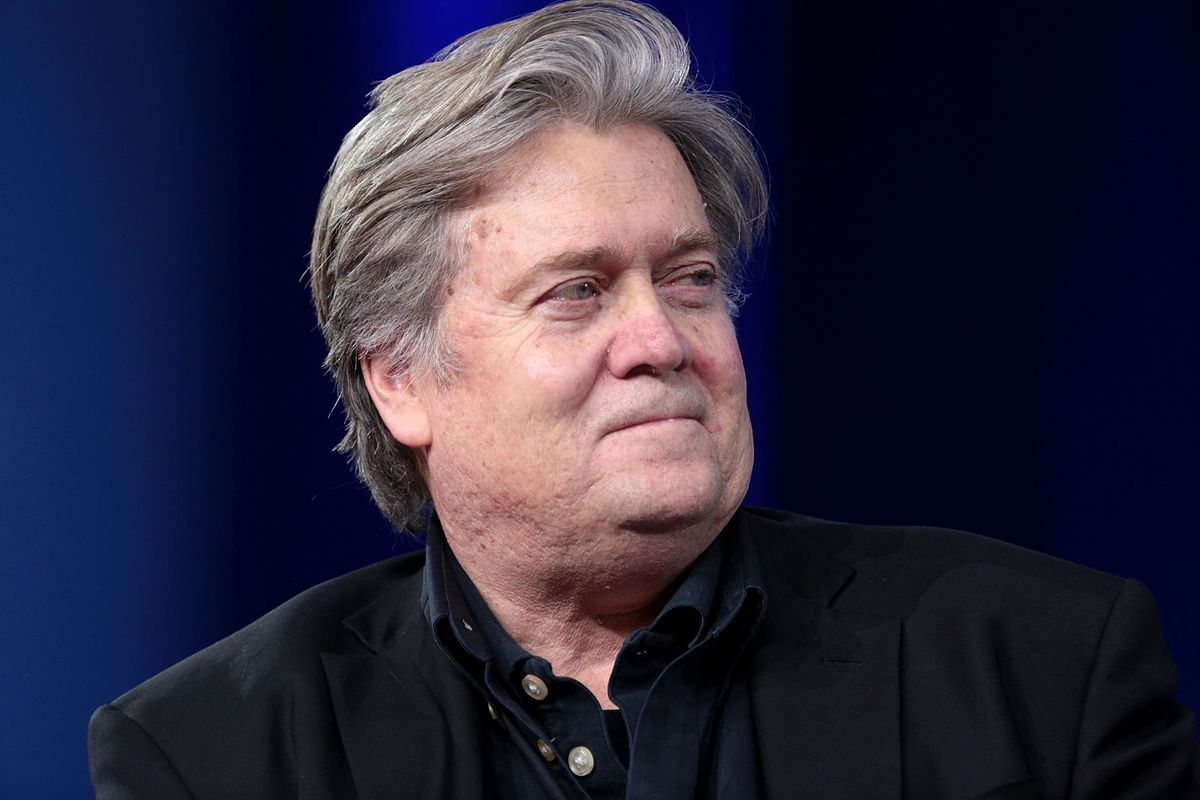
Steve Bannon, the political strategist and former top adviser to Donald Trump, has been charged in the state of New York with fraud and misappropriation of donor money. The timing of the indictment is striking, given the approaching midterm elections on November 8, which will include all 435 seats in the House of Representatives. Bannon is a key player in this election.
Prior to the trial, the FBI raided his home, a common intimidation tactic. For example, Trump's Florida home, Mar-a-Lago, was turned inside out by the security services. Bannon told Charlie Kirk that the same has happened to 35 influential supporters of the former president.1
Alvin Bragg, current New York County District Attorney and Bannon's accuser, was elected thanks to a campaign funded by George Soros.2 In contrast, Bannon, founder of The Movement, a European alliance of patriotic parties, is fiercely opposed to everything Soros' Open Society Foundation stands for.
Bannon's arrest appears to have been politically motivated. Exactly that which we accuse other world powers of doing, powers such as Russia and China, is happening in the United States: the silencing of democratic opposition.
That is why Thierry Baudet has put parliamentary questions to the Minister of Foreign Affairs, Wopke Hoekstra, to enquire as to his opinion on this highly remarkable state of affairs.
Written questions from MP Baudet (FVD) to the Minister of Foreign Affairs regarding the arrest of Steve Bannon:
- Are you aware of Steve Bannon's arrest in the US?
- Do you recognize that Steve Bannon, with his background in media and politics, plays an important role in organising democratic opposition in the US?
- Is the arrest of an opposition leader in the run-up to the election a cause for concern? If not, why not?
- Do you see a broader pattern of political justice in the United States, such as President Trump's Mar-a-Lago house search on August 8 of this year? If not, why not?
- What are your views concerning the interview with US President Joe Biden, which predates the prosecution of Steve Bannon, in which he states that he hopes Bannon will be “tried criminally”3? Do you think this is contrary to the governmental separation of powers and basic democratic principles? If not, why not?
- What are your views concerning the conference call of Kate Bedingfield, top adviser to President Joe Biden, in which she tells reporters that it is no surprise that “Bannon is a fraud”4 when the judge and jury have not yet ruled on this at all? Do you think this is contrary to the governmental separation of powers and basic democratic principles? If not, why not?
- What are your views concerning President Joe Biden's speech of September 1 this year, in which he stated that America is "a beacon to the rest of the world"5 because this country values "equality and democracy" so highly, in relation to the arrest of Steve Bannon?
- Are you prepared to ask the US authorities to explain the dubious timing - just before the midterm elections - of their prosecution? If not, why not?
- Is the Netherlands prepared to take in political refugees from the US? If not, why not?
- Can you answer these questions separately and as soon as possible?
Text translated from the Dutch by Leo Epema
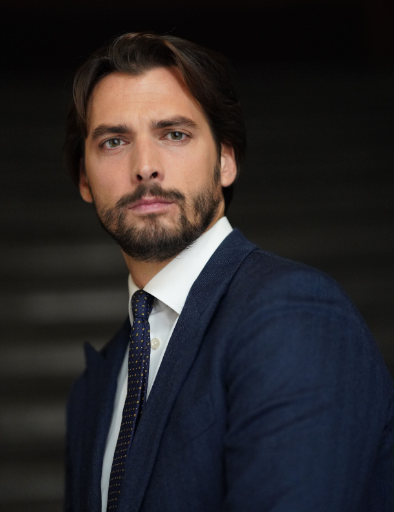
Thierry Baudet
Leader of FVD and Member of Parliament of the Netherlands
Thierry Henri Philippe Baudet (born 28 January 1983) is a Dutch politician, academic and author. He is the founder and leader of Forum for Democracy (FVD), and has been a member of the House of Representatives since 2017. He also serves as the party’s parliamentary leader.
Baudet was born in Heemstede into a family of partial Walloon ancestry. His forefather Pierre Joseph Baudet immigrated to the Batavian Republic in 1795 when his home in Hainaut was annexed by the French Republic, fleeing from conscription into the French Army. Baudet’s great-great-grandmother Ernestine van Heemskerck was born in the Dutch East Indies and was of partly Indonesian parentage. Baudet attended the Haarlem gymnasium, i.e. a high school with compulsory Latin and Ancient Greek. His first degree, from the University of Amsterdam, was in history, and from 2007 to 2012 he was a lecturer at Leiden University, where in 2012 he graduated as a Doctor of Philosophy with a thesis on national identity, European identity, and multiculturalism. This was co-directed by the philosopher Roger Scruton and was published in Dutch as The Assault on the Nation-State. An English translation was also published, called The Significance of Borders.
Related articles
 Politics
Is a reduction in gas tax impossible due to a European agreement, or are there more hidden rules at play?
 Politics
Blurring the line between alleged extremism and legitimate viewpoints threatens to narrow public debate
 Politics