Speech given to the Home Affairs committee of the Lower House of the Dutch parliament on the
AIVD report ‘Anti-institutional extremism in the Netherlands’
Note: the AIVD is the (Dutch) General Intelligence and Security Service
Chairman,
Today we are discussing the AIVD report 'Anti-institutional Extremism in the Netherlands', published last month. In this report, the Dutch Security Service, falling under the Minister of the Interior - and thus under the political control of parliament - identifies a relatively new threat: so-called anti-institutional extremism. It is said to be a threat that could eventually undermine peace and security.
Let me start by expressing the point on which I agree with the AIVD: I too find any form of violence utterly reprehensible and I too believe that the democratic rule of law must be protected.
But what is democracy? Organised distrust, according to commentator Jan Blokker. Distrust towards the workings of power and the tendency of certain lobby groups to make common cause with decision-makers. Towards the tendency of politicians to withhold information if it is disagreeable and their tendency to serve their own interests - instead of those of society as a whole.
Indeed, man is prone to all evil, according to the Old Testament, the New Testament and the Koran. So elites are prone to all evil too. Evil is within us, and political philosophers recognise this. From Plato and Aristotle to Montesquieu, the Federalist Papers and the works of Thorbecke, the same vision on man and society resonates everywhere: power corrupts.
Therefore, power must be controlled. Whether it is the financial elite, the Big Pharma or the Big Tech elite, or the elite that meets either at the World Economic Forum or at the Bilderberg conferences: where there is power, there is corruption. Always and everywhere. Under any circumstances.
Such, unfortunately, is the bent of humanity.
Democracy is unique as a political system because - unlike a dictatorship or a totalitarian society - it declares distrust in the intentions of power as a fundamental right.
Moreover, in a democracy, besides the right of citizens to distrust power, there are all kinds of institutions that actually have a duty to distrust power. Journalism, for instance. Or academia. Or - indeed - parliament. It is my contention that the tragedy of our time is that all three of these institutions are no longer fulfilling their critical, controlling role. They have degenerated from critical controllers to the guard-dogs of those in power.
Journalists slavishly parrot government narratives, without sounding any critical notes, as we can see every day in their one-sided reporting on virtually all topics, from climate politics to Russia, to Covid and to nitrogen. Journalism has become a propaganda channel for government narratives. And so has Science, where, for example, critical questions about gender ideology can lead to isolation or worse (note: a striking example is the disturbing situation in which Laurens Buijs, a researcher at the University of Amsterdam, has found himself).
Even parliament no longer fulfills its critical role. Ever since the formation of a party cartel, the coalition parties have had the majority in our parliament, so they never have to fear any real opposition.
It is against this background, Chairman, that the AIVD report is so disturbing. Once again: as fas as either mere threats or the actual use of violence are concerned, I stand with the security service, for 100%.
In a democracy, we fight each other with words and arguments - and we have the freedom to shape our lives in whatever way we see fit. But what does the AIVD write? I quote: “Anti-establishment extremists think that the government and the media are [wilfully] spreading certain ideas about, for example, ‘woke culture’, LGBT+ emancipation, the climate and immigration.”
Would there be anyone in the Netherlands who believes that the government does NOT spread a certain body of thought about climate or LGBT?
Next, the AIVD claims that people who agree with the "allegedly rigged elections" in the United States are another "clear example of anti-establishment extremism". Do they have the same opinion about all those people who argued that George W. Bush had stolen the elections from Al Gore, in the year 2000? Were these people considered “anti-institutional extremists” too?
The AIVD also considers “attempts to create a parallel society” an example of extremism. Was our pillarisation – splitting up the Dutch society into denominational groups - “extremism” too? Is it “extremism” when members of certain minorities frequent each other in order to trade and socialise among themselves?
The AIVD also calls it anti-institutional extremism to consider that the management of the Covid crisis was, quote, “all about corruption, money and power". So, questioning Big Pharma's interests is extremism? Naming the factually proven steering of the narrative by secret services on social media is extremism?
Chairman, “The task of the AIVD is to provide apolitical and factual interpretation,” the AIVD writes. So far, so good. But... “However,” they continue, “it is necessary to assess the accuracy of specific messages.” That is where, to my opion, things go wrong.
It simply has no place in a democratic constitutional state to treat politically legitimate questions as suspicious questions. And it is unacceptable to equate distrust towards systems with (threats of) violence to the democratic system.
I therefore would like to ask the minister to instruct the AIVD to review and amend this report.
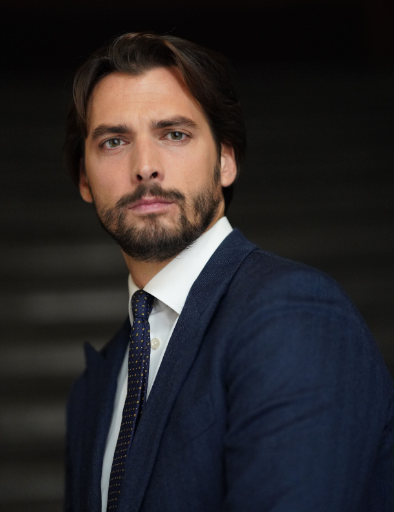
Thierry Baudet
Leader of FVD and Member of Parliament of the Netherlands
Thierry Henri Philippe Baudet (born 28 January 1983) is a Dutch politician, academic and author. He is the founder and leader of Forum for Democracy (FVD), and has been a member of the House of Representatives since 2017. He also serves as the party’s parliamentary leader.
Baudet was born in Heemstede into a family of partial Walloon ancestry. His forefather Pierre Joseph Baudet immigrated to the Batavian Republic in 1795 when his home in Hainaut was annexed by the French Republic, fleeing from conscription into the French Army. Baudet’s great-great-grandmother Ernestine van Heemskerck was born in the Dutch East Indies and was of partly Indonesian parentage. Baudet attended the Haarlem gymnasium, i.e. a high school with compulsory Latin and Ancient Greek. His first degree, from the University of Amsterdam, was in history, and from 2007 to 2012 he was a lecturer at Leiden University, where in 2012 he graduated as a Doctor of Philosophy with a thesis on national identity, European identity, and multiculturalism. This was co-directed by the philosopher Roger Scruton and was published in Dutch as The Assault on the Nation-State. An English translation was also published, called The Significance of Borders.
Related articles
 Politics
Is a reduction in gas tax impossible due to a European agreement, or are there more hidden rules at play?
 Politics
Blurring the line between alleged extremism and legitimate viewpoints threatens to narrow public debate
 Politics