Who sustains our shared world? Part 2: Hannah Arendt and Frits Bolkestein on plurality, freedom and citizenship
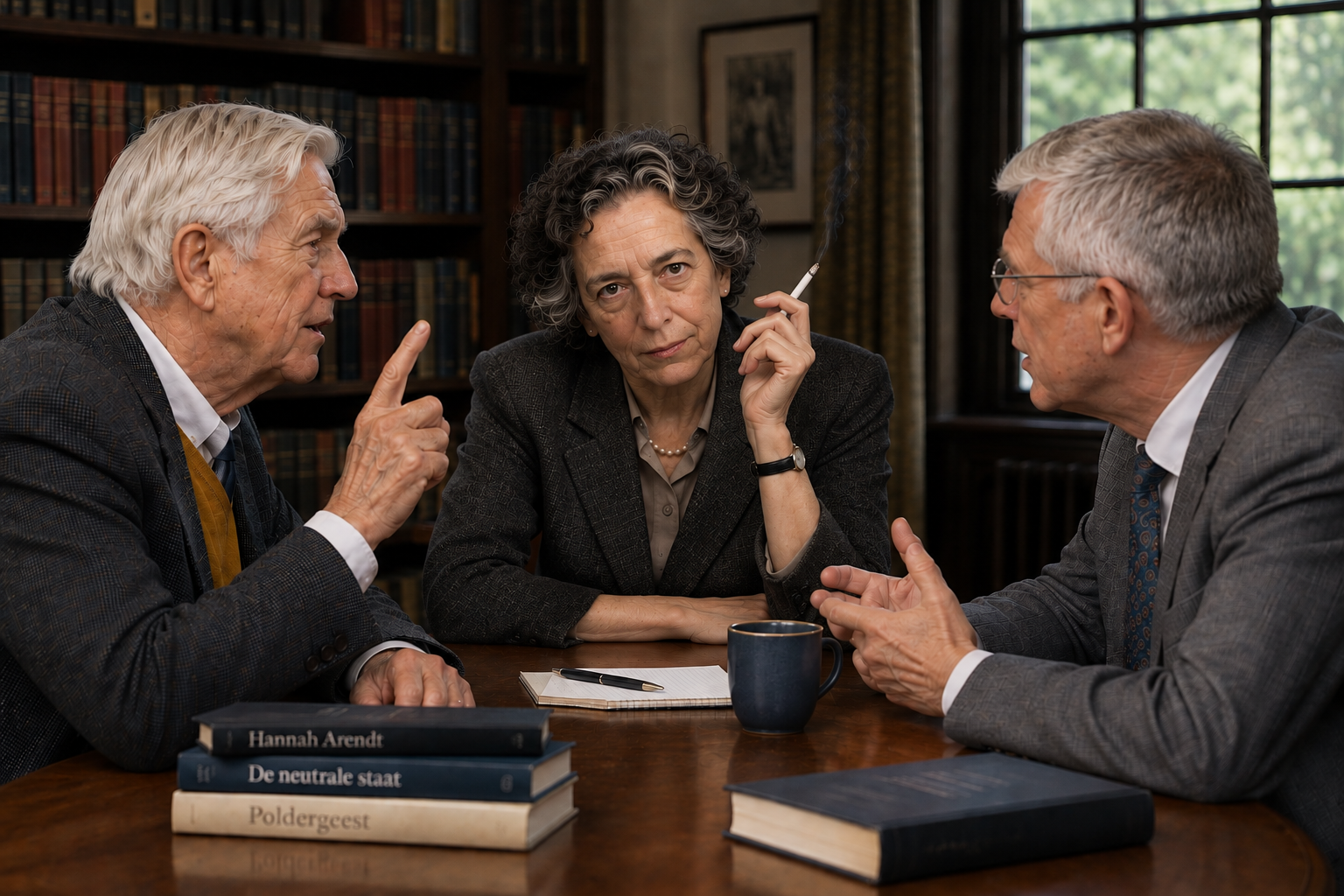
Every citizen has a duty to contribute to the community. Freedom does not exist without responsibility; rights do not exist without duties.
— Frits Bolkestein, Poldergeest (1998), p. 44
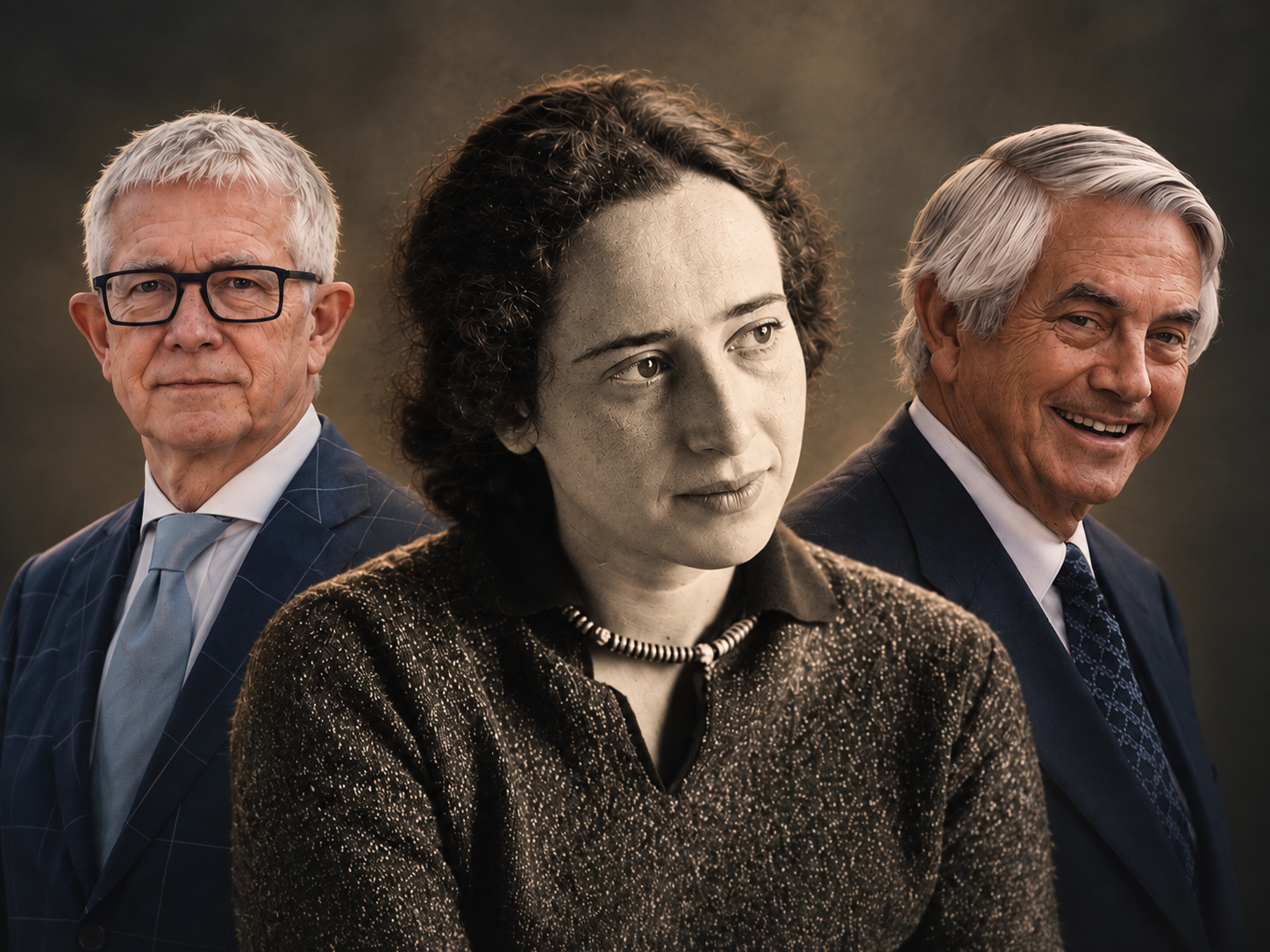
Three noteworthy books have recently been published—one on the political philosopher Hannah Arendt, one on the former VVD leader Frits Bolkestein, and one by the Tilburg-based public administration expert Paul Frissen. All three have grappled with the question of how to preserve our free and pluralistic society at a time when it is coming under increasing pressure. In Part 1, drawing on Arendt and Frissen, it was argued that this requires a fundamental critique of our current technocratic form of government. Instead, politics must reorient itself towards people’s concrete lived experience. In Part 2, we examine the question of whether it is sufficient, in this context, to recognise that citizens have rights. Bolkestein believed it was not. In his view, a shared lived experience could only have a future if there were a certain balance between rights and duties.
The right to have rights
One of Hannah Arendt’s most famous contributions to political philosophy is her formulation of the ‘right to have rights’. The concept is drawn from her analysis of the millions of stateless people who, following both world wars, found themselves excluded from any political community. Their tragedy lay not primarily in the loss of individual freedoms, but in the absence of a political community willing to genuinely guarantee their rights.
In doing so, Arendt challenged a deeply rooted conviction in modern political philosophy. Since the eighteenth century, it had generally been assumed that human rights could be derived from human nature itself. The French Déclaration des droits de l’homme and subsequent international treaties were based on rights that a person possesses simply by virtue of being human, irrespective of place, history or political community.
Arendt recognised the moral appeal of this ideal. What concerned her most, however, was how to guarantee those rights. After all, the twentieth century had shown that it was precisely those who possessed nothing more than their humanity who, in practice, often had no rights at all. As soon as someone ceased to be a citizen of a political community, the protection of their supposedly universal rights also appeared to vanish.
That is why she writes in The Origins of Totalitarianism that the most fundamental human right is ultimately not the right to freedom of expression or property, but the right to belong somewhere: the right to be a member of a political community in which an appeal to human rights holds validity.
In doing so, Arendt brings human rights back from an abstract moral plane to the concrete reality of politics.
Edmund Burke’s point
In this context, Arendt also refers to the work of the Anglo-Irish conservative Edmund Burke. During the French Revolution, Burke had already warned against the abstraction of the ‘Rights of Man’. According to him, rights are not attributes of an isolated individual, but develop historically within existing political communities. Freedom thrives on institutions, customs, the administration of justice and political experience. It cannot simply be derived from universal principles.
However, Arendt does not go so far as to suggest that the interpretation of what constitutes a human right is historically determined. She shares Burke’s criticism of abstract human rights but not his conservative premise. She cannot reconcile herself with hereditary privileges or the historical class-based society. Whereas Burke argues that rights develop historically, Arendt maintains that rights exist only where people collectively form a political world.
It is precisely here, however, that the question arises which Arendt scarcely poses explicitly. If rights can only exist within a political community, to what extent do the cultural presuppositions, values and norms taken for granted within that community still hold sway? Moreover: is invoking rights not somewhat one-sided? From a political perspective, are duties not just as important for a vibrant shared world?
Arendt’s work itself gives rise to these questions. For her, too, that shared world is ultimately not a given that goes without saying. As Burke had emphasised before her: it consists of language, a particular legal order, historical memories, institutions, schools, customs, architecture and artistic expressions. In short: everything that successive generations have built up together.
In The Human Condition, Arendt repeatedly states that this world only continues to exist because people constantly maintain and renew it. Freedom is therefore never solely a matter of individual claims. It presupposes a world in which those claims can take on meaning. From this follows an idea that Arendt elaborates on only implicitly, but which seems to flow logically from her own analysis.
Alongside the right to have rights, there is also a duty to help sustain the shared world. Not as a condition for ‘earning’ rights, but as a structural condition under which rights can continue to exist in the long term.
Amor mundi as a political virtue
This shifts the perspective on citizenship. It is then not merely a matter of legal status. Nor is it exclusively a collection of individual freedoms. It is a reciprocal relationship. Those who form part of a political community receive protection, but at the same time bear responsibility for the institutions that make this protection possible.
That responsibility takes many forms. It manifests itself in respect for the democratic legal order, in participation in public debate, in a willingness to contribute to collective burdens, in the maintenance of public institutions, in passing on language, history and political culture to future generations, but above all in the recognition that the shared world is not the property of the state, but of its citizens.
Here, too, ‘amor mundi’—a concept that Arendt in turn derives from Augustine—takes on a new meaning. This love for the world is not a sentimental love for ‘humanity’ or ‘the world in general’, as expressed in a cosmopolitan desire to make the whole world into a single political community.
On the contrary, as is already evident in Arendt’s study of Augustine, love is always ordered (ordo amoris). It begins in concrete relationships. In a political sense, this means that responsibility always begins with the concrete shared world in which people actually live together.
It is precisely for this reason that some of the recent literature on international relations, in which amor mundi is interpreted as a universal love of the world, seems difficult to reconcile with Arendt’s own starting point. Love for the world does not mean the abolition of political communities, but rather responsibility for the world that arises precisely between people.
The Judeo-Christian-humanist roots of our civilisation
On this point, the thinking of Frits Bolkestein offers a complement that ties in remarkably well with the line of thought Arendt points towards, but which she never fully elaborated herself. This is not, incidentally, a criticism of her, but rather proof that her thinking, too, is partly time-bound and does not, by definition, provide ready-made answers to questions that only became topical much later—in the 1990s.
Indeed, Bolkestein foresaw that a free society cannot rest solely on formal equality before the law. It also presupposes a shared public framework of norms and values. That framework, he explained – articulating a line of thought that was commonplace in VVD circles until the 1980s – was derived from Judeo-Christian-humanist civilisation. By this he did not mean religious orthodoxy or cultural uniformity. On the contrary: for him, it was about a political culture in which freedom of expression, gender equality, tolerance, the rule of law and democratic loyalty are recognised as shared values.
It is also evident in Bolkestein the Unassailable, the substantial biography by NOS editor Dik Verkuil, recently published by Prometheus, that for the then VVD leader, these shared norms and values do not preclude plurality but rather make it possible. Precisely because people differ, as Bolkestein also firmly believed, they need a common political language in which those differences can be peacefully resolved.
In a discussion with the Islamic philosopher Mohammed Arkoun, Bolkestein wondered why Islam had not succeeded in achieving something similar. Arkoun emphasised that this religion did indeed offer points of reference for this. But when Bolkestein asked him to elaborate, he was unable to provide an answer. Although both agreed that, when religion and politics were not inextricably linked, Muslims could indeed be loyal democrats.
Bolkestein’s emphasis on integration was therefore not primarily cultural, but political. Newcomers did not have to stop being themselves. However, they did have to be prepared to share responsibility for the shared social environment that made their freedom possible.
Here, Bolkestein touches precisely upon the reciprocity that ties in with Arendt’s amor mundi, but which we did not see reflected in any way in the context of her ‘right to have rights’. Membership of a political community does not merely mean enjoying protection. It also means contributing to the preservation of the world in which that protection takes on meaning.
In practical terms, this means the following. However much the future of our civilisation may, objectively speaking, depend on healthy relationships between men and women—without offspring, it really is the end of the story—it would never occur to those living in our shared world to carry out an attack on a Pride event.
Although there are valid objections to be raised against an ideology that casts suspicion on traditional male-female relationships in all manner of ways and therefore seeks to relativise them as ‘social constructs’, any sensible member of our shared world will abhor an attack on a Pride event such as the one that recently took place in Berlin.
Our shared world thrives on citizens who are prepared to recognise freedom of expression—including through mass demonstrations on the streets—to protect the institutions that safeguard it, and to actively uphold and pass on to future generations the traditions that have given rise to it.
The underlying question here is not only: how do we guarantee the right to have rights? But also: how does one become a co-bearer of our shared world?
That is the question to which Bolkestein sought to formulate an answer throughout his entire political career. A question, however, that is scarcely, if at all, asked within contemporary liberalism—let alone one to which it dares to provide an answer. This is what makes Bolkestein, ‘the unapproachable one’, at the same time a tragic figure.
The tragedy of the last classical liberal
In the early 1990s, Frits Bolkestein was one of the few Dutch politicians to publicly highlight tensions surrounding immigration, integration, national identity and the sustainability of the welfare state. Many of his analyses were dismissed at the time as provocative or pessimistic. Looking back, it is remarkable how many of the issues he brought to the fore have since become central to the political debate.
That is precisely why Bolkestein is a tragic figure. For it is not his successors within the VVD who have taken the direction he pointed out and turned it into a political priority. In the battle with Rita Verdonk, Bolkestein actually helped Mark Rutte stay in the saddle. Rutte turned out to be a born administrator, not someone who exhausted himself in political vision. As for that, he referred his critics to the optician.
Rutte was the man who, more than anyone else, sought to depoliticise the government and nip any political debate in the bud. Time and again, he invoked ‘experts’ to justify the policies he advocated. Under Rutte’s rule, nothing remained of the dualism between the executive and parliament, of which Bolkestein had been such a staunch advocate. Alongside Frissen, the assessment by the Leiden constitutional law scholar Wim Voermans in Het land moet bestuurd worden (2021) was also scathing; according to him, our democracy suffered from ‘rot at the core’ under Rutte.
Those who did take up the themes put forward by Bolkestein were, ironically, those very same reviled populists. What annoyed him was their polarising style of politics. He believed in the power of arguments. Not that populists like Pim Fortuyn lacked arguments. But they too often reduced them to simple one-liners and, in doing so, resorted to personal attacks far too frequently for his liking.
He was firmly of the opinion that, with Fortuyn at the helm, the Netherlands would make a ‘fool of itself’ on the international stage. That was not intended as a personal slur. It revealed a deeper difference in political style. Whilst Fortuyn sought to break through the established order using populist means, Bolkestein remained convinced that a free society is ultimately sustained by the power of argument and the quality of its institutions.
Bolkestein was thus the last classical liberal who saw it as his calling to breathe new life into politics. At the end of his biography, Verkuil leaves open the question of whether he was a politician without a successor. I am inclined to say that this certainly applies to his own liberals within the VVD. Yet his line was, in fact, carried forward precisely by those whom he most detested politically. It was not for nothing that Geert Wilders was described by the Amsterdam political scientist Meindert Fennema as Bolkestein’s sorcerer’s apprentice.
Now, one might rightly wonder whether Wilders is not far too left-wing to pass for a classical liberal. That line of thought is much more strongly represented within Forum for Democracy. Yet Bolkestein had little sympathy for that either.
That is the tragedy of one of the most significant political figures of the past half-century. His own political party allowed itself to be swept up in the political malaise against which Arendt, Frissen and he himself had warned. He regarded those who, primarily through their political style, appeal to voter groups that would never in their lives have voted for Bolkestein as subversive, whilst Frissen uncritically joins the chorus of technocrats and critics who dismiss populists as a threat to the state.
Who sustains our shared world?
We have seen that, for Arendt, it is not the state but active citizens who shape the world in which freedom becomes possible. Nor is plurality something that the state should promote, let alone colonise, as Frissen rightly argues. What we need, according to him, is a neutral state that protects the space in which citizens can disagree with one another on matters that concern them.
Bolkestein adds something to this that is certainly relevant today, given the state of our shared world. Arendt’s ‘amor mundi’ did indeed provide a starting point for this idea, but the social situation of the 1990s brought it to the forefront of current affairs.
Indeed, rights exist to protect people from arbitrariness and the abuse of power. At the same time, a shared world is not viable without citizens who are willing to uphold it. Rights presuppose citizenship. Freedom presupposes responsibility. Plurality presupposes a shared public culture in which differences lead not to enmity, but to political dialogue.
That shared reality is under pressure due to a fundamental mismatch between prevailing expectations regarding how to deal with pluralism and a growing number of people who refuse to conform to them. The attack on the Pride parade in Berlin is merely the most recent example in a long series. In many working-class neighbourhoods across the Western world, this mismatch is the order of the day.
This constitutes a fundamental attack on a civilisation in which Augustine was long regarded as one of the most important guiding lights. According to him, humankind was created so that there might be a beginning. That statement lies at the heart of Arendt’s political philosophy. Every birth brings a new beginning into the world. But no beginning is self-sustaining. Freedom is neither a state of nature nor a technical product of governance. It thrives on a shared world that must be fought for time and again, and then continually maintained.
Political challenge
Perhaps therein lies the deepest political task of our time. Not to constantly reinvent society. Not to seek to control it by subjecting it to the logic of technocracy or ideology. But to preserve it in such a way that freedom, plurality and civilisation remain a possibility for future generations too.
This requires a government that knows its own limits, institutions that protect diversity, and citizens who understand that rights can only endure if they are prepared to help sustain the shared world of which they are a part.
For ultimately, freedom is not a possession. It is a legacy. And every generation must decide anew whether it values it highly enough to pass it on to the next generation.
In response to:
Andreas Kinneging, Paul de Hert & Maarten Colette (eds.), Hannah Arendt. Humanity & Society in Plural. Published by Damon, Eindhoven, 2025; 232 pp.; €29.90.
Paul Frissen, The Neutral State. A Plea for Conservative Pluralism. Published by Boom, Amsterdam, 2026; 304 pp.; €29.90.
Dik Verkuil, Bolkestein the Unassailable, 1933–2025. Published by Prometheus, Amsterdam, 2026; 776 pp.; €39.99.
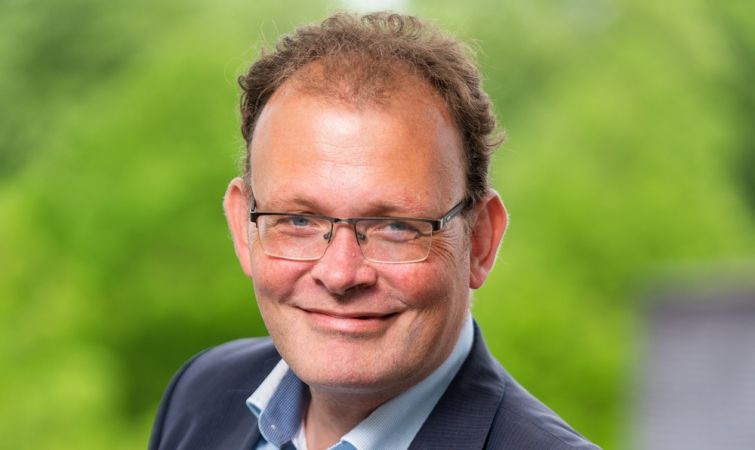
Hans van de Breevaart
Senior Researcher at the Renaissance Institute, the Think-Tank of FVD.
Senior Researcher at the Renaissance Institute, the Think-Tank of FVD.