Who sustains our shared world? Part 1: Hannah Arendt and Paul Frissen on plurality and freedom
Hoc [initium] ergo ut esset, creatus est homo, ante quem nullus fuit.
— Augustine, De Civitate Dei, XII, 20
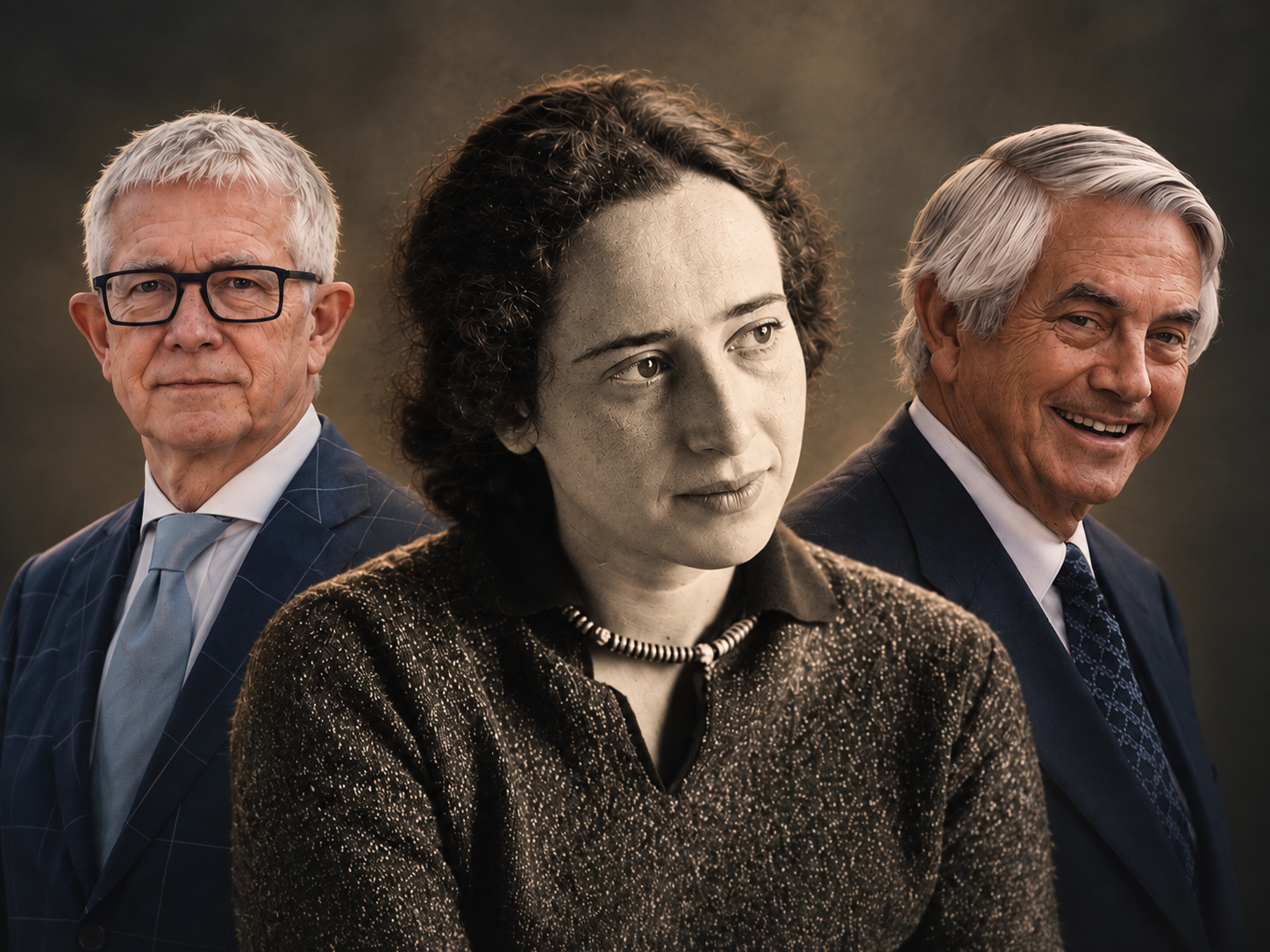
Three noteworthy books have recently been published—one on the political philosopher Hannah Arendt, one on the former Dutch VVD leader Frits Bolkestein, and one by the Tilburg-based public administration scholar Paul Frissen. All three grappled with the question of how to preserve our free and pluralistic society at a time when it is coming under increasing pressure. Does this require a reform of the form of government as we know it today? Do we need a different kind of politics? If the latter were the case, what view of human nature would be appropriate for such a political system? And does this involve citizens who have only rights, or also duties?
Introduction
Some political thinkers provide answers. Others teach us to ask better questions. Hannah Arendt (1906–1975) undeniably belongs to the latter category. As a Jewish-German refugee, shaped by the downfall of the Weimar Republic, the rise of National Socialism and, ultimately, her emigration to the United States, she developed a political philosophy that transcends the traditional dividing lines between liberalism, conservatism and socialism. She did not write from within a system, but from the experience of a century in which human freedom had come under unprecedented pressure.
It is precisely for this reason that Arendt is once again surprisingly relevant today. It is therefore only fitting that a fine collection of articles on her, edited by Leiden philosopher Andreas Kinneging and others, was recently published by Damon. At a time when politics is increasingly reduced to management, when experts and bureaucratic organisations seem to be taking the place of public debate, when the democratic rule of law is under pressure from both technocratic and totalitarian temptations, and when migration, plurality, identity and citizenship are increasingly at odds with one another, Arendt compels us once again to reflect on a more fundamental question: what are the conditions under which a free community can be viable?
Arendt provides an answer to that question that is as simple as it is profound. Freedom does not arise primarily from laws, elections or economic prosperity. It arises because people who are utterly different are prepared to make a success of their shared world. Politics does not begin with the state, but with that ‘shared world’ (Arendt’s ‘common world’) in which people meet, speak to one another and, despite their differences, remain prepared to live together.
That idea forms the starting point of this essay. In this context, Arendt is not regarded as a timeless authority, but as someone whose political anthropology allows her to be seen as a dialogue partner for a Dutch public administration scholar, Paul Frissen, and the legacy of a formerly prominent politician and political thinker, Frits Bolkestein.
In his book De neutrale staat (The Neutral State), recently published by Boom, Frissen defends the institutional conditions under which plurality can endure. His critique of the moralising state and the technocratic and, potentially, totalitarian administrative state aligns with Arendt’s analysis of modern politics on a surprising number of points. At the same time, Frissen places greater emphasis than Arendt on constitutional limits on state power.
Bolkestein had a strong affinity with this kind of thinking but felt it needed to be supplemented in light of the problems of the present day. His political thinking, recently described in detail in Dik Verkuil’s biography, centred on citizenship, integration and the question of which shared norms hold a free society together. Arendt emphasised plurality, Frissen institutional neutrality. Their ideas will be explored in more detail in Part 1 of the current essay. Bolkestein, whose ideas we will deal with in Part 2 of this essay, draws attention to the cultural conditions under which citizens are prepared to bear responsibility for the community of which they form part.
The central thesis of this essay is that these three perspectives are not mutually exclusive, but complementary. Arendt develops a political anthropology of freedom; Frissen describes the constitutional architecture that protects it; Bolkestein reminds us that no political community can exist sustainably without citizens who feel jointly responsible for its survival.
So that there might be a beginning
Arendt opens her most famous work, The Human Condition (1958), not with an analysis of institutions, power or democracy, but with a reference to Augustine’s De Civitate Dei (The City of God): ‘So that there might be a beginning, man was created; before him there was no one.’
According to Augustine, man is not first and foremost a rational being, but a being who brings novelty into the world. Every birth signifies an absolutely new beginning. Arendt secularises this idea. The theological perspective disappears, but the concept of a beginning is retained. Natalité—the capacity to begin something new time and again—becomes the starting point of her political anthropology.
In doing so, she very consciously turns against a large part of modern political philosophy. For Hobbes, Rousseau and Marx, human beings generally serve as a model for a universal human nature. Her mentor Heidegger describes human existence primarily in terms of finitude and Sein-zum-Tode. The existentialism of her contemporary Sartre also emphasises individual choice in the face of an absurd world.
Arendt adopts a radically different perspective. Not death. Not fear. Not desolation and alienation. Rather, according to her, birth constitutes the fundamental political reality.
She writes: “That which time and again rescues the world – the realm of human affairs – from its natural decay is the miracle of birth: time and again a human being appears who is capable of making a new beginning.” This is a remarkable shift. Human beings do not appear first and foremost as mortal beings, but as individuals capable of making a new beginning.
Ordinary people, not Man
Building on this concept of natality, Arendt develops her second central concept: plurality. Almost immediately after her discussion of natality, she writes what is perhaps the most famous sentence in her entire body of work: “It is not the abstract ‘Human Being’ who lives on earth, but a multitude of ordinary people who, each in their own way, make it a shared world.”
That single sentence marks a break with virtually the entire Western political tradition. According to Arendt, there is no abstract ‘human’ that forms the starting point of politics. There are only concrete human beings.
People differ. Not by chance, but in essence.
A little further on, she writes, “Plurality is the condition under which people can act. For although we are all human beings, no human being is ever identical to another who has ever lived, is living or will live.”
Plurality is therefore not a sociological phenomenon, not a consequence of migration, not a political choice, but an ontological condition of human existence. People are not only different but each, drawing on his own lived experience, has a different perspective on the world.
Politics is distinct from governance
Plurality makes politics necessary. If all people were identical, governance would suffice. Politics only arises where different perspectives meet.
Here, too, lies an important difference with Heidegger. She criticises him for the fact that his analysis of human existence leaves too little room for the world between people. Heidegger’s Dasein remains fundamentally an existential category. Arendt, on the other hand, takes the step towards the public sphere. Human beings do not merely exist in the world, but always with others in a shared world.
This also explains why she is so critical of any political theory that seeks to replace plurality with consensus, historical necessity or scientific truth. A society in which all fundamental questions have already been answered by experts no longer needs politics—only technocratic governance. For Arendt, the latter constitutes not merely an administrative problem, but an erosion of the human condition itself.
Remarkably, a similar idea applies to science as well. Arendt had great respect for scientific research, but she opposed the notion that science could resolve political differences of opinion. On the contrary. Science is itself a pluralistic endeavour, in which hypotheses are constantly tested, criticised and revised.
It is precisely totalitarian systems which seek to replace that openness with an imposed consensus. It is no coincidence that, in The Origins of Totalitarianism, Arendt describes how ideology presents itself as an infallible science of history or nature. Where debate ends and a single truth is politically enforced, both science and politics cease to be themselves.
This already outlines the contours of Arendt’s entire political philosophy. Freedom presupposes plurality; plurality presupposes a shared world; and that shared world requires citizens who are prepared to sustain it.
It is clear that it is precisely this freedom and plurality that have come under increasing pressure in recent times. This raises the question of how we can prevent the state, of all things, from appropriating this shared world and attempting to mould it according to a single moral or ideological vision.
Paul Frissen, a public administration expert from Tilburg, has attempted to answer that question in his book The Neutral State: A Plea for Conservative Pluralism, published by Boom.
The necessity of a neutral state
Frissen’s views are surprisingly close to those of Arendt. Although his starting point is rooted more in constitutional law and public administration than in political philosophy, he ultimately defends the same ideal: a political order that does not seek to eliminate the diversity of society, but rather to protect it.
Frissens’ analysis begins with an observation that has become increasingly apparent in recent decades. Modern states have long since ceased to limit themselves to maintaining the rule of law. They are increasingly seeking to educate, guide and improve their citizens. The state presents itself not merely as an arbiter, but also as an educator, therapist and moral compass.
This rarely stems from malicious intent. On the contrary. Almost always, the government invokes widely shared ideals that sound fantastic at first hearing: health, sustainability, inclusion, safety or social equality. It is precisely for this reason, according to Frissen, that this development is so difficult to see through. Behind the seemingly neutral language of policy and science lies an ever-expanding normative ambition.
Frissen gives many examples: the ever-expanding healthcare system, in which lifestyle becomes a subject of government policy; diversity and inclusion programmes, in which the government implicitly formulates standards regarding the desired structure of society; climate policy that encompasses not only technical choices but also calls for moral lifestyles; and citizenship education, which can easily shift from teaching about democratic institutions to moulding the ‘good citizen’. The state is increasingly shifting from protecting freedom to defining the good life.
It is precisely in this that Frissen sees a fundamental danger. As soon as the government privileges a single conception of the good life, the space in which citizens are allowed to differ disappears. The neutral state is therefore not a worthless state, but a state that refuses to elevate a single moral truth to the status of a public norm.
Here, Frissen touches directly upon Arendt’s concept of plurality. For Arendt, too, politics exists only as long as different convictions can coexist peacefully. As soon as a single truth is declared definitive, politics disappears and only administration remains.
The technocratic illusion
The connection becomes even clearer when Frissen discusses the role of expertise. Modern governments are increasingly legitimising their actions by appealing to science, models and expert knowledge.
Of course, experts are indispensable. No complex society can function without medical knowledge, economic analysis or technical expertise. But, according to Frissen, a problem arises when political choices are presented as if they were merely technical necessities.
In this, he aligns almost seamlessly with Arendt’s critique of the technocratic temptation. In The Human Condition, Arendt draws a sharp distinction between labour (necessary for survival), work (producing something) and action (in awareness of its implications in a pluralistic world). Technical problems can often be solved by experts. Political problems, on the other hand, require judgement, debate and the weighing up of different values. They have no definitive scientific answer.
When politicians hide behind experts, responsibility shifts imperceptibly from the citizen to the specialist. That is the moment when politics turns into administration.
Arendt had already recognised how totalitarian ideologies presented themselves as a kind of science of history. Both National Socialism and communism claimed to know the objective laws of race and history respectively. Those who possess the science no longer need to engage in debate.
This gives rise to a dangerous tendency: as soon as political differences of opinion are reduced to technical questions of implementation, the citizen loses their own judgement. Not because they are oppressed, but because they are told that there is simply no alternative.
We encounter the same line of reasoning in Frissen’s work. The neutral state must not identify with any single scientific, moral or administrative rationality. Its task is not to produce consensus, but to protect the institutional space within which citizens are permitted to fundamentally disagree.
The question then remains as to how this technocracy can be corrected. In a democratic constitutional state, this is not merely a decision for the state but must be driven by a counter-movement arising from society itself.
It is precisely here that we see a subtle difference between Arendt and Frissen.
The shared lifeworld as a political corrective
Frissen seems to have a great deal of confidence in the institutions of our constitutional democracy. The neutrality of the state limits the power of those in authority and prevents any single worldview from monopolising the public sphere. His analysis is, in essence, institutional.
The question is whether that is enough to spark a powerful counter-movement. That question becomes all the more pressing when, in The Neutral State, he dismisses precisely those political movements – such as the Forum for Democracy – which wish to return to that neutrality and therefore feel supported by his argument, as ‘subversive’ and ‘a threat to the state’.
Let us return to Arendt on this point. For her, while institutions are indeed indispensable, they are never sufficient. Ultimately, politics does not exist primarily thanks to institutions, but thanks to people who relate to one another in the public sphere through their speech and actions.
That is why Arendt attaches so much significance to what she calls the shared lifeworld. It is not statistics, models or policy indicators that ultimately form the basis of politics, but the experiences of citizens as they are articulated in the public sphere. Political judgement arises precisely because different experiences encounter and correct one another.
This idea takes on particular relevance at a time when social discontent is regularly dismissed as a matter of ignorance, contempt for ‘the truth’ or irrational resentment. Arendt would presumably warn against such a reaction. For politics ceases to be politics the moment citizens feel that their experiences—often fuelled by incidents from everyday life—are, from the outset, made subordinate to administrative expertise.
Of course, experiences can be coloured by emotions, prejudices or incomplete information. But it is equally true that experts do not hold a monopoly on truth. It is precisely the confrontation between scientific knowledge and civic experience and everyday common sense that forms the core of a living democracy. Where one of these disappears, the public sphere is impoverished.
In that respect, Arendt’s concept of plurality appears to reach deeper than an institutional theory of the neutral state. Plurality is not only a characteristic of society, but also of knowledge itself. Just as science thrives on constant criticism and falsification, so politics thrives on the clash between divergent experiences and perspectives.
Frissen would be the first to acknowledge this. In addition to The Neutral State, his earlier work The State of Difference (2007) also illustrates this point.
Yet, despite the close affinity between Arendt and Frissen, a fundamental question remains unanswered. Both convincingly demonstrate why plurality deserves protection. Both defend institutions that prevent a single truth from taking hold of the state. But what actually makes citizens feel a lasting connection to the shared world that makes this plurality possible?
A constitution can limit powers. A neutral state can protect freedom. But neither can, of its own accord, create the willingness to bear responsibility for the world in which that freedom finds its meaning.
It is precisely here that the question of citizenship, reciprocity and the cultural conditions of a free society arises. Someone who has helped us further on this point was former VVD leader Frits Bolkestein. The biography by Dik Verkuil, beautifully published by Prometheus, provides a fine opportunity to explore in more detail the foundational values of our pluralistic society. But more on that in part (2).
In response to:
Andreas Kinneging, Paul de Hert & Maarten Colette (eds.), Hannah Arendt. Humanity & Society in Plurality. Published by Damon, Eindhoven, 2025; 232 pp.; €29.90.
Paul Frissen, The Neutral State. A Plea for Conservative Pluralism. Published by Boom, Amsterdam, 2026; 304 pp.; €29.90.
Dik Verkuil, Bolkestein the Unassailable, 1933–2025. Published by Prometheus, Amsterdam, 2026; 776 pp.; €39.99.
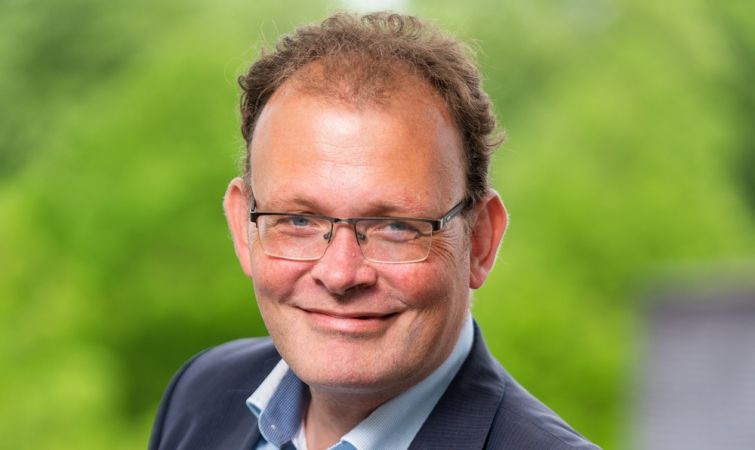
Hans van de Breevaart
Senior Researcher at the Renaissance Institute, the Think-Tank of FVD.
Senior Researcher at the Renaissance Institute, the Think-Tank of FVD.