
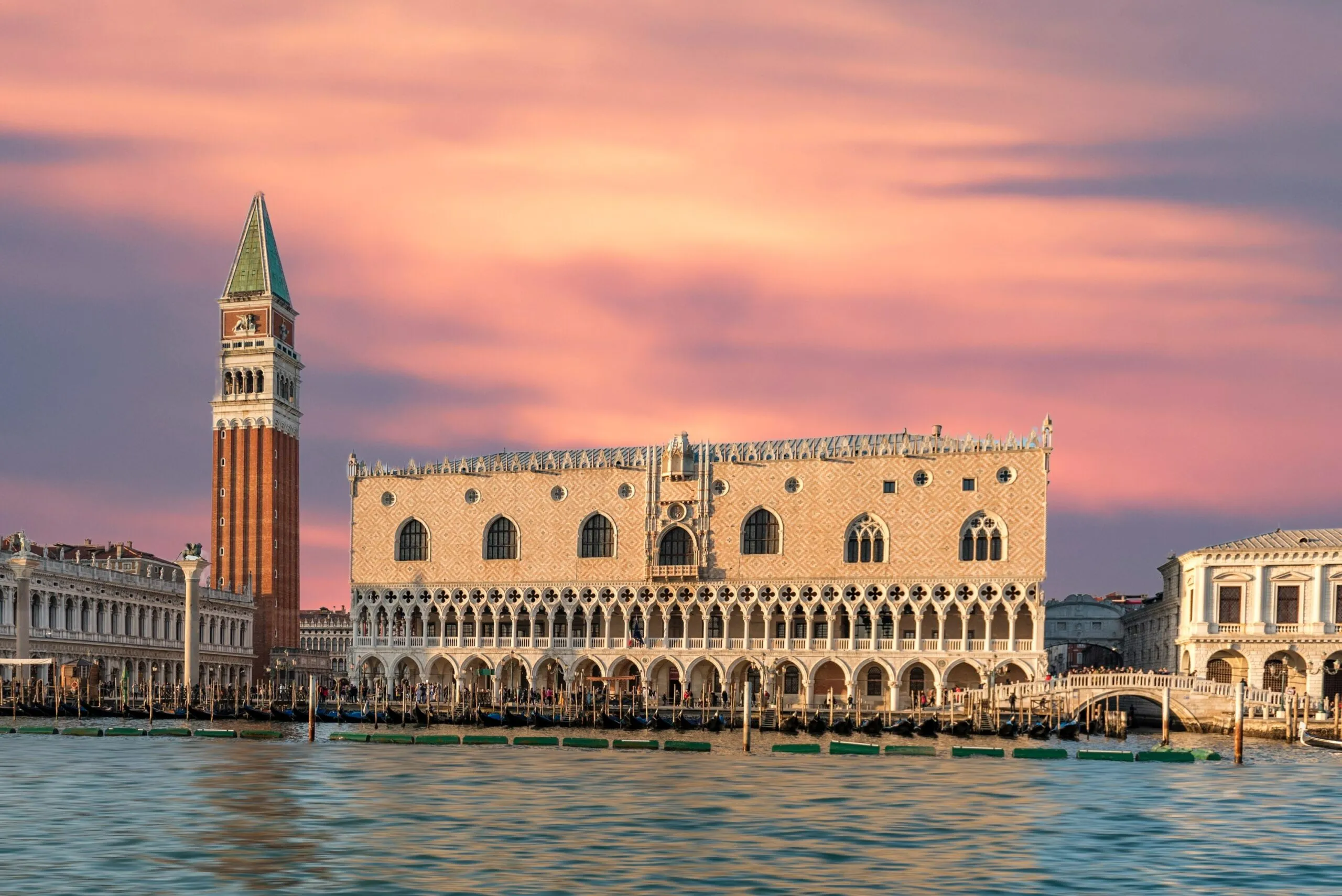
Speech at ESN conference on Cultural Sovereignty, Venice, 30 October 2026
Speaking at the ESN conference on Cultural Sovereignty in Venice, John Laughland explores the inseparable relationship between culture and sovereignty, and argues that restoring both requires freedom from ideology and a renewed commitment to truth, beauty and goodness.
‘Cultural sovereignty’ is an interesting title for a conference. It is not often that culture and sovereignty are juxtaposed but I want to argue that they are in fact consubstantial with each other. Culture and statehood and two sides of the same coin - and they are being dissolved, destroyed even, by the same forces.
Sovereignty
Sovereignty means independence. Sovereignty is the characteristic of a state. A state is sovereign when it decides on its own fate and when decisions are not made for it by others. A state is sovereign when it can wield power.
EU states today are no longer sovereign because the political and judicial last word lies in Brussels and Luxembourg - and the states have accepted the fact. Globalism more generally is the dissolution of state sovereignty by international bodies which suck out states’ power and wield it themselves.
Sovereignty does not mean that the state can do what it likes, or that material factors – pressures from outside – which reduce a state’s room for manoeuvre mean that it is not sovereign. Just as people must decide how to live in the world in which they find themselves, so do free states.
Instead, sovereignty is the freedom to interact with the world as we find it. To do this well, statesmen need to think.
Thought can only be free - ‘unfree thought’ is not thought. In the same way, power can only be free – ‘unfree power’ is not power.
Precisely what we observe today in politics is that leaders no longer think. Instead, they pursue policies which make no rational sense and which instead depend on ideology. We see this lack of thought and power very frequently. When ministers are asked a question, they repeat empty mantras. They speak in clichés, langue de bois, Soviet-style slogans, Newspeak – the very purpose of which is to prevent thought. People who speak like this are in office but not in power. They are not thinking but instead mouthing things because they feel they have to. They are like a ventriloquists’ dummy.
George Orwell analysed the destruction of thought by dead language brilliantly in his essay Politics and the English Language (1946) (the comedian Peter Sellers also caricatured it in his sketch ‘A Party Political Speech’ in 1958). In his 1974 Letter to the Soviet Leaders Alexander Solzhenitsyn identified ideology, whose ‘lies’ he vehemently denounced, as the thing which was killing his society: he described these lies as far worse than the material privations under Communism. His essay sounds like a criticism of our own times too.
Culture
Like sovereignty, or statesmanship, culture is also a product of thought, of feeling, of skill. It does not exist where these things are absent. Culture is great when it comes from the heart, the seat of wisdom, when it is motivated by love and when it speaks to us. Painting, music, architecture, poetry are all ways of representing the world, of understanding it. Culture seeks to express what the medievals, drawing on the Greeks, called the transcendentals – the very properties of being, namely truth, beauty and goodness. Truth, beauty and goodness are the ways in which human reason and love articulate their understanding of reality and the transcendent.
Ideology in politics and culture
Both culture and statesmanship (sovereignty) are destroyed by ideology. As Julien Freund has argued in L’essence du politique (1965), ideology is about action, not knowledge or explanation. Ideology is the bastardisation of what pretends to be thought, in the service of praxis. Ideology uses language but it is not thought. Ideology’s goal is destruction; it is not interested in truth.
One of the clearest statements of the ideological mindset is Karl Marx’s famous remark (in the Theses on Feuerbach, 1845) that the role of philosophers is not to understand the world but to change it. In his critique of Hegel’s Philosophy of Law, Marx writes, ‘The essential emotion of critique is indignation, its essential work is denunciation.’ The ideologue is always angry; he hates the world instead of marvelling at it. Critique - intellectual activity - says Marx, is not a surgeon’s knife, gently probing into reality to understand it, but instead a dagger. Words, the usual vehicle of thought, are turned into a weapon.
Culture today, especially modern art and architecture, is also a weapon - a weapon of destruction. Ideology turns what should be creativity into destruction. Nietzsche boasted he wanted to philosophise ‘with a hammer’: he wanted to smash things up, which is what ideologues do. Nietzsche saw all values – all evaluation and therefore all judgement - as nothing but expressions of power. He wanted to invert them all, inversion being an end in itself. Nietzsche is in this sense the father of modern deconstructionism and of modern art which is based purely on the urge to transgress.
Sovereignty and culture are therefore both destroyed by ideology. This is what is happening in the European Union today, whose ideology freezes politics out and is designed to do so. Ideology destroys politics because it invariably appeals to ineluctable scientific rules – positivism, dialectical materialism, political Darwinism, the European construction, technocracy, the world market. These are the opposite of freedom.
These dogmas all pretend that government is a science. But politics is not a science, it is an art, an expression of freedom and creativity. Politics is the art of the possible, not the management of the inevitable. States are living organisms, composed of living people, and therefore governed by human reason (freedom) and emotions. A state is not an accountant’s spreadsheet and nor is it an imagined, soulless technocratic ‘project’, like the EU.
The state as a work of art
Instead, not only is politics an art but also, as the great Swiss cultural historian, Jacob Burckhardt, wrote in Die Kultur der Renaissance in Italien (1860), the state is ‘a work of art’. The state is a work of art! What does Burckhardt mean?
On the face of it, we might think that he is thinking of beauty. Venice is perhaps the best place to think of the state as a work of art - this highly improbable and breathtakingly beautiful state which survived for over a thousand years as one of the great power centres of the world.
But this is not what Burckhardt means. Instead, he means that culture really is civilisation and vice-vera. Burckhardt’s two great works, Die Kultur der Renaissance in Italien and Griechische Kulturgeschichte are translated in English as ‘The Civilisation of the Renaissance in Italy’ and ‘The Greeks and Greek Civilisation.’ The same goes for the French translations (‘la civilisation’ etc.). In other words, Kultur means civilisation, civilisation being precisely politics, life in the state - polis, civitas. Burckhardt begins both of his two studies of cultural history with discussions about the Italian Renaissance states and the Greek city states, as if to say that the political constitutions of these two epochs were the basis of their exceptional culture.
If the state is a work of art, it is because the state is creation of order, by reason, creativity, skill, power and determination. Just as a sculptor brings order out of a formless block of stone – think of Michelangelo’s ‘prisoners’ – so the state brings order out of the formless state of nature.
Venice embodies this because it emerges from the ultimate formlessness, the sea. But the state is not just any order. It is an order based on truth, beauty and goodness. Like a work of art, the state is the product of the highest skill - skill which is acquired only by genius or a lifetime of practice and drawing on the accumulated wisdom of earlier artists. The Venetian Republic was one of the longest-lived political units in history. It combined all three of Aristotle’s political categories in its constitution - monarchy, aristocracy and democracy. The system for electing the Doge was a work of art and ensured that the state remained free, never captured by powerful families unlike other Italian city states. The Most Serene Republic was famous for her intricate constitution and for her massive network of diplomatic agents – for centuries, Venice apparently had more embassies abroad than any other European state. She was famed for her exceptional political agility and skill. She was of course a considerable naval power, sea power being itself a symbol of versatility and inventiveness.
But it is not just Venice. All across Europe, the royal court was the principal institution for the exercise of state power for centuries. Courts were works of art: they were performative spaces for the regulated display of state power. Courts had ceremony which expressed hierarchy; they also housed the highest artistic endeavours with their theatres and operas, their promotion of the finest arts from painting to porcelain to architecture, through their creation of academies and libraries, their endless promotion of beauty. Even warfare, the quintessential state activity, is an art.
Courts were often housed in hunting lodges. Versailles and Schönbrunn were originally hunting lodges, also the Palazzina di caccia in Stupigni near Turin. This is because hunting is the exercise of violence and skill - of power - to reaffirm the sovereignty of man over the formless state of nature. Hunting is a metaphor for statecraft because it imposes law, through skill and effort, onto the lawlessness of the forest.
Statecraft, like hunting, is therefore a foundational act. It is a heroic performance. To found something is to make something permanent through an act of determination and courage. The British art historian, Kenneth Clark, said that the key to civilisation was self-confidence – the self-confidence to project ambition and excellence into the future. There is no excellence without self-confidence and freedom. In his 1978 Harvard commencement address, Alexander Solzhenitsyn precisely identified the lack of courage he detected in Western culture as the cancer which would destroy it - and now has destroyed it.
Authority
This brings us back to culture. Authority – precisely that concept which the Frankfurt School sought, successfully, to destroy – means authorship, foundation, initiative, creativity. A person in authority is a person who causes something to grow (is qui auget), to augment. The auctor has more than just power (potestas) or command (imperium): he has prestige, he gives advice, he uses persuasion. He is an author.
Today’s modern art is explicitly based on the rejection of authority and therefore of creativity. Culture today, like politics, is based on one overwhelming posture: Never again! Nie wieder! Plus jamais ça! The past is rejected as evil. Modernism’s regard is directed resolutely towards the future. Any appreciation for the past is regarded as fatal. Like Orpheus, modernism feels commanded never to turn or look back. Instead, modernism believes, like the old Soviet propaganda posters, that it is marching forcefully towards an ever brighter future. Eurydice has to be left behind because ‘Year by year and minute by minute, everybody and everything (is) whizzing rapidly upwards.’ (George Orwell, 1984)
For centuries European culture did the opposite. It was irrigated by various sources from the past which continue to flow even today. The past was a resource which could be tapped. Modern education is based on the modernist obsession with utilitarian technique, not on the life-giving wellspring of culture.
Modern art, like modern politics, is precisely formless, that is to say contentless, that is to say meaningless. Globalism is formless – no borders, endless flows of capital and labour. Abstract art is for abstract people, ‘citizens of the world’, people abstracted or extracted from their particular environment, David Goodhart’s ‘anywheres.’ The earlier search for the transcendent – for ultimate truth and order in both art and politics – and the desire for transmission of this information, to others and to future generations, have been replaced by the bastardised cult of the indeterminate ‘trans’ – transnationalism, transgenderism, transgression.
Perhaps nothing symbolises this more than the abandonment of Latin in the 1960s, both in schools and in the liturgy of the Catholic Church. Latin used to be the basis of all education, including scientific, across the whole of Europe. Its abandonment was not only a deliberate decision to turn one’s back on history in the name of supposed technological progress - to launch humanity instead into the seductive infinity of outer space - it was also the abandonment of form, Latin, the language of Rome, being precisely the language of order, of reason, of statehood and of law.
The urgency of truth
This Orphic attitude is nothing but leftism, in other words, progressivism. Universities today across Europe are dominated by this ideology – by the Marxist determination to change the world rather than to understand it. This is precisely the opposite of the proper function of a university, as laid out in John Henry Newman’s Idea of a University (1852-8), which is to seek and impart knowledge. The search for knowledge naturally assumes the existence of truth and the possibility of reaching it.
For more than a generation, Western universities have been dominated by deconstructionism and, more recently, by woke ideology. Wokeism sees everything in terms of power and domination. Wokeism rejects understanding, indeed it often denounces understanding as treason. Wokeism is implacably hostile not just to authority or tradition, nor even the patriarchy and Western civilisation, but to the concept of truth itself.
Jacques Derrida, for instance, said that deconstruction should be applied to everything which comes from logos, reason, and especially truth itself. (1) Jean-François Lyotard wrote this: ‘Here is a political agenda: harden, aggravate, accelerate decadence. Take on the perspective of active nihilism, put your hands to destruction, fight against the restoration of values. Let us be ready to destroy belief in truth in all its forms.’ (2)
Across Europe, researchers and teachers at universities today are under attack from aggressive wokeism which reduces the whole of European culture to oppression – of colonised peoples by empires, of women by men, of sexual minorities by convention and religion. The extremes to which this is taken are grotesque, as has been well documented during a conference held at the Sorbonne in 2022, opened by the Minister of National Education himself. (3) The key message running through the various contributions – over 60 of them – is that truth has been thrown out of the window by childish ideology. Moralism, indeed, in university life as much as in politics, is the very opposite, indeed the enemy, of the search for truth. As Yeats predicted for the end times, ‘The best lack all conviction, while the worst are full of passionate intensity.’
What wokeism demands is precisely the opposite of that for which universities were created. They were created to seek and find truth. Nihilistic wokeism denies the very notion of truth and seeks to make humanity regress to what Leo Strauss in Natural Right and History (1950) says was the states of affairs which existed prior to philosophy – prior to the love of knowledge – namely one in which power alone, without any reference to truth, is that which compels.
It is therefore urgent to restore both culture and sovereignty and the freedom of both from ideology. It is essential to create - to found - power structures in politics, the media, finance, commerce, based on courage and foundational determination. Statehood cannot be rescued from dissolution without a cultural and educational system based on the belief in, and the search for, truth. For only the truth will set us free.
1) ‘La déconstruction de toutes les significations qui ont leur source dans celle du logos. En particulier la signification de vérité’ (De la grammatologie Les Éditions de Minuit, 1967, p. 21 ; quoted by Taguieff ‘Pourquoi déconstruire ?’, p. 79)
2) Voici une ligne politique : durcir, aggraver, accélérer la décadence. Assumer la perspective du nihilisme actif, ne pas en rester au simple constat, dépressif ou admiratif, de la destruction des valeurs : mettre la main à la destruction, aller toujours plus avant dans l’incrédulité, se battre contre la restauration des valeurs. Marchons vite et loin dans cette direction, soyons entreprenants dans la décadence, acceptons par exemple, de détruire la croyance dans la vérité sous toutes ses formes.’ (Petite mise en perspective de la décadence … in Dominique Grisoni (dir.) Politiques de la philosophie (Paris : Grasset, 1976, p. 128-9 ; Taguieff p. 178)
3) Après la déconstruction, L'université au défi des idéologies, dir. Emmanuelle Hénin, Xavier-Laurent Salvador, Pierre-Henri Tavoillot (Paris : Odile Jacob, 2023).
John Laughland
Director of Forum for Democracy International
John Laughland is an English author of numerous books and a lecturer in Political Science. He writes on international affairs and political philosophy and has contributed articles to The Guardian, The Spectator, the Brussels Journal, The Wall Street Journal, National Review, The American Conservative, and Antiwar.com. He was Director of the Euroskeptic think tank European Foundation until 2008 and Director of studies at the Institute of Democracy and Cooperation in Paris until 2018. He worked at the European Parliament from 2018 to 2020 and, since September 2021 has been on the teaching staff of the Catholic Institute of the Vendée in Western France where he is a lecturer in political science and history. He is currently Visiting Fellow at the Mathias Corvinus Collegium in Budapest.
Related articles
 Culture
The Road Home: Reflections on Christopher Nolan’s The Odyssey
 Culture
The hour has struck: Europe between self-revelation and renewal: A reflection on the root causes of the European crisis
 Culture