
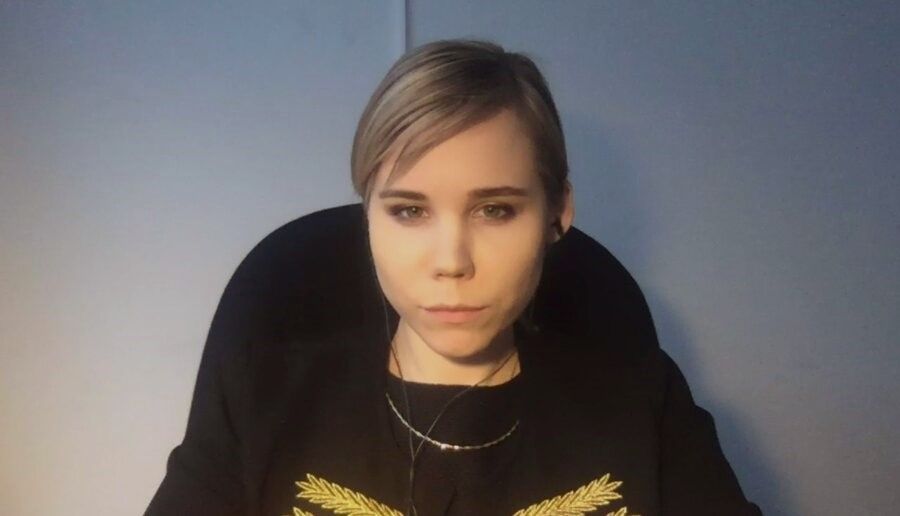
A black cloud has broken from the underworld and swallowed up our Daria, little Daria Dugin - the bright, subtle, wonderful product of a Russian family and of Russian culture.
She had the charm and purity of Tolstoy’s heroine Natasha Rostova, and the moral firmness of Turgenev's female characters. She embodied both the female image as we imagine it in Russian fairy tales, and the modern woman……
She was a political scientist and philosopher, who made friends with many intellectuals at European universities; a talented journalist and blogger; a brave fighter, ready to become a total warrior. She was the living proof that progress is possible without losing your values, the core values that shape personal and national life. This is genuine progress, and not the Western version of it, with its disastrous cocktail of sin and virtue, beauty and ugliness, truth and lies, good and evil…
Dasha's death in the fire of universal warfare proves the truth of a conservative perception so often and vividly expressed by Dasha's father, Alexander Dugin: this is a war between civilizations.
I'm not afraid to say it: we are at the heart of a battle between the Archangel Michael and Satan for the future of mankind. The universal battle depicted on the canvases of the great Europeans, when they were still Christians and not indifferent to the boundary between good and evil…
We must make a low bow to Dasha's heartbroken parents, Alexander Dugin and his wife and comrade-in-arms Natalia Melentyeva. They raised a wonderful girl, and this shows that their family life corresponds to their public views.
It is no coincidence that a blow so disgusting in its godlessness and cowardly meanness was inflicted on this particular family.
Alexander Dugin is one of the most extraordinary, bright thinkers of modern Russia, well known abroad, a recognized believer in the idea that Russian can stand firm against this era where ignorance, vulgarity and presumptuous mediocrity triumph, where the flesh triumphs over the spirit. It was Dugin who always raised consciousness to a panoramic angle and showed his romantic and captivating Russian soul, alien to practicality, in the hope of being of service to both Russian history and the future of Man and Nations in world history.
Such inspiring ideas proved more dangerous to his enemies than brutal screams and calls to kill. The enemy, drawing strength from the underworld, strikes at the intellect, at refined thinking, at the ability to express merciless opinions eloquently.
Demons want to break the spirit, soul and will, breaking the heart with grief - but they cannot. The whole history of the Russian people shows an hardening of their will under pressure. “Better to be in a coffin than to be a slave”, say our Serb brothers, who strewed the Russian embassy in Belgrade with flowers in memory of Daria Dugin.
We mourn and cry for Daria, and my heart shrinks with grief and empathy for her parents - with whom I have spoken so many times. My whole family often met Daria at meetings of like-minded people and exchanged opinions with her. We were always struck by the complete lack of arrogance and narcissism in this brilliantly clever 29-year-old woman. We will never forget Daria's wonderful smile, radiating kindness ...
May the Lord send Alexander Dugin and Natalia Melentyeva strength to cope with their terrible grief and may the memory of Daria be eternal...
By Natalia Narochnitskaya, Russian Historian
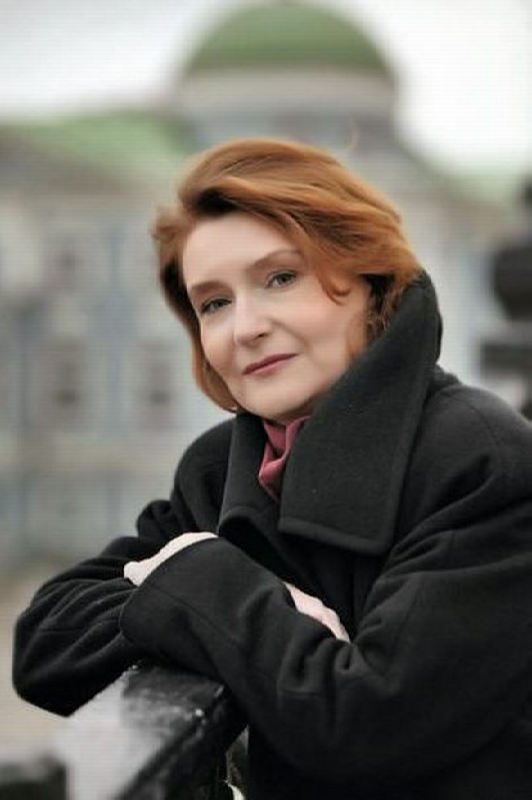
Natalia Narochnitskaya
Russian politician, historian and political commentator
Nataliya Alekseevna Narotchnitskaya (Наталия Алексеевна Нарочницкая) (born 23 December 1948) is a Russian politician, historian and political commentator.
Between 1982 and 1989 Narochnitskaya worked at the Secretariat-General of the United Nations in New York.
In the 1990s Narochnitskaya was a member of several minor political parties in Russia, including Constitutional Democratic Party and Derzhava. She gained some publicity as an advocate of the greater political role of the Russian Orthodox Church and her support of the Russian military actions in Chechnya in 1994-1996. Narochnitskaya was also an outspoken opponent of NATO intervention in former Yugoslavia and of NATO expansion, having called recognition of state continuity for the Baltics a ploy “to dilute the obstacles to the entry of parts of historic Russia into NATO.”
Narochnitskaya was elected to parliament as a representative (but not member) of the Rodina block in 2003 and served as vice chairman of the international affairs committee in the State Duma. She was not reelected in 2007.
Narochnitskaya advocates that an indispensable condition for the success of Russia's foreign policy in the modern world is the renewal and detailed study of traditional pre-Soviet foundations of Russian diplomacy.
In January 2008, Narochnitskaya was appointed director of the Paris-based Institute of Democracy and Cooperation, a Russia-funded NGO.
She is an author of several works dedicated to Russian history; antiglobalism; and international, political and spiritual affairs.
Related articles
 Opinion
The Pillar, Cofnas, Ghent – the battle for the institutions
 Opinion
Who sustains our shared world? Part 2: Hannah Arendt and Frits Bolkestein on plurality, freedom and citizenship
 Opinion