Europe’s politicians are middle managers, with all the lack of imagination that middle managers have
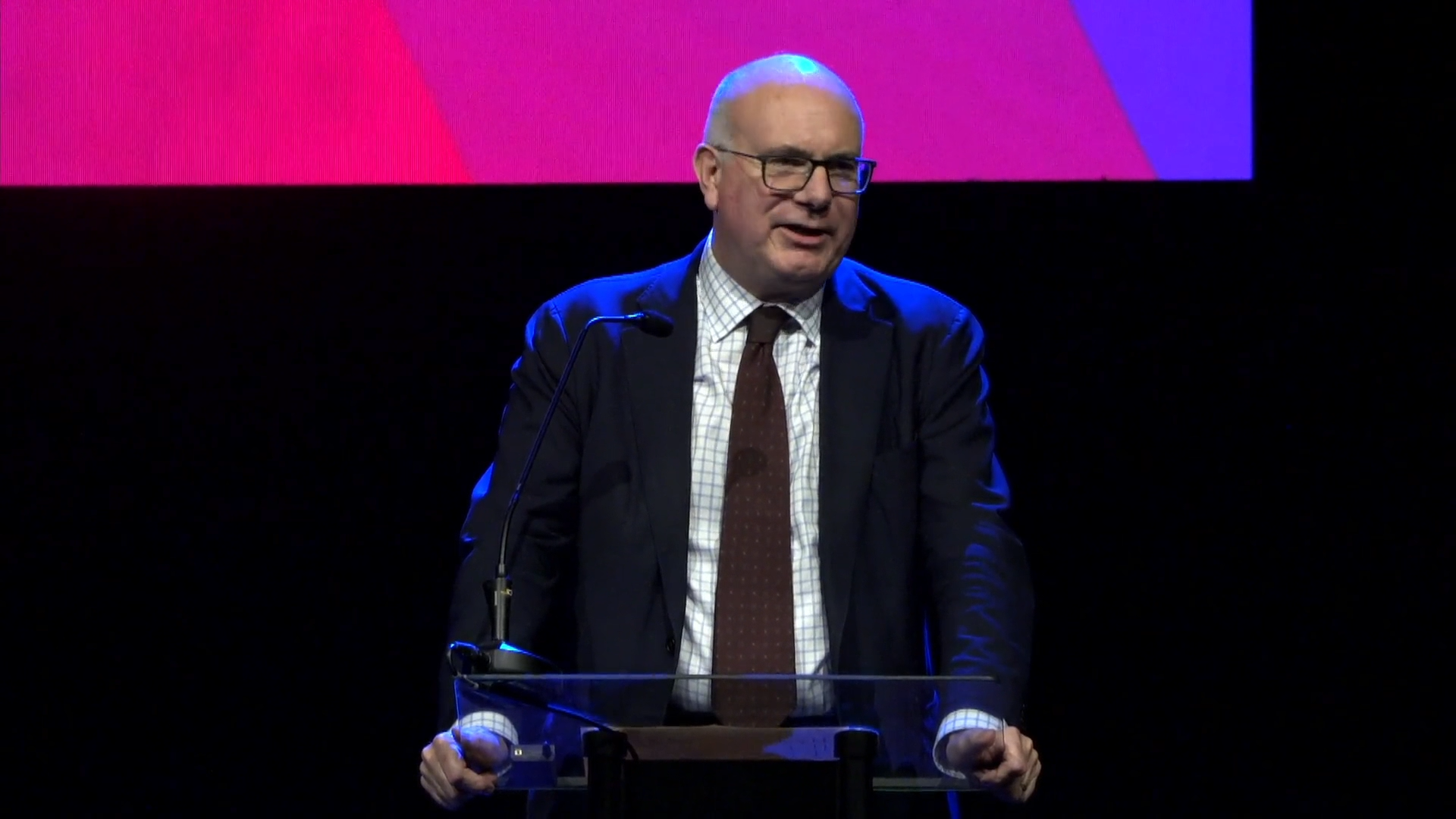
The British philosopher John Laughland regards the EU as an American project, the French Revolution as a catastrophe and Europe’s elites as unimaginative administrators. A conversation about a vanished republic, the revolt against reason, and whether it is already too late for the continent.
Interview by Jan A. Karon
(Originally published in German in GLUT magazine.)
For three decades the Briton John Laughland has advanced a thesis that almost no one in Germany dares to voice: that the European Union is not Europe but its antithesis, conceived in Washington, administered by technocrats and directed against the continent’s own history. Anyone who wishes to understand what nourishes Europe’s new sovereigntist right, from The Hague to Budapest to Paris, cannot avoid him.
Now is a good moment to listen to him. Under Trump, Washington is redefining its relationship with Europe, the continent is rearming, and parties that want to claw power back from Brussels are in government or on the threshold of it. Laughland has long supplied them with their intellectual armoury. In our conversation he ranges from the Marshall Plan by way of Edmund Burke to Ukraine, by turns erudite and cutting. Some of his positions, notably on Ukraine and on migration, will disturb many readers. That is precisely why they deserve to be known.
ABOUT JOHN LAUGHLAND
John Laughland, born in 1963, studied at Oxford and in Munich and holds a doctorate in philosophy from Oxford. His book The Tainted Source (1997), on the undemocratic origins of the European idea, has never appeared in German, but it established him as one of the intellectual fathers of British Euroscepticism. The former Labour Europe minister Denis MacShane called him “one of the intellectual architects of Brexit”. His other books deal with political trials and with the philosopher Schelling. From 2008 to 2018 Laughland was director of studies at the Institute of Democracy and Cooperation in Paris, which is headed by a former Duma deputy and which critics regard as close to the Kremlin. Today he teaches political science and history at the Catholic Institute of the Vendée and heads the international arm of Thierry Baudet’s Dutch party, Forum for Democracy.
GLUT: Mr Laughland, we last met in Venice, at a conference on “cultural sovereignty”. Afterwards you described the city as an empty shell. Why?
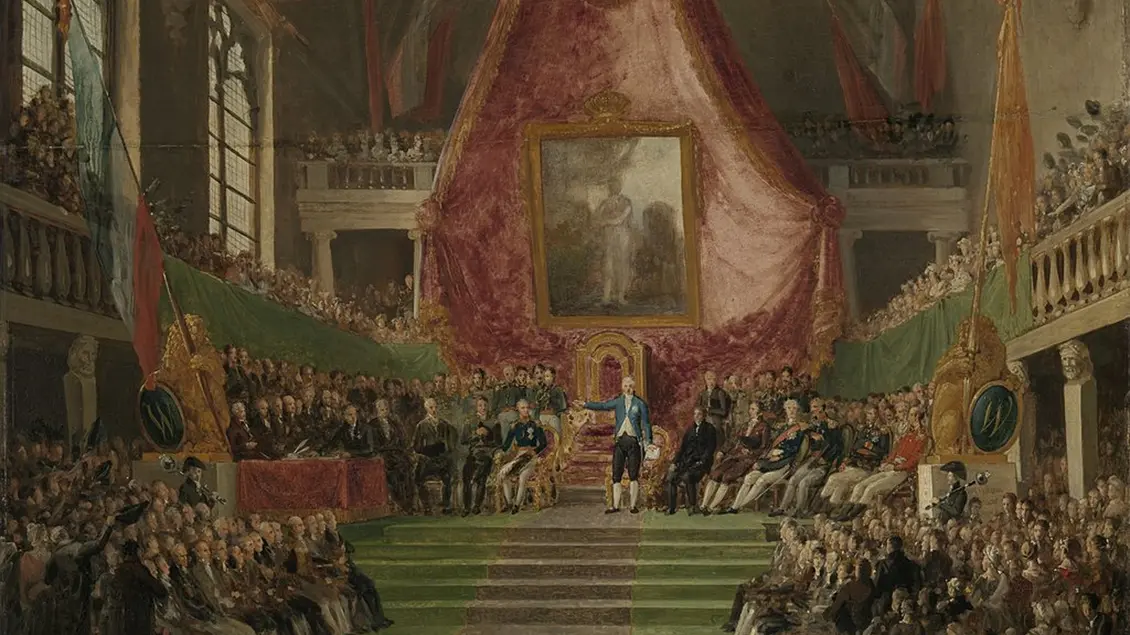
Laughland: Because Venice ceased to exist as a state in 1797. For more than a thousand years the Serenissima was an independent republic, and for centuries one of the great powers of the Mediterranean. Then, under pressure from Napoleon, the Great Council voted itself out of existence, the last Doge, Ludovico Manin, laid down his insignia, and a few months later the city was bartered away to Austria at Campo Formio. What remains is a façade. In 1951 some 175,000 people still lived in the historic centre; today it is fewer than 50,000, while tens of millions of tourists arrive every year. Many of the restaurants are no longer even run by Italians. The city has been hollowed out and replaced by something else.
GLUT: Is Venice an image of Europe?
Laughland: Part of me fears that it is Europe’s own future. My first instinct is to say that it’s all over. Then I look for signs of hope and try to persuade myself that they exist.
GLUT: Online, the late EU, or the late Federal Republic, is often compared with the fall of Rome: decadence, an elite detached from the people, corrupted morals, lost territory. Does history repeat itself?
Laughland: I believe it does. My colleague David Engels, who knows antiquity far better than I do, has written an entire book about it, published in English as Europa Aeterna and in German as Auf dem Weg ins Imperium. He compares the crisis of the EU with the end of the Roman Republic: falling birth rates, the loss of faith, bread and circuses, and at the end of it all an authoritarian regime. I would add one item to your list: militarisation. It is the defining feature of the Roman Empire. The Republic was destroyed by its own army, and military strongmen replaced the republican institutions. That has already happened in the United States; Eisenhower warned of the “military-industrial complex” in his farewell address of 1961. Now it is happening in Europe, where everything is being subordinated to military imperatives.
GLUT: What does that militarisation look like in practice?
Laughland: Our states have become obsessed with security. The intelligence services are now structurally embedded in political decision-making: decisions are taken with their input, and in many cases perhaps by them. I call it the securitisation of our societies. Then there is clientelism. Rome bought consent with bread and circuses, and that too is a point of comparison.
“Marshall Pleads for European Unity”
GLUT: Let us go back to the beginning. You argue that European integration was never really a European project but an American one, and that NATO and the EU are two sides of the same coin. German schoolchildren are taught the opposite.
Laughland: It is a matter of historical record. After the war the Americans wanted Western Europe to unite economically, politically and militarily, in order to wage the Cold War and to secure their own hegemony. They also wanted a new market for American goods; that is what the Marshall Plan was for. And there is an ideological dimension. Americans are convinced, to this day, that their federal constitution is a recipe for the whole of humanity. They believe they have solved the problem of how different peoples can live together. They simply cannot understand why a relatively small space like Europe should be divided into nations.
GLUT: So were Monnet, Schuman and Adenauer merely executing Washington’s will?
Laughland: No. Of course there were Europeans who wanted a federal, technocratic structure. But it would hardly have come about without American encouragement. America emerged from the war as the hegemon. The day after George Marshall’s speech at Harvard in June 1947, the New York Times ran the headline “Marshall Pleads for European Unity”. The Marshall Plan was a plea for unity. By 1952 some 13 billion dollars had flowed into Western Europe, roughly 170 billion in today’s money. It was distributed by the first pan-European organisation, the OEEC, founded in April 1948 and financed by Washington; it later became the OECD. In October 1949 Paul Hoffman, head of the American Marshall Plan administration, announced the goal to its council: the “integration” of Western Europe into a single large market for goods, services and people.
GLUT: And the Schuman Declaration of 9 May 1950, the founding moment of today’s EU?
Laughland: I regard it as an act of sabotage. A year earlier, in May 1949, the Council of Europe had been founded. It was intergovernmental, without supranational powers, essentially a British creation. The federalists, European and American alike, disliked that. So Monnet and Schuman drew up their plan for a coal and steel community in secret. Monnet himself writes in his memoirs that only nine people knew about it. Italy and the Benelux countries were informed the day before, Germany on the morning of 9 May, when Adenauer received a letter. The plan was announced at six that evening. In European historiography, that is the fiat lux.
GLUT: Where do the Americans come in?
Laughland: People forget that a supranational body for German coal and steel already existed: the International Authority for the Ruhr. The Western powers decided on it in 1948, and it was established in April 1949, that is, before the Federal Republic, with the Americans among its signatories. German demonstrators called it the “Ruhrdiktat”. Once the Treaty of Paris establishing the coal and steel community had been signed in 1951, the Ruhr Authority was wound up and its powers passed to the new community. Even the word “authority” is American. The continuity is complete. Then, in June 1950, the Korean War broke out. In September the Americans informed their astonished British and French partners that they wanted West Germany rearmed, within a European army. In October the French prime minister René Pleven presented the plan for a European Defence Community. Europe gift-wrapped an American imperative as a European package. That the French National Assembly eventually killed the Defence Community in 1954 changes nothing about its origins.
GLUT: Let me play devil’s advocate. So what? America guaranteed Europe’s security, trade made the continent rich, and we imported Hollywood gladly enough. Where is the harm?
Laughland: I did not say it was harmful. Under the conditions of the Cold War, one can argue that it was perfectly acceptable. And yes, it brought a long period of prosperity, to Germany above all. But it refutes a claim one hears constantly, in France at any rate: that a united Europe makes the continent stronger and more independent, able to hold its own against China and America. The EU is not an independent actor. Since the Lisbon Treaty its subordination to NATO has been written down explicitly. Article 42 states that the Union’s security and defence policy must be “compatible” with that of NATO. Since the war in Ukraine we have seen this in practice as well.
GLUT: If the EU is an American project, what happens when America loses interest? Trump has made little secret of his.
Laughland: I do not think America is losing interest so much as restructuring its empire under Trump. It is becoming more openly rapacious, more explicitly devoted to extracting wealth from its territories. In the trade agreement of summer 2025 the EU swallowed a 15 per cent tariff and committed itself on top of that to buying 750 billion dollars’ worth of American energy within three years. Domination is increasing too. Yes, America is turning towards China, and when parts of an empire become dispensable, they are abandoned. American support was never selfless.
No Manager Abolishes His Own Department
GLUT: You describe yourself as extremely pessimistic about Europe. Why?
Laughland: Because Europe has bet the house on American support. And because Europe’s politicians are incapable. They are middle managers, with all the lack of imagination that middle managers have. They cannot imagine a world in which they would face real choices. They recite slogans they have been taught and which they believe will help their careers. That is not an engagement with reality; it is management speak. The consequences are catastrophic, above all the loss of technological sovereignty, never mind political and military sovereignty, which has long since gone.
GLUT: Technological sovereignty in what sense?
Laughland: We do not even have a payment system of our own. After 2014 Russia realised how vulnerable it was to sanctions on payment systems. It built its own messaging system for interbank transfers and, in 2015, its own card network, Mir. When Russian banks were cut off from SWIFT in 2022, it was prepared. Whenever we take out a bank card in Europe, we use Visa, Mastercard or American Express. According to the ECB, around two thirds of card payments in the euro area run through such international schemes. In artificial intelligence we are equally dependent. And all this after twenty-five years of deindustrialisation. Yes, America’s share of the world economy has fallen. But look at the companies that have shaped our age: Google, Meta, WhatsApp. All American, not a single one European. Among the ten most valuable companies in the world there is not one from Europe. Despite its own decline, America has remained extraordinarily inventive. Europe has not.
GLUT: How exactly do the member states suffer from centralisation in Brussels?
Laughland: I could talk about that for hours. I cannot think of a single policy area in which centralisation benefits the member states or their citizens, and for two reasons. First, power in Brussels is exercised ideologically: the aim is to increase the power of a post-national, post-historical Union, not to improve people’s lives. Second, the EU operates according to a managerial ethic. Imagine you walk into your boss’s office on a Monday morning and say: great idea, let’s close our department and save the company money. You will be fired. No manager abolishes his own department. Every bureaucracy expands; America and the national governments suffer from the same problem. But the EU is bureaucratic in its very structure. Everything depends on the Commission, and the Commission is a technocracy, an administration. Politics, the art of the possible and the search for real solutions, is fundamentally incompatible with that.
GLUT: Is that why critics of Brussels are called populists?
Laughland: Precisely. With a dreadful snobbery, the national political classes who have bought into the system, and who profit from it, discredit anyone who claims to act on behalf of ordinary people. That is not their world. Their world consists in serving their superiors, in this case the European structures. The result is what the American blogger Curtis Yarvin calls the “Cathedral”: a web of administration, media and universities that generates consensus without any central direction. Narratives that strengthen the power structure are amplified; those that weaken it are expelled. The whole purpose of the EU is to depoliticise government. That is its ideological origin: the desire to turn our backs on history. European history means wars between nations. So politics, the supposed cause of war, is to be replaced by technocratic administration.
The Revolt Against Reason
GLUT: Where does this faith in administration come from?
Laughland: From the French Revolution. It was a catastrophe for France and for the whole of Europe, because it introduced rationalism into politics. The British philosopher Michael Oakeshott denounced exactly that in 1947 in his essay Rationalism in Politics. Edmund Burke had taken the same line as early as 1790 in his Reflections on the Revolution in France, before the Terror: abstract, mathematical thinking destroys genuine government. Burke understood that the Revolution was destructive in its very essence. Politics means weighing up reality. Abstract thought is ideology: thought, or the semblance of thought, in the service of action, and usually of destruction. That runs through the entire nineteenth century. Turgenev portrayed the nihilist in Fathers and Sons, Dostoevsky showed in Demons where he leads, and in 1917 came the Russian Revolution. Rationalism is angry with the world because the world is not rational. So it seeks to subjugate the world to its preconceived ideas.
GLUT: What do you set against it?
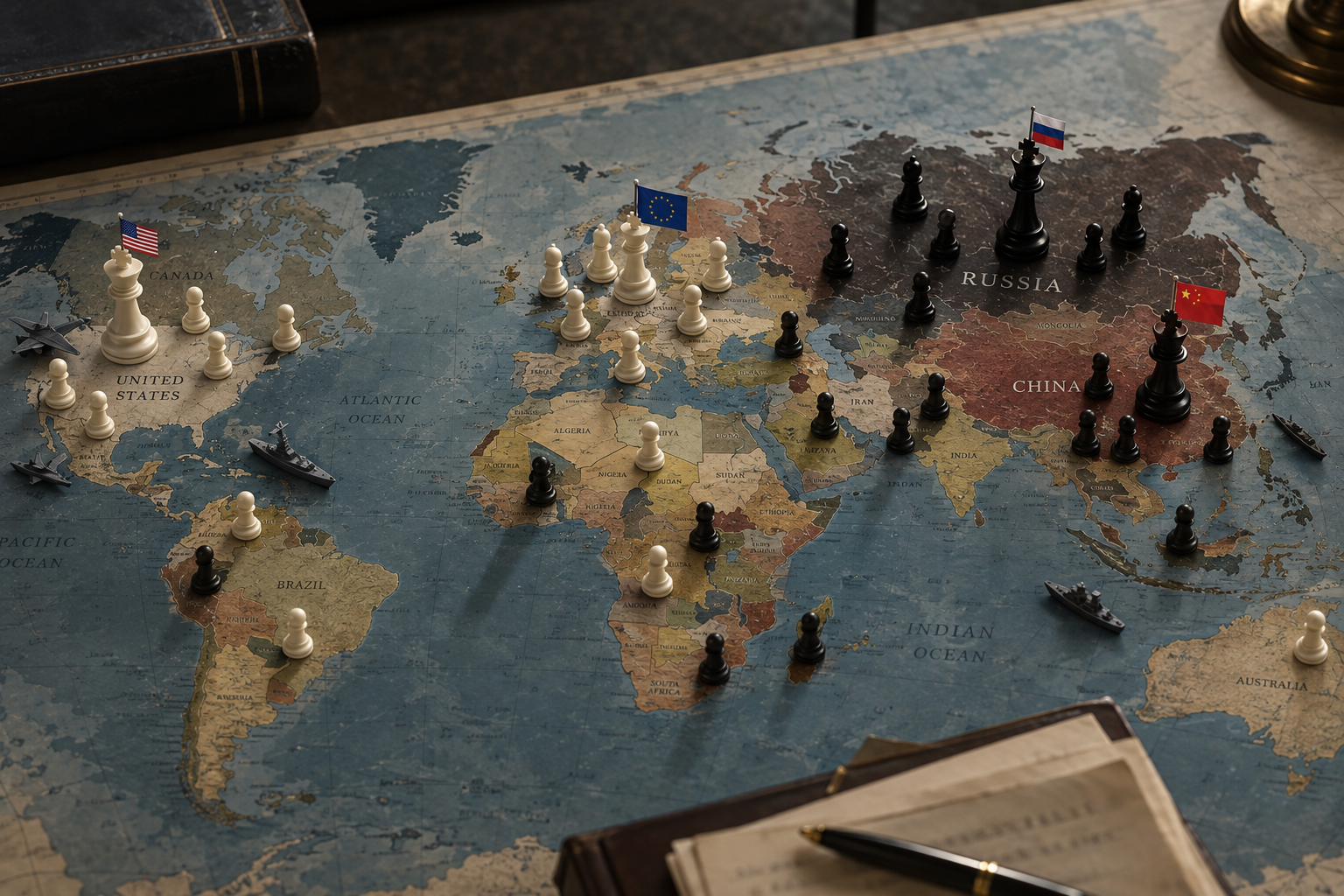
Laughland: The insight that states are living organisms, made up of people with free will and desires of their own. In The Theory of Moral Sentiments Adam Smith mocked the “man of system” who imagines he can move people about like pieces on a chessboard. Such a man forgets, Smith writes, that “in the great chess-board of human society, every single piece has a principle of motion of its own”. A state is like a family: it must be nurtured and led, as a father leads his family. That demands human qualities to which abstract thought is hostile.
GLUT: You make no secret of your nostalgia for the Holy Roman Empire. Why?
Laughland: Partly for aesthetic reasons. It is one of the longest-lived political entities in European history: from the imperial coronation of Otto the Great in 962 until 1806, when Francis II laid down the crown under pressure from Napoleon. It was then, in Hegel’s sense, aufgehoben into the Austrian Empire and, in a different way, into the German one. At times it comprised some three hundred territories, held together by the emperor, the Imperial Diet and the imperial courts. It was beautiful in its conception and in its practice. Those thousand years mean more to me than the two centuries since. I do not even like the word “medieval”, as if it were merely a parenthesis. I tell my students to say “the Christian era” instead. That was the glorious millennium of European history.
GLUT: Which brings us to Germany. Ursula von der Leyen sits in Brussels, the ECB in Frankfurt, and Friedrich Merz is pressing for deeper integration. What role does Germany play?
Laughland: The central one. The EU’s federal structure is quite obviously modelled on the Federal Republic, and on Germany’s imperial history. I do not mean the Kaiserreich, but the thousand-year Holy Roman Empire: an overarching structure within which kingdoms and principalities share their sovereignty. That model is German. It is neither the British nor the French model, nor indeed the Russian one. Those countries developed as nations, not as empires.
GLUT: How do you view the present German leadership?
Laughland: I am sorry to say it, but when I watch Merz and large parts of the political class, von der Leyen included, I sometimes have the feeling that they want revenge for the defeat their grandfathers suffered in 1945. The German leadership seems hell-bent on inflicting a defeat on Russia, as, to be fair, do the French and the British. I have no proof of this. But I sometimes wonder whether, in their forum internum, some of them think: third time lucky. This time we have the French and the British behind us, which we did not in 1914 or in 1941. There is a great deal of geopolitical collective memory at work.
GLUT: In the 2024 state elections the AfD came first in Thuringia with almost 33 per cent, and won around 30 per cent in Saxony and Brandenburg. Is there anything in today’s Germany that gives you hope?
Laughland: I observe the division between East and West with interest. The AfD is strong throughout the East and is reaching for power in one of the eastern Länder. Perhaps this is a form of decentralisation, a renewal of the thousand-year tradition that I regard as the truly German one: the German lands not independent of one another (which, unfortunately, they were during the Thirty Years’ War), but with more political existence of their own than they have had over the past century.
“Russia Wants Victory”
GLUT: You say Germany wants to defeat Russia. At the same time you say Europe was “abandoned” over Ukraine. By whom?
Laughland: By Trump. Within weeks of taking office in 2025 he unilaterally abandoned the line that Biden and the EU had shared: not to talk to Russia. On 18 February Rubio and Lavrov met in Riyadh. That is exactly what the row in the Oval Office ten days later was about, when Zelensky asked: what do you mean, diplomacy with Russia? America still sells Ukraine weapons, but it no longer gives it money. Europe pays the bill, and God knows where the money is to come from. The famous 90 billion euros for 2026 and 2027 were supposed to be secured against the frozen assets of the Russian central bank. Some 210 billion of those sit in the EU, most of it at Euroclear in Brussels. Belgium blocked that, so now it is being financed through joint EU borrowing. In the end it lands on the European taxpayer. France does not have the money; its public debt stands at around 115 per cent of GDP. Italy does not have it, nor does Britain. They are all drowning in debt. We have been left holding the baby. It is our own fault, but there it is.
GLUT: Trump promised to be the peace president. In its fifth year the war goes on. Some say Russia has no interest in ending it.
Laughland: The whole debate about who wants peace is intellectually deformed. Saint Augustine explained it in the nineteenth book of The City of God: even those who wage war desire nothing but peace, only a peace according to their own will, a different peace from the one they had before. All wars are waged in order to achieve peace. Clausewitz put it sardonically: “The conqueror is always a lover of peace; he would like to make his entry into our state unopposed.” Of course Russia wants peace. Russia wants victory. So does Ukraine, and so does Europe. We simply do not agree on what victory looks like.
GLUT: What does victory look like for Moscow?
Laughland: First, NATO renouncing Ukraine. Second, the disarmament of Ukraine, which has so far been achieved only very partially, because NATO keeps replenishing its losses. Territory, on which everyone fixes their gaze, comes only third. As long as NATO membership is not explicitly off the table, Russia will keep fighting. Trump has said it is off the table, but it still hangs in the air. Russia has suffered several hundred thousand dead. That will not induce it to give up. On the contrary: to give up would be to betray the dead after the fact. We could not sustain losses of that kind. The British Army is down to some 70,000 regular soldiers, fewer than at any time since the Napoleonic Wars, and the French army has scarcely more. In 2024 Putin raised the authorised strength of his armed forces to one and a half million. It is a war of attrition, and Russia’s wager is that the other side will collapse first.
GLUT: You place sovereignty above all else. Is Ukraine’s war not the very model of a sovereigntist war? A people with its own language and symbols is fighting not to be swallowed up. And Western governments attribute a whole series of acts of sabotage in Europe to Russian services: parcel fires at DHL, the blaze at the Marywilska shopping centre in Warsaw, attacks on Polish railway lines.
Laughland: As to Russian attacks in Europe: I hear these claims constantly, and I have never once heard a properly developed explanation of whether these cyber attacks really come from Russia, or whether they are attacks at all. For ten years, until 2018, I observed and criticised false claims and disinformation about Russia, again and again. That experience has marked me deeply. If they are attacks, then of course countries must defend themselves. As to Ukrainian sovereignty, my answer is a very firm no. Ukraine was not sovereign in 2022.
GLUT: Why not?
Laughland: Because after what I call the Maidan coup, large parts of the Ukrainian state were taken over by the West, including judicial appointments and the secret services. From 2014 Ukraine was in a state of civil war; civilians were dying in the east. According to UN figures, some 14,000 people were killed in the Donbas by 2022. In December 2021 Moscow published two draft treaties on collective security, in effect an ultimatum: no further advance by NATO, and the withdrawal of its forces to the lines of 1997. NATO sent Russia packing. Then Russia intervened. Its aim was not so much to extinguish Ukrainian sovereignty as to defeat NATO: NATO’s expansion into Ukraine and, more broadly, American hegemony. The American journalist Stephen Kinzer has spoken of a seventy-five-year geopolitical war against Russia. That is how it is seen in Moscow.
GLUT: Ukraine has its own language and its own flag, and in 1991 more than 90 per cent voted for independence. Is that not a nation?
Laughland: I am afraid this will sound cruel, but I believe I am right: Ukraine is not a nation in the sense in which I understand the word.
GLUT: Ukraine is not Poland?
Laughland: No. Ukraine has never before existed as a state. Nationhood and statehood are interdependent; each shapes the other. Ukraine is, rather, the origin of the state that used to be called Rus and is now called Russia. Until a few years ago the everyday language there was Russian; I know that from my travels. Ukrainian, the dialect of the western regions, was imposed on the whole territory by the Soviets, and then, after Maidan, very brutally through the language laws of 2017 and 2019. There is nothing anti-Ukrainian in saying so. Austrians speak German, the Irish speak English, Cypriots speak Greek. Speaking your neighbour’s language does not mean being dominated by him. And after the end of the Soviet Union the Ukrainian state became hostage to oligarchs and mafia structures. That is the opposite of national sovereignty.
GLUT: One might say that all of this applies even more to Russia.
Laughland: Not for the past twenty-five years. In the first decade after the Soviet Union, yes; then Russia too was prey to private interests.
GLUT: What should Europe do?
Laughland: Not “Europe”. I do not believe in European leadership, only in the leadership of individual nations. That Britain, France and Germany coordinate on Ukraine is perfectly normal. But the EU should play no role whatsoever, because it is exploiting the war to centralise power and to use an external enemy to paper over its internal contradictions. That is fatal for the continent. Think what you like of Russia: regard it as a mafia state or an aggressor, adopt the Polish-Baltic view. Russia is not going to go away, except in the fantasies of people who draw maps of its disintegration. Even leaving Siberia aside, European Russia covers about 40 per cent of the continent and has more than 100 million inhabitants. The Russians are the largest people in Europe; the Germans are the second. These are geopolitical facts, and they will not change. So we must find a modus vivendi with this colossal neighbour. Moralising about how evil Putin is, is childish, literally childish. That is not how geopolitics is made.
GLUT: Do you see any signs of such a modus vivendi?
Laughland: A glimmer. The heads of state and government of Norway and Finland recently spoke to Putin by telephone and justified it on the grounds that they share a border with Russia. That is a sound basis, and it would be for Poland and the other neighbours too. That is political geography.
GLUT: It is precisely those neighbours who are afraid. The Baltic states are building a defensive line along their borders, and in Lithuania the Bundeswehr is, for the first time, permanently stationing a combat brigade abroad. They fear being next if Ukraine falls.
Laughland: Forgive me, but I consider that childish nonsense. Look how hard it is for Russia to take a few villages in the Donbas. To imagine the Russian army conquering the whole of Ukraine and then marching into the Baltics and Poland, one must have been subjected to some kind of gaslighting. Of course, from Moscow’s point of view, Baltic independence is a problem. At the Peace of Nystad in 1721 Sweden had to cede Estonia and Livonia to Peter the Great, and Lithuania followed with the third partition of Poland in 1795. Russia has therefore had the region in its sights for almost three centuries and, in a parallel universe, would gladly have it back. In practice it is out of the question.
“It Has to Be Dismantled”
GLUT: Parts of the right are now arguing for more Europe: technology, migration and defence, they say, demand a united continent. Giorgia Meloni wants to change the EU from within. Can it be reformed?
Laughland: Absolutely not. It has to be dismantled completely, and the discourse of European unity has to be abandoned, because that very discourse is what weakens Europe. As soon as a challenge arises, Europe’s statesmen feel obliged to have a common policy. In France they say l’union fait la force, unity is strength, which is also, incidentally, Belgium’s national motto. But unity creates strength only if everyone pulls in the same direction. If states have different priorities, their efforts cancel each other out.
GLUT: How, then, should states cooperate?
Laughland: As they always have. We do not need to reinvent the wheel. The Peace of Westphalia in 1648 was a pan-European conference. After the Congress of Vienna in 1815, the Concert of Europe secured almost a century of relative stability. There were treaties between states in the sixteenth century and throughout the Christian era. The notion that states need a permanent structure in order to cooperate is utterly unhistorical. European states will cooperate, and sometimes they will come into conflict. If ad hoc alliances make them stronger, well and good. The same applies to the United Nations. For more than a century we have been led astray by the irenic belief that international organisations bring peace. They do not. In my view they have made the world worse. And the EU, as the most advanced form of supranationalism, is the clearest proof of that failure.
GLUT: Europe’s external borders stretch across thousands of kilometres of coast and land. According to UN projections, Africa’s population will grow from around 1.5 billion today to some 2.5 billion by 2050. How is a single nation-state supposed to cope with that?
Laughland: Nationally. The idea that a dangerous or globalised world compels us to act together is fundamentally mistaken. A key driver of migration is Schengen. Lampedusa lies a little over a hundred kilometres off Tunisia, closer to Africa than to Sicily. You can land there and move to Berlin, Stockholm or Paris without crossing a single border. That sucks in migration. The migration crisis did not begin in 2015; it began in March 1995, when the internal borders were abolished. It is a perfect example of how European integration weakens Europe. It is no coincidence that more and more Schengen states are once again checking their borders, Germany at all its land borders since the autumn of 2024.
GLUT: Apart from open borders, what drives migration?
Laughland: Money. Large corporations, lobbies, agencies and NGOs earn a great deal from it. Then there is a mechanical cause: the excessive taxation of labour. In Germany almost half the labour costs of a single average earner go in taxes and social contributions, the highest figure in the OECD after Belgium. That makes labour artificially expensive and imports artificially cheap, and distorts the entire economy. Add to that social benefits, the doom loop of privatised profits and socialised losses, and social housing. In my view, social housing should not be allocated to non-nationals. If that ended, I believe many people would return to their countries of origin. All of this ought to be reversed, not only because of migration but for the health of the economy.
GLUT: Back to Venice. You said you look for signs of hope. Where do you find them?
Laughland: In Britain there is a remarkable young man, Charlie Downes, twenty-five years old, a campaign director at Restore Britain. The movement was founded in 2025 by the MP Rupert Lowe after Nigel Farage threw him out of Reform UK. Downes is brilliant and highly intelligent. I am seeing him again next weekend. He will spend the coming decades campaigning for demographic security in Britain and across Europe, just as I spent my twenties campaigning against the EU. Perhaps he will succeed. Perhaps we will turn the tide. But the task is immense, because the problems have been building up for so long.
GLUT: In June you spoke at a “remigration summit” in Oslo. Where does the idea of “population replacement” lead: to segregation, to states breaking apart along ethnic lines?
Laughland: I believe population replacement is a reality and a very grave danger. There are no nations without peoples, and peoples are biological as well as cultural and political. My hope is that the structural problems will be addressed before we arrive at civil war and segregation. But to speak of civil war is not extreme. Gérard Collomb, Emmanuel Macron’s first interior minister, for decades the Socialist mayor of Lyon and an establishment man through and through, warned of it. On leaving the ministry in 2018 he said: “Today we live side by side; I fear that tomorrow we will live face to face.” If we did not solve the problem within five years, he said, the danger of civil war would be very great. Nobody should be under any illusions about the path we are on.
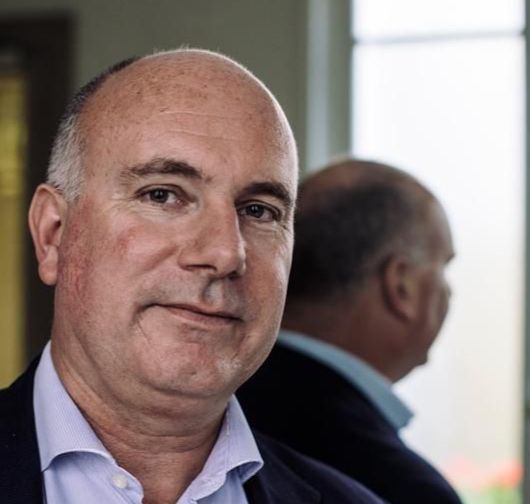
John Laughland
Director of Forum for Democracy International
John Laughland is an English author of numerous books and a lecturer in Political Science. He writes on international affairs and political philosophy and has contributed articles to The Guardian, The Spectator, the Brussels Journal, The Wall Street Journal, National Review, The American Conservative, and Antiwar.com. He was Director of the Euroskeptic think tank European Foundation until 2008 and Director of studies at the Institute of Democracy and Cooperation in Paris until 2018. He worked at the European Parliament from 2018 to 2020 and, since September 2021 has been on the teaching staff of the Catholic Institute of the Vendée in Western France where he is a lecturer in political science and history. He is currently Visiting Fellow at the Mathias Corvinus Collegium in Budapest.