
How much Dutch benefit money is being unlawfully transferred abroad? Milan Schenk MP puts down parliamentary questions
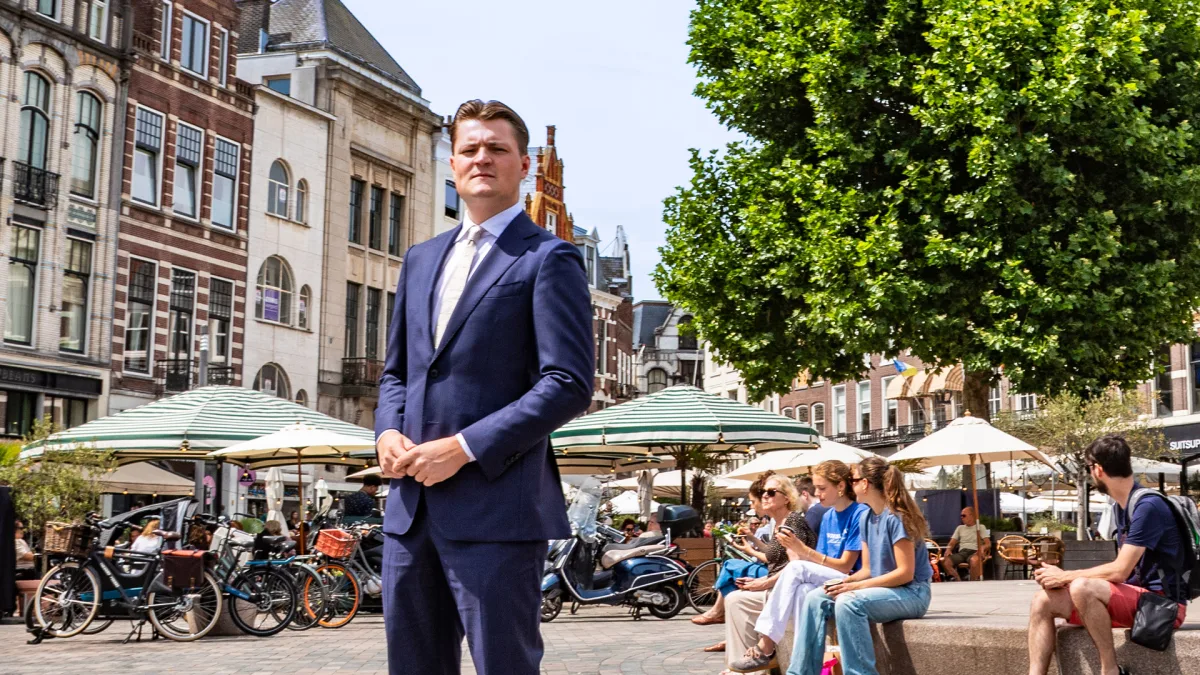
Previous studies have shown that private individuals in the Netherlands transfer billions of euros abroad every year. A migrant worker who works here and transfers part of his own salary to his family is one thing. But how much in benefits and allowances is transferred abroad by immigrants living in the Netherlands? It is a fact that this happens but very little is known about the scale of the problem and the damage such practices cause to the Dutch economy.
This is unacceptable to Forum for Democracy. We must identify and tackle those who receive benefits or allowances in the Netherlands because they have insufficient income yet at the same time regularly transfer money abroad. Dutch taxpayers’ money is not intended to finance foreign households or build up wealth abroad.
Furthermore, every year Dutch benefits are paid to people who themselves live abroad. It was even recently revealed that people leaving the Netherlands to live abroad will soon be entitled to six months’ unemployment benefit rather than three. At the same time, monitoring foreign income and assets is by no means always straightforward. Exactly how much money is involved, where it ends up, and the extent of fraud and abuse are matters into which the Dutch government should have, and must gain, insight.
That is why FVD MP Milan Schenk is tabling no fewer than 55 parliamentary questions to the government. He is enquiring about fifteen years’ worth of money flows abroad, the link with benefits and allowances, the foreign assets of benefit recipients, the export of Dutch social security provisions, and the possibilities for taking a tougher stance against this kind of fraud and abuse.
The Netherlands must stop naively handing out (tax) money without sufficient insight into where it ultimately ends up. FVD wants to expose these cash flows and tackle abuse, so that money belonging to the Dutch people is actually invested in the Netherlands.
Written questions from Milan Schenk MP (FVD) to the Minister of Finance, the Minister of Social Affairs and Employment, the Minister of Work and Participation, and the Minister of Justice and Security regarding private money transfers abroad, the export of Dutch social benefits, and the prevention of misuse of public funds
Is the Government aware of large-scale private money transfers from the Netherlands abroad, also known internationally as remittances?
How much money has been transferred abroad by private individuals from the Netherlands each year over the past fifteen years? Please provide a breakdown by calendar year.
To which thirty countries has the most money been transferred by private individuals from the Netherlands over the past fifteen years? Please provide a breakdown by country and by calendar year.
What proportion of all private money transfers over the past fifteen years were destined for destinations within the European Union, and what proportion were destined for destinations outside the European Union?
What proportion of all private money transfers over the past fifteen years were destined for destinations within Africa and the Middle East?
Which (government) bodies hold data on private money transfers abroad, and how is this data collected?
Are only bank transfers recorded, or are money transfers via payment service providers such as Western Union and MoneyGram, as well as cash physically taken abroad, also recorded?
Does the Government have an understanding of the scale of informal remittances abroad, for example via so-called hawala systems or other informal methods? If so, what is the estimated size of this flow of funds? If not, why not?
Has the Government commissioned a study into the economic and social consequences of private money transfers abroad for the Dutch economy, domestic consumption, the tax base or capital outflows? If so, what were the main conclusions of that study, and can you share these findings with the House? If not, why not?
How does the Netherlands compare with other Member States of the European Union in terms of the volume of private remittances abroad?
Does the Government have data showing what proportion of all private remittances abroad over the past fifteen years originated from persons who are resident in the Netherlands for tax purposes, and can this data be shared with the House?
Does the Government have data showing what proportion of all private money transfers abroad over the past fifteen years originated from individuals residing in the Netherlands only temporarily, such as migrant workers, and can this data be shared with the House?
Does the Government have data showing what proportion of private money transfers abroad over the past fifteen years originated from employment income, business income, pension income, social security benefits, allowances and other sources of income, and can this data be shared with the House?
Does the Government have data showing in how many cases recipients of Dutch social security benefits simultaneously make regular remittances abroad? If so, how many people has this involved annually over the past fifteen years, and what sums are involved? Please break this down by benefit scheme.
If the data referred to in question 14 is not available, why is this data not recorded?
Is the Government prepared to investigate the extent to which recipients of Dutch social security benefits are simultaneously making regular money transfers abroad? If not, why not?
Does the Government have data showing in how many cases recipients of Dutch benefits simultaneously make regular transfers of money abroad? If so, how many people has this involved annually over the past fifteen years, and what sums are involved? Please break this down by housing benefit, healthcare benefit, childcare benefit and the child-related budget.
If the data referred to in question 17 is not available, why is this data not recorded?
Are substantial or regular money transfers abroad taken into account in any way when assessing entitlement to social security benefits or allowances? If not, why not?
Can regular money transfers abroad give rise to an eligibility review of a social benefit or allowance? If so, under what circumstances?
If the answer to question 20 is in the negative, why does the Government not consider such money transfers relevant to the assessment of the eligibility for social benefits?
To what extent do the UWV, the Social Insurance Bank, local authorities, the Tax and Customs Administration, the Financial Intelligence Unit (FIU-Netherlands) and other relevant bodies exchange data in cases involving substantial money transfers abroad?
Does the Government have any indications, risk analyses or investigations showing that Dutch social security benefits or allowances are being used to provide financial support to individuals abroad? If so, can the Government share these with the House?
Does the Government have an understanding of the extent to which individuals who are long-term recipients of Dutch social benefits periodically transfer money abroad?
Does the Government have data showing what proportion of private money transfers abroad originates from people receiving Dutch social security benefits or allowances? If so, can you share this data with the House?
If this data is not available, does the Government consider it desirable to record it systematically in future, so as to gain a better understanding of the relationship between private money transfers and the use of Dutch social security benefits? If not, why not?
How many people are currently receiving Dutch social security benefits whilst living outside the Netherlands? Please provide a breakdown by benefit scheme over the past fifteen years.
How much public money is involved in this annually? Please provide a breakdown by benefit scheme over the past fifteen years.
To which countries have Dutch social security benefits been paid over the past fifteen years? Please provide an overview by country, including the number of recipients and the annual amount paid.
How has the number of people receiving a Dutch social security benefit whilst living outside the Netherlands developed since 2000? Please provide a breakdown by scheme.
Which social benefits and allowances can be exported in full or in part to other countries under national legislation, European regulations or international treaties?
Which social benefits and allowances cannot be exported abroad? On what legal grounds is this the case?
Can the Government, insofar as this data is recorded, specify for each social security scheme how many recipients hold only Dutch nationality, hold only a non-Dutch nationality, and hold both Dutch nationality and at least one other nationality?
Does the Government have data on the country of birth of recipients of Dutch social benefits who live outside the Netherlands? If so, can you share this with the House?
If the data requested in questions 33 and 34 are not available, why are these data not recorded?
How many recipients of Dutch social security benefits live outside the European Union?
How many recipients live in countries with which the Netherlands has concluded a bilateral social security agreement? Please provide a breakdown by country with which such an agreement has been concluded.
Has the Government investigated the extent to which existing social security agreements result in Dutch tax and social security contributions flowing abroad on a structural basis? If not, why not?
Does the Government still consider the current arrangements for exporting Dutch social security benefits abroad to be consistent with the original objectives of the relevant legislation and regulations? If so, why?
Is the Government prepared to periodically evaluate the existing social security treaties and the exportability of social benefits in terms of their effectiveness, legitimacy, feasibility and financial implications for the Dutch taxpayer? If not, why not?
How much public money has been paid out abroad in total over the past fifteen years via exportable Dutch social security benefits? Please provide a breakdown by calendar year and by benefit scheme.
Does the Government have any evidence that recipients of Dutch social security benefits or allowances are simultaneously building up or holding assets abroad? If so, what specific action is being taken in response?
Are foreign bank accounts, property, businesses and other forms of assets routinely taken into account when assessing entitlement to Dutch social security benefits and means-tested schemes? If not, why not?
How many investigations into assets held abroad have been carried out over the past fifteen years in the context of the implementation of the Participation Act, the Unemployment Benefits Act (WW), the Work and Income (Capacity for Work) Act (WIA), the General Old Age Pensions Act (AOW), the Surviving Spouses’ Pensions Act (Anw), the Young Disabled Persons Act (Wajong) and other social security schemes? Please provide a breakdown by scheme and by calendar year.
How many of these investigations have led to a review of a benefit, the termination of a benefit, the recovery of public funds, an administrative fine and/or criminal proceedings?
What was the total financial value of the recoveries referred to in question 45? What proportion of that amount has actually been recovered?
How many fraud cases involving foreign assets, foreign income or foreign bank accounts have been identified over the past fifteen years? Please provide a breakdown by scheme and by calendar year.
Which countries feature most frequently in investigations into foreign assets or foreign income of recipients of Dutch social security benefits?
Are there any countries with which the Netherlands is unable to exchange sufficient data to adequately verify entitlement to social security benefits or allowances? If so, which countries are involved and what are the practical implications for the implementation of these schemes?
Does the Government consider it desirable for Dutch social benefits to be paid out when their legitimacy cannot be verified, or can only be verified to a limited extent, due to a lack of international data exchange? If so, why?
What legal options currently exist for taking substantial or regular money transfers abroad into account when monitoring the eligibility for social benefits and allowances?
Are other European countries better able to gain insight into the relationship between private money transfers abroad and the receipt of social benefits? If so, which countries are involved and what lessons does the Government draw from this?
Is the Government prepared to carry out a comprehensive investigation into the relationship between private money transfers abroad, the use of Dutch social benefits, the export of Dutch benefits and the possibilities for preventing abuse more effectively? If not, why not?
Can the Government rule out the possibility that individuals who are long-term recipients of Dutch social security benefits are simultaneously transferring substantial sums abroad without the relevant authorities being aware of this? If this cannot be ruled out, does the Government consider it desirable to gain a better understanding of this situation? Why or why not?
Does the Government share the view that Dutch income support, which is intended to compensate for a lack of means of subsistence, should not be used systematically to build up assets or to finance households outside the Netherlands when the recipient simultaneously claims to have insufficient means of their own? If not, why not?

Milan Schenk
Member of Dutch Parliament for FVD
Member of Dutch Parliament for FVD
Related articles
 Politics
Dutch Government Refuses to Address Key Questions on Russia and the War in Ukraine
 Politics
Is a reduction in gas tax impossible due to a European agreement, or are there more hidden rules at play?
 Politics