“La propriété, c’est le vol,” declared the French socialist, Pierre-Joseph Proudhon, in 1840. “All property is theft.” The idea, soon after elaborated by Karl Marx and Friedrich Engels in their famous Communist Manifesto, is that everything ultimately belongs to “the community”; that we all live, work, and exist within the same society; and that it is impossible to claim that one person “deserves” more than another. Since we are all equal, so the argument goes, claiming something as your own property means you are effectively “stealing” it from the collective.
At least, that is what the socialists believe. Opposed to this is an equally widespread notion, expressed for example by the libertarian, Murray Rothbard, in 1982, that “taxation is theft”, in other words any form of taxation is a violation of property rights. In this view, all things are ultimately private property, and there exists no collective which is greater or more important than the individual’s right to dispose of the fruits of his own labour.
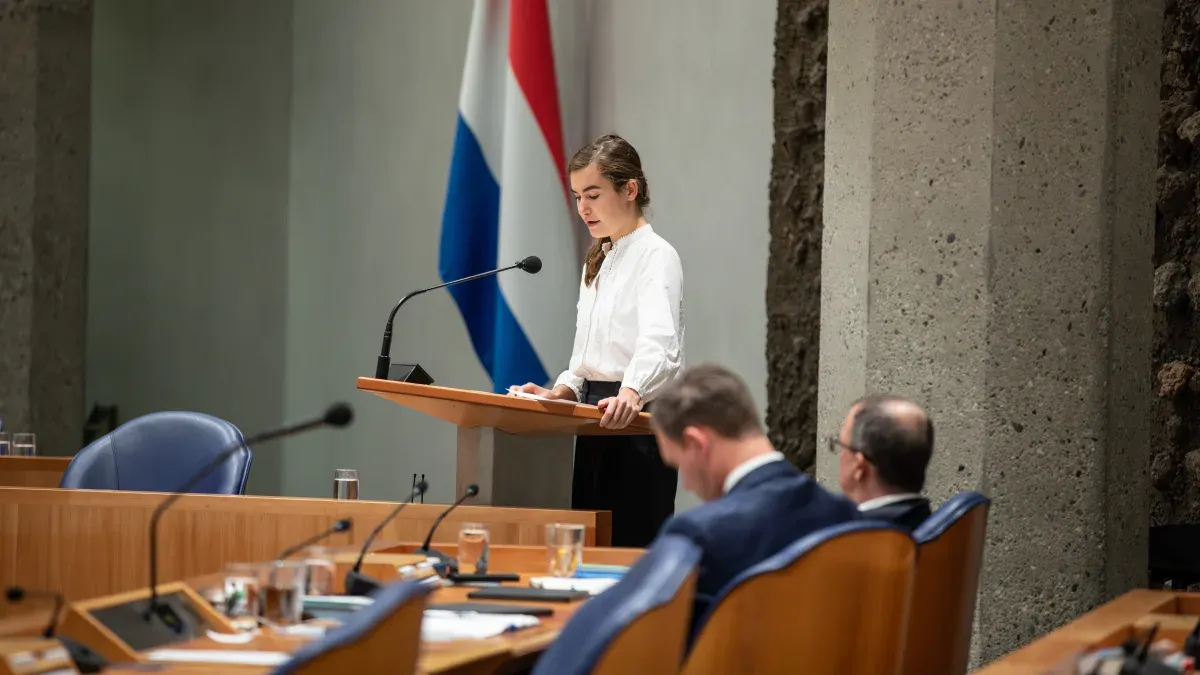
Who is right? And what does that mean for politics, taxation, and the economy? During the parliamentary debate on the Tax Plan on Thursday 20 November, Jimmy Dijk (SP) and I touched upon this age-old question of political philosophy. Although a concrete proposal was on the table concerning the taxes for 2026, levies on businesses, VAT on groceries, and so on, the discussion suddenly went much deeper.
This is how it unfolded: the leader of the Socialist Party argued that under the current tax system, the so-called “rich” still managed to remain wealthy too easily. The system, he claimed, simply was not “fair”. So I asked him what his definition of “fair” actually entailed. When are taxes “fair”? When is it legitimate to take money or earnings from people, and when is it not?
His answer was that “the people who do the work” should “earn the money”, and not “the lazy shareholder”. For Jimmy Dijk, “capital”, private property, is therefore the problem. This is exactly what the socialists of old (from Proudhon to Marx and Engels) argued.
In a world where the cards are dealt entirely at random, a board game in which one person receives great wealth by sheer luck and another receives almost nothing, that view might even be true. But how do rich people actually acquire their wealth? Roughly speaking, there are two possibilities:
- through hard work, or
- through inheritance.
If you acquire wealth through hard work, then you belong to the very group Jimmy Dijk claims to favour, so if work has paid off, it would, by his own definition, be unjust to confiscate it afterwards. That is where the contradiction already begins. But if you acquire wealth through inheritance, the same logic still applies. After all, your parents or loved ones once earned it themselves through hard work and choose to give it to you. Why should they not be allowed to dispose of the fruits of their labour as they wish? Again, you end up trapped in an internal contradiction.
On what, then, is the socialist argument against capital actually based? It seems, for Dijk, mainly to revolve around the extent of the differences: a small difference is acceptable, he implies, but not too large a one. But why should the differences not be too large? If someone works twice as efficiently as another person, or ten times, or a hundred times, should they not also be allowed to earn twice, ten times, or a hundred times as much?
At root, the Socialist’s conviction is perhaps that such large differences between people simply do not exist. But how does the Socialist know that? Indeed, how could one possibly know or measure such a thing? There is, unfortunately, no objective criterion for this - except the free market. Thus, logically considered, the Socialist position turns out, unfortunately, to be entirely untenable, and one is always led back to the correctness of the capitalist.
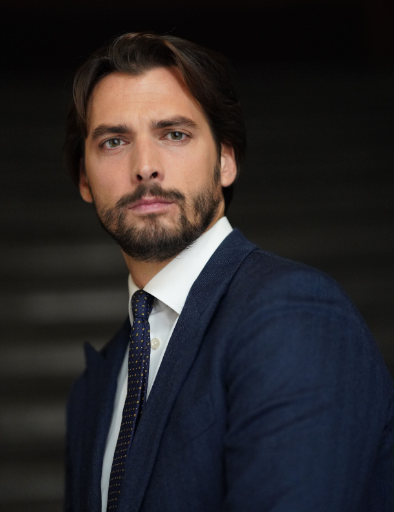
Thierry Baudet
Leader of FVD and Member of Parliament of the Netherlands
Thierry Henri Philippe Baudet (born 28 January 1983) is a Dutch politician, academic and author. He is the founder and leader of Forum for Democracy (FVD), and has been a member of the House of Representatives since 2017. He also serves as the party’s parliamentary leader.
Baudet was born in Heemstede into a family of partial Walloon ancestry. His forefather Pierre Joseph Baudet immigrated to the Batavian Republic in 1795 when his home in Hainaut was annexed by the French Republic, fleeing from conscription into the French Army. Baudet’s great-great-grandmother Ernestine van Heemskerck was born in the Dutch East Indies and was of partly Indonesian parentage. Baudet attended the Haarlem gymnasium, i.e. a high school with compulsory Latin and Ancient Greek. His first degree, from the University of Amsterdam, was in history, and from 2007 to 2012 he was a lecturer at Leiden University, where in 2012 he graduated as a Doctor of Philosophy with a thesis on national identity, European identity, and multiculturalism. This was co-directed by the philosopher Roger Scruton and was published in Dutch as The Assault on the Nation-State. An English translation was also published, called The Significance of Borders.
Related articles
 Economy
Another blow for climate fanatics: IMF confirms economic stagnation due to climate and nitrogen policies
 Economy
Dutch Travel Maniac exposes abuses and misconduct at the Central Agency for the Reception of Asylum Seekers; Tom Russcher MP submits parliamentary questions
 Economy