
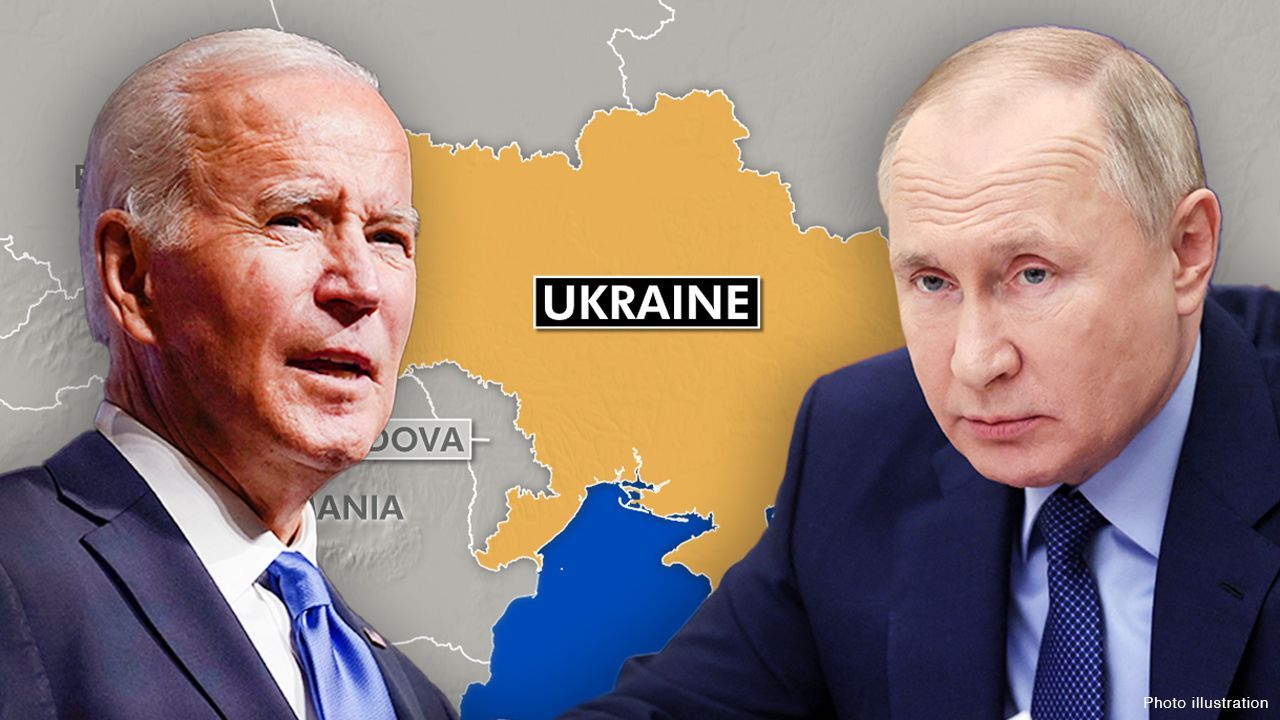
For some weeks now, we have been told that Russia is about to invade Ukraine. Satellite photos have been produced showing the troop build-up on the Ukrainian border. The Ukrainian government has predicted World War III.
The usual suspects, the British, have made threats of terrible sanctions if Russia invades, no doubt provoking sniggers in the Kremlin. The neo-cons are foaming at the mouth because Joe Biden has said that ‘a minor incursion’ by Russia would provoke only discussions. This looks like a green light for Moscow. There is only one problem with all this. The same governments now warning that Russia is about to invade Ukraine in 2022 said that Russia invaded Ukraine in 2014. After the violent Maidan coup overthrew President Viktor Yanukovich, they claimed that Russia sent troops into Donbas, the Eastern breakaway region.
Same Old
In September 2014, a Polish government think-tank, an emanation of the Prime Minister’s office, said, “On 24 August, regular units of the Russian army crossed the border in eastern Ukraine. The Russian offensive has led to the seizure of areas of the Donetsk and Lugansk regions hitherto been controlled by Ukrainian forces.” In November 2014, Nato published satellite photos of what it said were Russian troops on Ukrainian territory. A Dutch brigadier and Nato official, Nico Tak, “The satellite images released today provide additional evidence that Russian combat soldiers, equipped with sophisticated heavy weaponry, are operating inside Ukraine’s sovereign territory.”
In January 2015, the then Prime Minister of Ukraine, Arseny Yatsenyuk, said Russia had invaded his country. It is not clear why Yatsenyuk said Russia invaded in January 2015 because he had already claimed that Russia was militarily present in Ukraine in July 2014, when the Malaysian aircraft Flight MH-17 was shot down. The Donbas separatists, he said, were “drunken gorillas” who could not possibly operate a Buk anti-aircraft missile system on their own without help from its owners, the Russian army. In March 2015, the US Military Commander in Europe, General Ben Hodges, said that 12,000 Russian troops were operating inside Eastern Ukraine (the Donbas) in addition to the 29,000 Russian troops in annexed Crimea. Also in March 2015, the Royal United Services Institute, which is part of the British Ministry of Defence, said that Russia had sent 90,000 troops to seize the Donbas. In June 2015, the then president of Ukraine, Petro Poroshenko - now on trial for treason - told Corriere Della Sera that there were 200,000 Russian troops in his country. The very wide range of figures given for the number of Russian troops allegedly present in Ukraine (between 12,000 and 200,000) naturally aroused suspicion about their reliability.
Invasion and brake away
But if Russia had already invaded in 2014 or 2015, then how can it now be about to invade again in 2022? If you have already invaded a country and still have troops there, you cannot ‘invade’ it again. Alternatively, if Russia really is about to invade now, this means that Russia cannot already have invaded 6 or 7 years ago. The West’s fearmongering about an invasion now is tantamount to saying that there are no Russian troops in Ukraine after all. But if Russia did not invade in 2014 or 2015, as Ukraine and the West pretended, this means that the Donbas separatists are not, as Kiev repeatedly claims, in fact, Russians. It means instead that the Donbss breakaway was a genuinely internal Ukrainian event, like the secession of Slovenia and Croatia from Yugoslavia in 1991, and not an international one. Kiev has always presented the Donbas secession as an invasion, refusing on this basis to grant autonomy to Donetsk and Lugansk regions as the 2015 Minsk peace agreement requires. Kiev even refuses to talk to the separatists, saying they are simply controlled by Moscow. This is one of the reasons why the conflict has not been resolved. If the Donbas is not occupied by Russia, this means that when the Ukrainian armed forces launch attacks there, as they repeatedly do, they are attacking their own people. This is usually regarded as the defining characteristic of a dictatorship. Or perhaps the Western fearmongers mean that Russia is now about to invade the whole of Ukraine, as opposed to just the Donbas and the Crimea which they already hold, and that this would be unacceptable. But if they mean that, then it suggests that they are prepared to live with the status quo, i.e. with the Russian presence in Crimea and its alleged presence in the Donbas, a presence which is denied by Moscow. This is the equivalent of selling Ukraine down the Dniepr. It is the opposite of the formal Western position which is that the secessions of both Crimea and Donbss were illegal and that the West would never recognize them.
Nord Stream
My view is that the invasion is not going to happen. Ukraine and its Western backers have cried wolf too often for the current warnings to be credible – most recently in April 2021, less than a year ago, when they also said Russia was ‘massing troops’ on the Ukrainian border (i.e. on Russian territory) with a view to invading. Instead, the warnings of an imminent invasion are a means of putting maximum pressure on the Germans not to formalize the opening of the Nord Stream 2 gas pipeline. In spite of US extraterritorial sanctions imposed in November 2019 (and since dropped), the pipeline construction is complete and there is only one last administrative hurdle to clear before it starts working. The Americans, the Poles, the Balts and the Ukrainians have been determined to sabotage the pipeline for years. The absurd fairytale about the Novichok poisoning of Alexei Navalny in August 2020 was an attempt to derail it; these warnings about Ukraine are another attempt. It is amusing to note that the same people who denounce the pipeline often also blame Russia for not pumping enough gas into Europe through the existing network, thereby deliberately provoking a hike in gas prices. Russia is damned if she does and damned if she doesn’t.
My prediction is that this latest attempt, presumably by elements within the American deep state, will also fail. The signs are that Berlin has made her choice in favour of the pipeline and in favour of Russia. There are signs that Washington, or at least the White House, has done the same. And as the Mafia failed state of Ukraine takes yet another plunge in its seemingly infinite descent into chronic political and financial corruption - the prosecution of its former ‘democratic’ president is only the latest outrage - that is a very good thing.
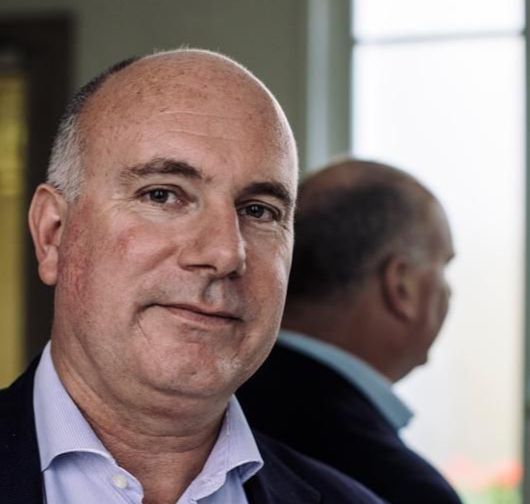
John Laughland
Director of Forum for Democracy International
John Laughland is an English author of numerous books and a lecturer in Political Science. He writes on international affairs and political philosophy and has contributed articles to The Guardian, The Spectator, the Brussels Journal, The Wall Street Journal, National Review, The American Conservative, and Antiwar.com. He was Director of the Euroskeptic think tank European Foundation until 2008 and Director of studies at the Institute of Democracy and Cooperation in Paris until 2018. He worked at the European Parliament from 2018 to 2020 and, since September 2021 has been on the teaching staff of the Catholic Institute of the Vendée in Western France where he is a lecturer in political science and history. He is currently Visiting Fellow at the Mathias Corvinus Collegium in Budapest.
Related articles
 World
WorldThe End of an Era: Time's Up for Orbán
 World
WorldThe War Against Iran: the Netherlands should stay out and look after its own people
 World
World