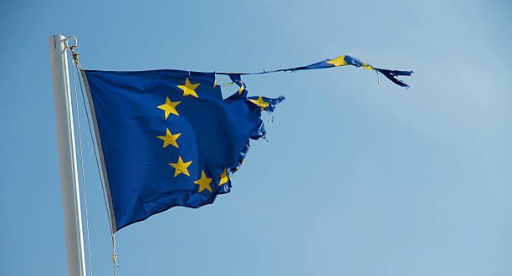
30 years ago, on 7 February 1992, the Maastricht treaty was signed creating a common security and foreign policy for the European Union. The goal was to give the EU greater clout on the international stage.
New bureaucracy
In 1999, the Treaty of Amsterdam consolidated this by creating the post of High Representative for Common Foreign and Security Policy, supposedly a sort of EU Foreign Minister.
In 2009, the title of this post was changed by the Lisbon treaty to High Representative for Foreign Affairs and Security Policy and the EU gave itself a new bureaucracy, the European External Action Service, supposedly a Foreign Ministry to support the work of the High Representative.
In 2019, the newly appointed president-elect of the European Commission Ursula von der Leyen announced that she wanted hers to be “a geopolitical Commission” to “shape a global order” and to show European “leadership”. [1]
Geopolitical irrelevance
Now the EU has announced a “strategic compass” to be produced by March 2022. Its stated goals are to “to become a provider of security for its citizens, act faster and more decisively to protect our values and interests and contribute to international peace and security”. [2]
In other words, successive European leaders have for a generation been claiming that they are making Europe more powerful. The reality is that they have succeeded only in making Europe a complete geopolitical irrelevance.
Talks began this week, on 10 January 2022, between the United States and Russia. The subject? European security. They took place without the participation of a single EU member state or the EU itself. In other words, the future security structure of Europe is being decided, as usual, over the heads of European states.
Ukraine crisis
The idea that the Americans will take European interests into account is quaint and naïve. The US withdraws from disarmament treaties whenever it likes, as is shown by its 2019 withdrawal from the INF treaty on intermediate nuclear forces, its 2020 withdrawal from the Open Skies treaty on surveillance, and its 2021 withdrawal from Afghanistan (where the mission was a Nato one). In 2014, at the height of the crisis in Ukraine, the current US Assistant Secretary of State for European and Eurasian Affairs, Victoria Nuland, told the US ambassador in Kiev, Geoffrey Pyatt, that the Americans would decide the composition of the new Ukrainian government without any European input. “Fuck the EU,” she said.[3]
The INF treaty specifically dealt with missiles capable of striking Europe. The US withdrew because of Russian missile deployments, which were in turn a response to the US ‘missile shield’ installed in Eastern Europe. It does not matter who started it. The EU played no role in these decisions even though they are decisive for European security - and to European security alone.
Seeking a role
Europe has, however, played a major role in creating the hysterical anti-Russian climate which has led to the current impasse, an impasse the Geneva talks are trying to resolve. In 2009 the EU’s new constitution, the Lisbon treaty, subjugated its foreign and security policy to that of Nato by saying that EU policy must be compatible with it (see Article 42 and the related Protocols 10 and 11[4]). There is no equivalent clause in any Nato treaty tying it to the EU.
Europe’s role has thus been reduced to one of procurement - not military procurement but procurement of the kind for which Ghislaine Maxwell was recently convicted in New York. The EU procures fresh new young states from the East to satisfy the determination of the ageing but rich Nato alliance to believe that it is still attractive. The EU is therefore the willing accomplice of the USA’s so-called ‘open door’ policy of liberal imperialism on the European continent, a policy which has produced that inevitable pushback from Russia which any historian of international relations could foresee, and which in any case the Russians have been threatening since at least 2007.[5] Far from trying to be a bridge between the US and Russia, the EU has served as the Americans’ battering ram against its own immediate neighbour.
Geopolitical power
The mere fact that the Americans agreed to the Geneva talks, following a series of Russian demands including that Ukraine never join Nato, shows that the pushback has partially succeeded. Russia has established itself as the Ordnungsmacht in Syria, not a mean feat for a country whose geopoliticians have for centuries dreamed of paddling their feet in the warm waters of the Mediterranean. Russia has tipped the balance of power in the Black Sea by seizing Crimea, where its fleet is based, in 2014, thereby preventing that sea from becoming the American lake of which neo-conservative strategists once fantasised.[6] Russia is present, via mercenaries, in Libya, still in chaos 10 years after the appalling 2011 Nato attack on that country. And Russia, as of this week, is also effectively in charge of Kazakhstan, a gigantic hydrocarbon-rich silk-road country, the 9th largest country in the world and two-thirds of the size of the EU, where the regime survived a coup attempt thanks to the intervention of Russian troops. Oh, I nearly forgot to mention the presence of Russian peacekeeping troops in the Caucasus following the 2020 Azeri-Armenian war over Nagorno-Karabakh, which add to those present in Georgia (Abkhazia and South Ossetia) since 2008, and of course the long-standing Russian presence on the territory of Belarus which borders Poland and Lithuania.
The euro-weenies bleat that this proves that Russia is an aggressive threat. They promise to stand up for European “values” instead. But this is the language of the primary school classroom. The Americans are more realistic, notwithstanding the insufferable political correctness of the Biden administration. The men in the Pentagon know that Ukraine will never join Nato, for the same reason that Georgia never will. The admission of either of these countries to Nato would be equivalent to a declaration of war against Russia. Russia has troops on their internationally recognised territory and Nato membership requires that all Alliance members protect each other’s territorial integrity.
There is little point arguing about the rights and wrongs of this Russian presence. As the defeated French troops said after surrendering the town of Fashoda in Sudan to the British in 1898, “We had the arguments but they had the weapons.” This is the same lesson which Thucydides taught us over 2,000 years ago in his account of the hard talk between the Athenians and the inhabitants of Melos, whose pathetic pleadings about justice led to them all being massacred.[7]
EU Mafia
It might be noble to go down in support of a good cause but the EU, and the states which compose it, cannot even claim that. Their craven support of the violent US-backed coup in Ukraine in 2014 has led them to continue covering for what is undoubtedly the worst Mafia state in Europe. Ukraine’s arrest of opposition figures[8], the closure of opposition TV stations[9], even the judicial harassment of the former president who took power after the 2014 coup[10] – none of this seems to bother the EU, which continues to support the gangster regime in Kiev, no doubt because it is just as hand in glove with crooked Joe Biden and his sleazy son, Hunter, as it was when Biden was Vice-President.[11]
The EU, like Nato, sucks power out of European states into a structure over which, in fact, they have no control. It therefore actively prevents Europe’s nation-states from dealing with their own security. In order to justify its pretence to have an independent foreign and security policy, EU have for decades repeated Henry Kissinger’s dismissive but realist sarcasm, ‘If I want to call Europe, who do I call?’ The last three decades have shown that the answer to that question is the same as it has been since 1945: it is a number in Arlington, Virginia.
[1] https://ec.europa.eu/info/sites/default/files/president-elect-speech-original_1.pdf [2] https://eeas.europa.eu/sites/default/files/towards_a_strategic_compass-2021-11.pdf [3] https://www.theguardian.com/world/video/2014/feb/07/eu-us-diplomat-victoria-nuland-phonecall-leaked-video [4] https://eur-lex.europa.eu/legal-content/EN/TXT/HTML/?uri=CELEX:12012M/TXT&from=EN [5] http://en.kremlin.ru/events/president/transcripts/2403 [6] https://www.hoover.org/research/black-sea-and-frontiers-freedom [7] http://www.perseus.tufts.edu/hopper/text?doc=Perseus%3Atext%3A1999.04.0105%3Abook%3D5#note-link196 [8] https://www.ukrinform.net/rubric-society/3382928-medvedchuks-house-arrest-extended-until-march-10-prosecutor-generals-office.html [9] https://www.dw.com/en/ukraine-zelenskiy-bans-three-opposition-tv-stations/a-56438505 [10] https://www.euronews.com/2022/01/06/ukraine-former-president-poroshenko-s-assets-frozen-kyiv-court-decides [11] https://www.youtube.com/watch?v=DviireZwG50
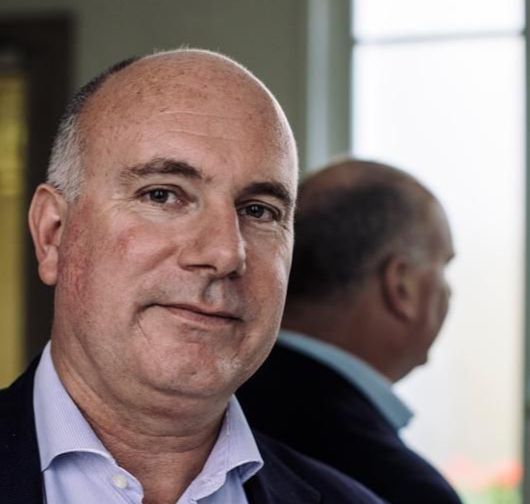
John Laughland
Director of Forum for Democracy International
John Laughland is an English author of numerous books and a lecturer in Political Science. He writes on international affairs and political philosophy and has contributed articles to The Guardian, The Spectator, the Brussels Journal, The Wall Street Journal, National Review, The American Conservative, and Antiwar.com. He was Director of the Euroskeptic think tank European Foundation until 2008 and Director of studies at the Institute of Democracy and Cooperation in Paris until 2018. He worked at the European Parliament from 2018 to 2020 and, since September 2021 has been on the teaching staff of the Catholic Institute of the Vendée in Western France where he is a lecturer in political science and history. He is currently Visiting Fellow at the Mathias Corvinus Collegium in Budapest.
Related articles
 World
WorldThe End of an Era: Time's Up for Orbán
 World
WorldThe War Against Iran: the Netherlands should stay out and look after its own people
 World
World